A country on edge after a sudden, nationwide assault
Mali woke up to chaos on April 25, 2026. Coordinated attacks across the capital and northern regions have pushed the country into one of its most dangerous security crises in years. What makes this moment especially alarming is not just the scale but the unprecedented cooperation between rival militant groups.
This matters far beyond Mali’s borders. The country sits at the heart of the Sahel, a region already struggling with instability. If Mali’s security collapses further, the ripple effects could destabilize multiple neighboring states.
A fragile state under pressure
To understand what’s happening now, you have to look at the bigger picture. Mali has faced years of insurgency, military coups, and shifting alliances, leaving its central government stretched thin.
Armed groups operate across vast desert regions, often beyond the reach of the state. Among them are jihadist organizations linked to Al-Qaeda and separatist movements seeking autonomy in the north.
Until now, these groups have often competed with each other. But that dynamic appears to be changing and that shift is at the heart of the current crisis.
A highly coordinated, multi front assault
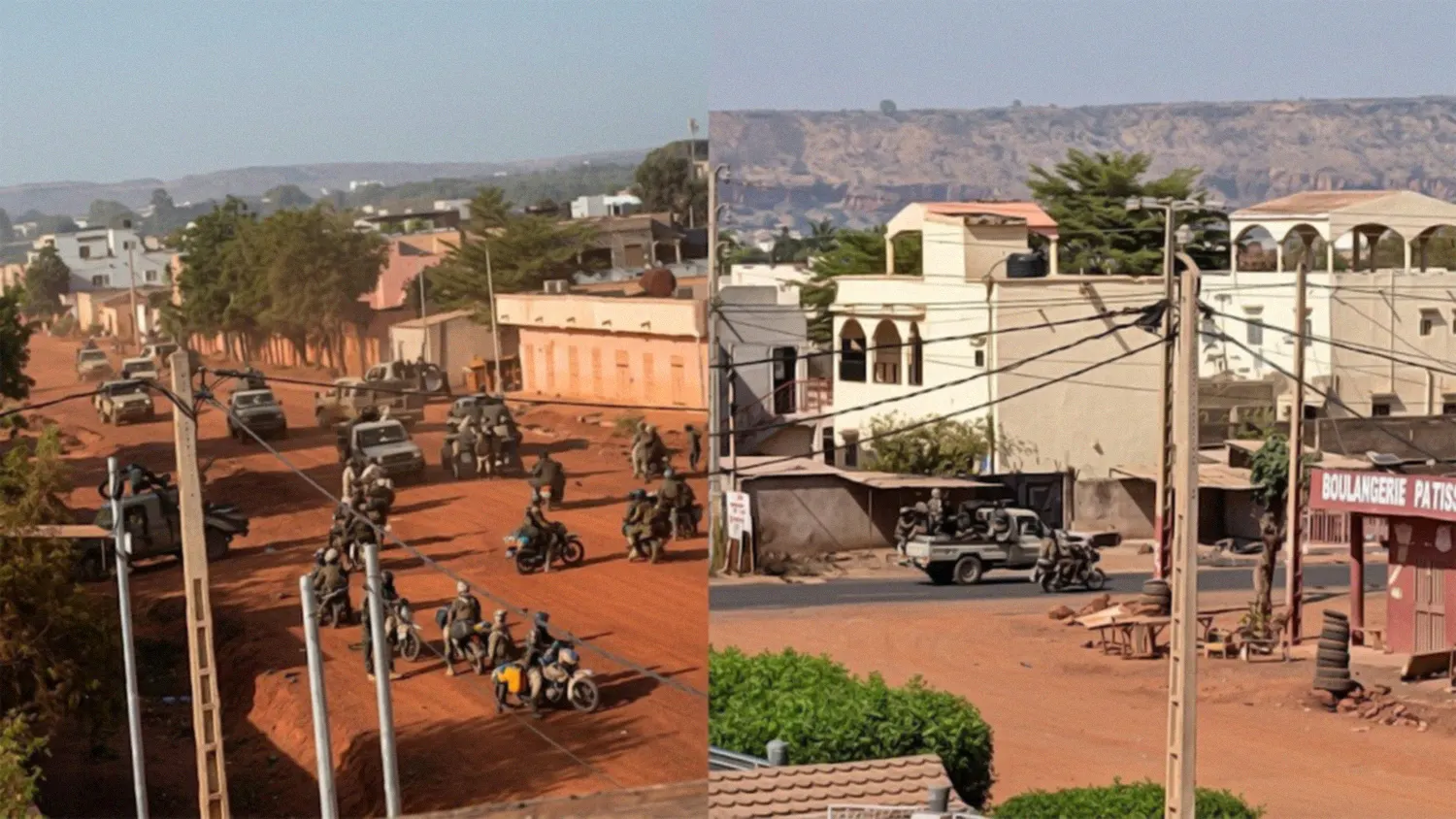
The latest violence began early Saturday morning. Around 5:20 AM, simultaneous explosions and gunfire erupted across Mali, hitting both political and military targets.
In Kati, the country’s main military base, the situation turned deadly. Defense Minister Sadio Camara was killed along with members of his family, marking one of the most significant losses for the ruling junta.
Meanwhile, in Bamako, gunfire broke out near the international airport and a key military zone linked to Russian forces, showing that even the capital is no longer secure.
At the same time, attacks spread across the north and center. Cities like Gao, Mopti, and Sévaré came under pressure. But the most symbolic blow came in Kidal, where Tuareg-led forces now claim control of the city, a major strategic setback for the government.
A rare alliance that changes everything
What truly sets this offensive apart is who carried it out. Two major groups JNIM, an Al-Qaeda linked network, and the Azawad Liberation Front (FLA), a separatist movement have openly confirmed they are working together.
This is a major shift. Historically, these groups have had different goals and ideologies. But now, they appear united by a shared objective: overwhelming the Malian state and its allies.
Experts describe this as a “marriage of convenience.” And it’s effective. By coordinating attacks, they have forced the Malian military into a multi front war, stretching its resources from the bamako to remote desert regions.
The role of foreign forces and rising risks
The situation becomes even more complex when you factor in international involvement. Mali’s government has relied heavily on Russian “Africa Corps” forces (formerly Wagner) to support its military operations.
But this partnership is now under pressure. Reports confirm that a Russian linked Mi-35 helicopter was shot down, killing all onboard, highlighting the vulnerability of foreign forces.
At the same time, militant groups are sending clear messages. JNIM has warned Russia to stay out, while the FLA has cautioned neighboring countries like Burkina Faso and Niger against intervening.
This raises a critical concern: the conflict could expand beyond Mali if outside actors become more deeply involved.
Government response vs. reality on the ground
Malian authorities have tried to project control. Officials say “several hundred attackers” have been killed, and security operations are ongoing.
But independent verification is limited. And reports from the ground suggest continued clashes in key areas like Kati and Kidal, indicating the situation is far from stabilized.
In Bamako, a strict curfew is now in place. From 9:00 PM to 6:00 AM, movement is restricted, reflecting ongoing fears of further attacks.
For civilians, the reality is uncertainty. Roadblocks, fuel disruptions, and security alerts have made daily life increasingly difficult.
Global reactions signal deeper concern
International concern has been swift. The United Nations has condemned the violence and called for coordinated global support, warning that the crisis could destabilize the wider Sahel.
Western governments are taking precautions. The U.S. and UK have issued “shelter in place” advisories and warned against all travel to Mali, underscoring the seriousness of the situation.
These reactions highlight a broader issue: Mali is not just a national crisis, it’s a regional security flashpoint.
A war that could reshape the Sahel
Looking ahead, the key question is whether this alliance between militant groups will hold. If it does, Mali could face sustained, large scale offensives that challenge the state’s control over major territories.
There’s also the risk of escalation. Increased involvement from foreign forces or neighboring countries could turn this into a wider regional conflict.
At the same time, the fall of strategic locations like Kidal suggests the balance of power on the ground may already be shifting.
The bottom line
Mali is entering a new phase of conflict. The combination of coordinated militant attacks, high profile casualties, and shifting alliances marks a dangerous turning point.
What was once a fragmented insurgency is becoming more unified and more capable.
And as that happens, the stability of the entire Sahel region hangs in the balance.