A Political Earthquake in Europe
Hungary has delivered one of the most dramatic political upsets in modern European history. After 16 years in power, Prime Minister Viktor Orbán has been voted out, marking the end of an era that reshaped Hungary and challenged the European Union itself.
What replaces it could redefine not just Hungary’s future, but the direction of Europe,
the war in Ukraine, and even transatlantic politics.
The Election Result: A Clear and Overwhelming Mandate
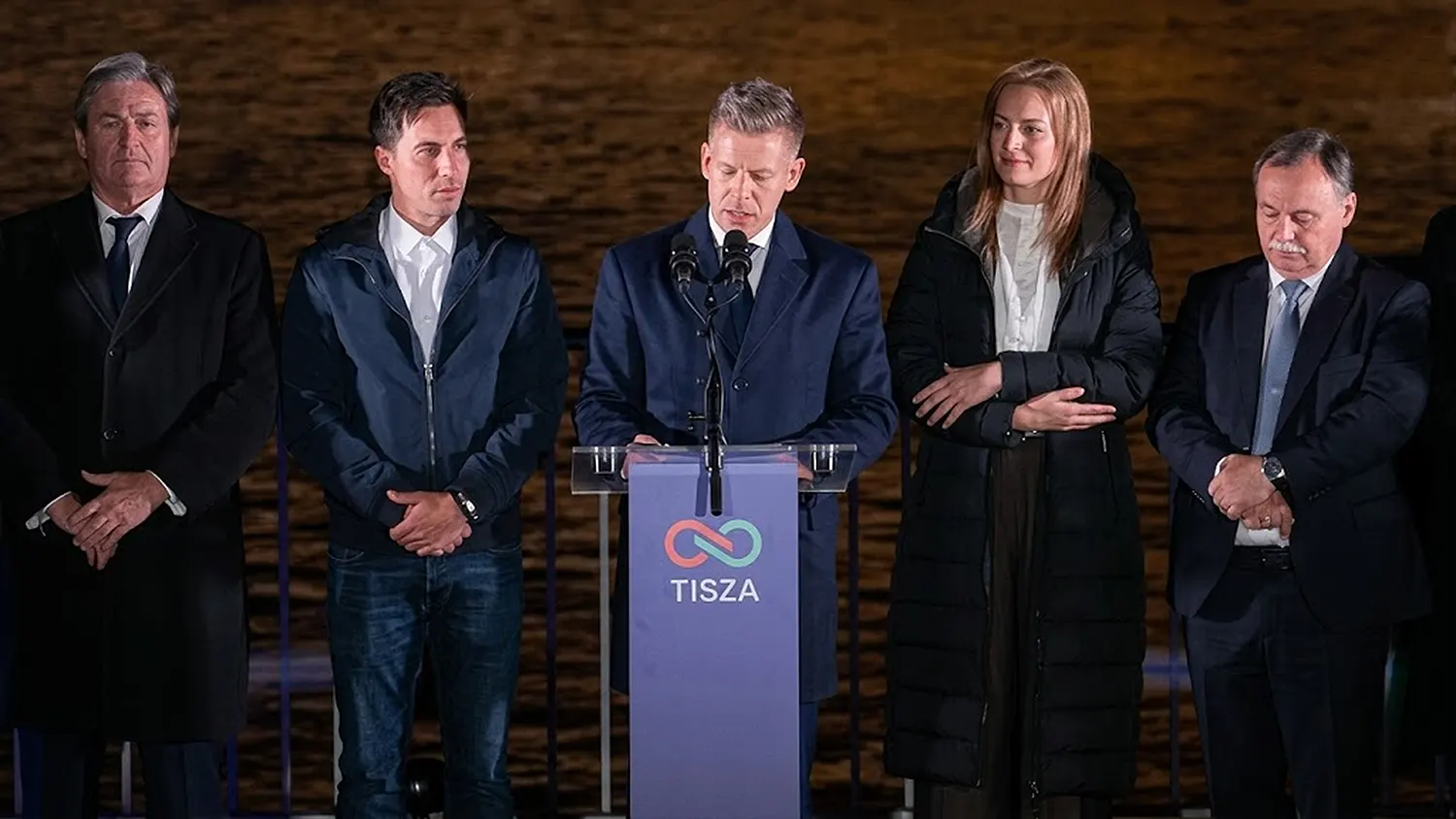
The scale of victory for Péter Magyar and his Tisza Party is nothing short of historic.
With over 98% of votes counted:
- Tisza Party: 138 seats (two thirds supermajority)
- Fidesz (Orbán’s party): 55–57 seats
- Others: Minimal representation
In a 199 seat parliament, this gives Magyar constitutional level power to reshape the country’s political system.
Equally significant was turnout. Between 78% and 80% of voters participated, a record level, signaling that this election was widely seen as a referendum on Hungary’s direction.
Even Orbán acknowledged the scale of defeat:
“The result is understandable and clear. For us, it is painful, but unambiguous.”
The Root of the Shift: From Insider to Challenger
The defining story of this election is the rise of a political insurgent from within the system itself.
Péter Magyar was once part of the Fidesz establishment. His break in 2024 transformed him into a credible challenger, one who understood the machinery of power he was now campaigning against.
His message was simple but potent:
- Dismantle what he called the “Orbán system”
- Restore democratic institutions
- Rebuild Hungary’s relationship with Europe
- Confront entrenched corruption
As a result, his campaign unified a fragmented opposition and attracted disillusioned Fidesz voters, something previous challengers failed to achieve.
What Happens Now: Turning Power Into Policy
With a two thirds majority, Magyar is not just governing, he has the tools to fundamentally rewrite Hungary’s political framework.
Restoring Democratic Norms
Magyar is expected to move quickly to reverse constitutional changes introduced under Orbán.
This includes:
- Re establishing judicial independence
- Removing political loyalists from key institutions
- Restoring checks and balances
This is a structural reset of the Hungarian state.
The European Pivot
Perhaps the most immediate shift will be Hungary’s relationship with the European Union.
Under Orbán, Hungary was often in open conflict with Brussels. Now:
- Billions in frozen EU funds could be unlocked
- Hungary is expected to adopt a cooperative stance on EU policy
- Leaders like Emmanuel Macron and Keir Starmer quickly signaled support
The tone has already changed from confrontation to alignment.
The Anti Corruption Drive
One of the most consequential moves could be Hungary joining the European Public Prosecutor’s Office (EPPO).
This would:
- Allow external oversight of EU funds
- Directly challenge allegations of systemic corruption
- Signal a break from past governance practices
In practical terms, it opens the door to investigations that were previously impossible.
Immediate Global Impact: Ukraine, NATO, and the EU
The €90 Billion Ukraine Package
Hungary’s election result has immediate consequences for the war in Ukraine.
Previously, Orbán had blocked a major EU support package. Now:
- The veto is expected to be lifted immediately
- The €90 billion package (military + financial aid) can proceed
- Funds could begin flowing within weeks
For Kyiv, this is a critical financial lifeline.
A Reset with the United States
The shift in Budapest also reshapes Hungary’s relationship with Washington.
The outgoing government had close ties with Donald Trump and JD Vance, who openly supported Orbán during the campaign.
In fact:
- JD Vance visited Budapest days before the vote
- Trump even addressed supporters remotely
That strategy failed.
Now, Magyar is signaling a different approach:
- Less personal politics, more institutional cooperation
- Commitment to NATO obligations
- A focus on predictable alliance behavior
The result: less ideological alignment, but potentially more stability.
The Fall of the “Orbán Model”
Orbán’s Hungary had become a symbol of “illiberal democracy” globally.
It was often praised by conservative figures in the U.S. and beyond as an alternative political model.
His defeat raises a critical question:
Can such systems be dismantled through democratic elections?
For many observers, Hungary now becomes a test case for democratic reversal, a rare example of voters undoing a deeply entrenched political system.
What to Watch Next
The coming months will determine whether this political earthquake leads to lasting transformation.
Key areas to monitor:
- Speed of constitutional reforms
- Access to EU funding
- Hungary’s stance on Ukraine and Russia
- Internal resistance from remaining Fidesz networks
A supermajority gives power but execution will define success.
The Future of Hungary and Europe
Hungary’s 2026 election is more than a national event, it is a turning point for Europe.
- A long standing leader has been removed through the ballot box
- A new government holds sweeping power to reshape the system
- The European Union gains a more cooperative member
- Ukraine stands to receive crucial support
- The global “illiberal” movement loses a key stronghold
In short: Hungary has not just changed governments, it has changed direction.