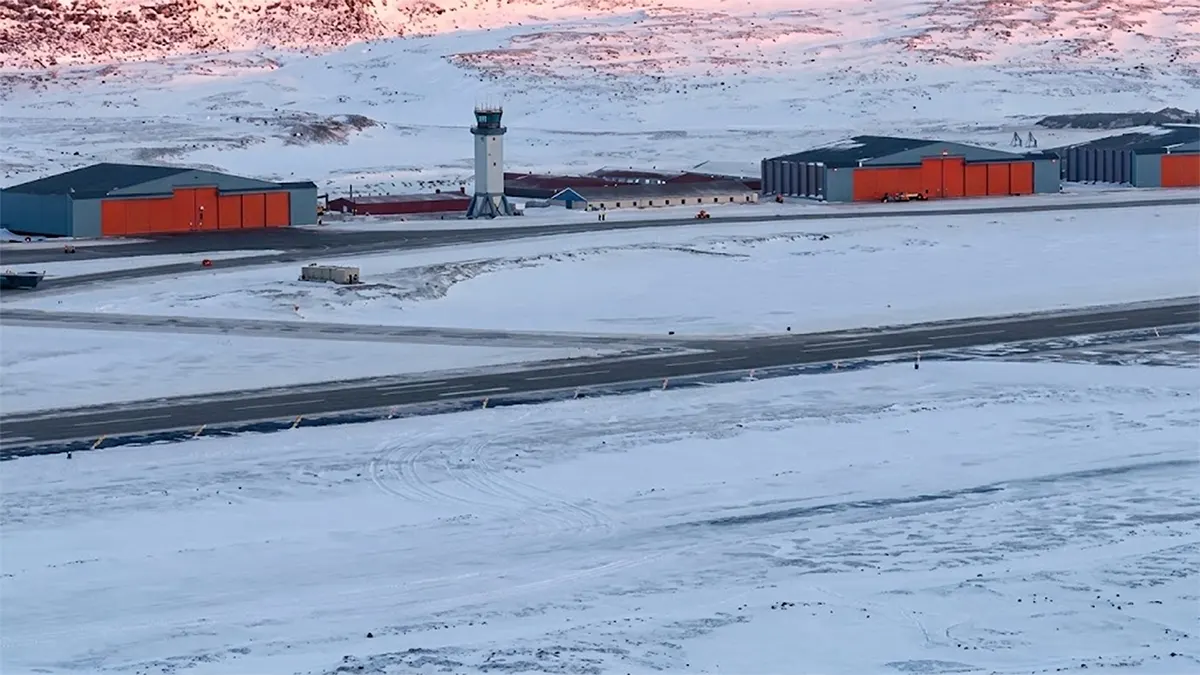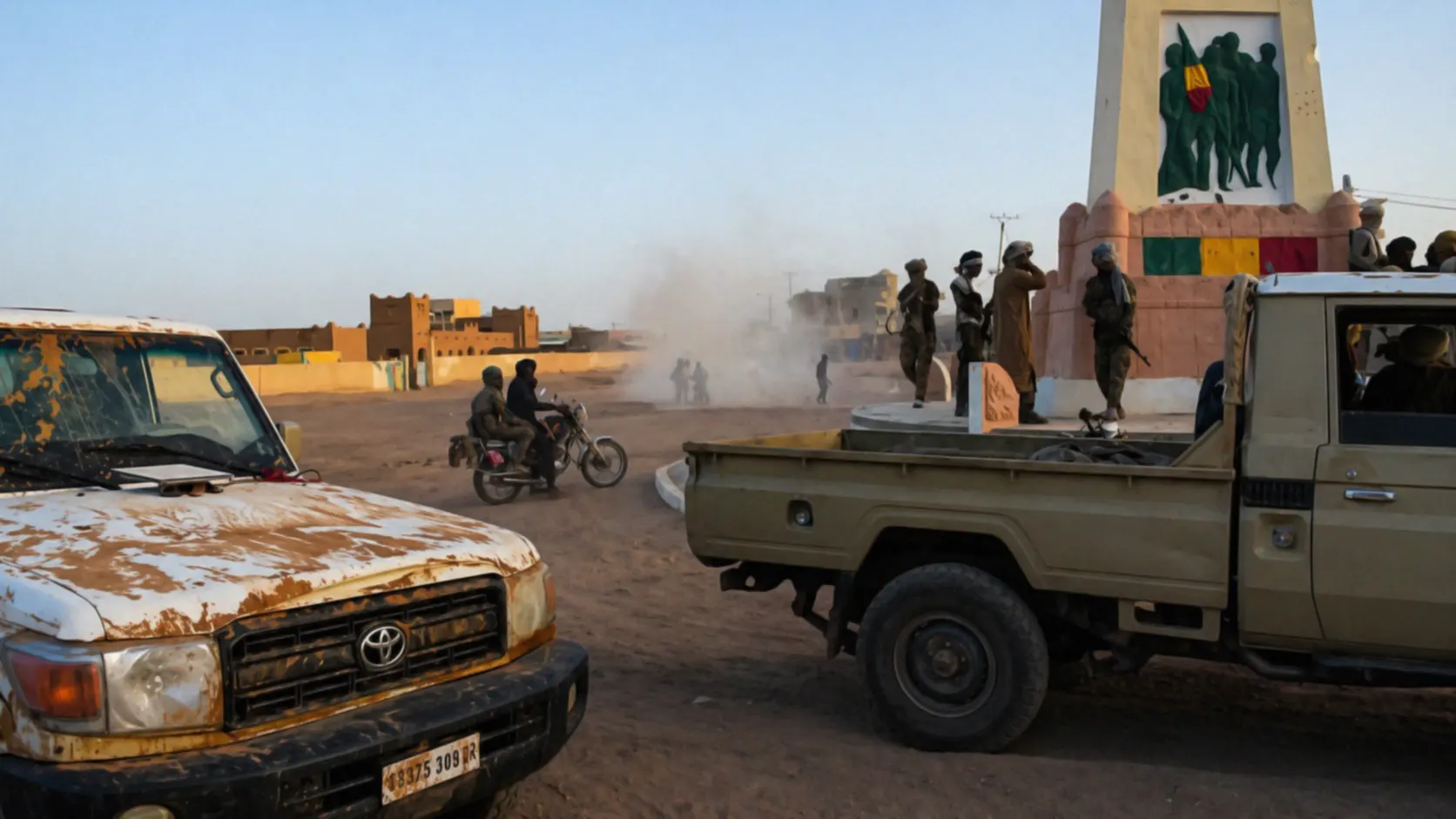
Mali’s northern city of Kidal fell to rebel forces on April 26, 2026, after a coordinated assault by separatists and jihadists, marking a major strategic loss for the government and exposing a dangerous new phase of the conflict.
That moment matters because it signals more than a battlefield defeat. It reveals a rare alliance between rival militant groups, raising the risk that Mali’s long running insurgency could evolve into a broader and more destabilizing regional crisis.
But the real shift becomes clear when looking at how Kidal was taken and what that reveals about the changing nature of the war.
Why the fall of Kidal signals more than a territorial loss
Kidal is not just another northern city. It is the symbolic center of Tuareg separatist ambitions and a long contested stronghold in Mali’s conflict.
Over the weekend, forces from the Azawad Liberation Front (FLA), working alongside the Al-Qaeda linked JNIM, seized the city after overwhelming government defenses. In response, the army confirmed it had withdrawn and “re-positioned” to nearby Anefis, effectively conceding control.
The visual markers of that shift are stark. The Malian flag has been lowered, and authority on the ground now rests with rebel forces.
This is a direct reversal of the junta’s earlier claims. The government had presented its 2023 capture of Kidal as proof that its alliance with Russia could stabilize the north.
That narrative has now collapsed. And that collapse becomes more consequential when placed alongside the broader wave of attacks.
A coordinated offensive that reached from the north to the capital
The fall of Kidal did not happen in isolation. It was part of a nationwide, synchronized offensive that struck multiple regions at once.
In Bamako and nearby Kati, attacks targeted high value sites, including the international airport and military installations. The most significant blow came when a car bomb killed Defense Minister Sadio Camara, one of the junta’s most powerful figures.
At the same time, northern and central hubs such as Gao and Sévaré came under pressure, stretching the military across multiple fronts.
This level of coordination is unusual. It reflects not just planning, but a shared operational strategy between groups that have historically been rivals.
Which leads directly to the most consequential development of all.
A “marriage of convenience” that is reshaping the battlefield
The alliance between the FLA and JNIM is the defining feature of this moment. While their long term goals differ sharply, they are now fighting a common enemy: the Malian state and its Russian allies.
This cooperation is not superficial. It involves tactical coordination on the battlefield, with each group playing a distinct role.
In Kidal, the FLA provided local knowledge and ground forces, while JNIM deployed specialized units and suicide car bombs to break through defenses. Elsewhere, JNIM has focused on high impact strikes in the south, including the attack that killed Camara.
The result is a more effective insurgency. Instead of fragmented attacks, the military now faces a multi front, synchronized campaign.
But this alliance is also fragile. And that fragility introduces a new layer of risk.
Different end goals, shared short term strategy
Despite their cooperation, the two groups are not aligned in vision.
The FLA seeks an independent northern state Azawad with Kidal as its political center. Its objective is territorial separation, not control of the entire country.
JNIM, by contrast, aims to overthrow the entire Malian government and establish a state governed by strict religious law. Its recent attacks on Bamako suggest a strategy focused on weakening central authority.
For now, these goals overlap enough to sustain cooperation. But history offers a warning. Similar alliances in 2012 eventually collapsed into internal conflict.
That raises a critical question: whether this partnership will hold or fracture once immediate objectives are met.
And that uncertainty is compounded by the role of foreign actors.
The Russian withdrawal and the collapse of a key narrative
Foreign involvement has long shaped Mali’s conflict. In recent years, the junta has relied heavily on Russian Africa Corps forces to bolster its military capacity.
But in Kidal, that support faltered. Reports indicate that Russian paramilitaries withdrew under a “safe passage” agreement, rather than holding their position.
This retreat carries symbolic weight. It undermines the junta’s central claim that Russian backing could succeed where earlier international missions failed.
At the same time, it strengthens the rebels’ narrative. By forcing a withdrawal, they have framed themselves as capable of defeating both domestic and foreign forces.
This shift is not just local. It feeds into broader geopolitical dynamics.
A conflict increasingly shaped by external networks and resources
The scale and sophistication of the recent offensive suggest access to significant resources.
JNIM, for example, operates a self sustaining financial network, drawing revenue from gold mining, taxation, and ransom operations. This funding supports advanced weaponry and sustained operations.
Meanwhile, analysts point to signs that the FLA may have received external technical support, particularly in drone usage and tactical coordination.
Weapons and equipment also flow through regional black markets, especially via Libya, turning the Sahel into a corridor for arms and logistics.
Taken together, these factors indicate that Mali’s conflict is no longer purely internal. It is increasingly embedded in a wider system of regional and global influences.
Which brings the focus back to the government and its ability to respond.
A government under pressure, projecting control amid uncertainty
The junta’s response has been a mix of messaging and emergency measures.
Officials have framed the withdrawal from Kidal as a “tactical repositioning”, while imposing curfews in cities like Gao and tightening security in Bamako.
At the same time, information controls have increased. Authorities have warned against sharing unofficial reports, aiming to limit panic and maintain an image of control.
But gaps are visible. The death of Defense Minister Camara represents a major leadership loss, and the continued absence of Colonel Assimi Goïta from public view has raised questions about stability at the top.
In practical terms, the government appears focused on holding the south while regrouping in the north.
And that strategy underscores the scale of the challenge it now faces.
A turning point that could reshape Mali and the wider Sahel
The fall of Kidal has reset the trajectory of Mali’s conflict. What was once a fragmented insurgency is becoming more coordinated, more capable, and more ambitious.
If the alliance between separatists and jihadists holds, the country could face sustained pressure across multiple regions. If it collapses, internal conflict between those groups could create a different but equally volatile scenario.
Either way, the outcome will not stay contained within Mali’s borders. The Sahel remains deeply interconnected, and instability in one state can quickly spread to others.
For now, one fact is clear. A city that once symbolized government control has changed hands again and with it, the balance of the conflict itself.