Ever put on an outfit and feel like it says nothing about you? Like it could belong to anyone, anywhere, generated by some invisible system? That feeling is exactly what 2026 fashion is pushing back against.
Because right now, style isn’t about looking perfect, it’s about looking real.
Why “perfect” suddenly feels… boring
Not long ago, fashion was all about “Quiet Luxury.” Think perfectly fitted basics, neutral tones, and that understated “I have money but won’t show it” vibe.
But something shifted.
In a world where AI can design, scan, and produce flawless clothing in seconds, perfection has become easy and that makes it cheap. So naturally, people started craving the opposite.
That’s where today’s biggest shift comes in: “Visible Labor.”
Clothes that clearly show time, effort, and human touch are now the ultimate flex.
And that shift leads directly to the rise of a bold new silhouette.
The rise of “Anti-Fit” and the power of not fitting in
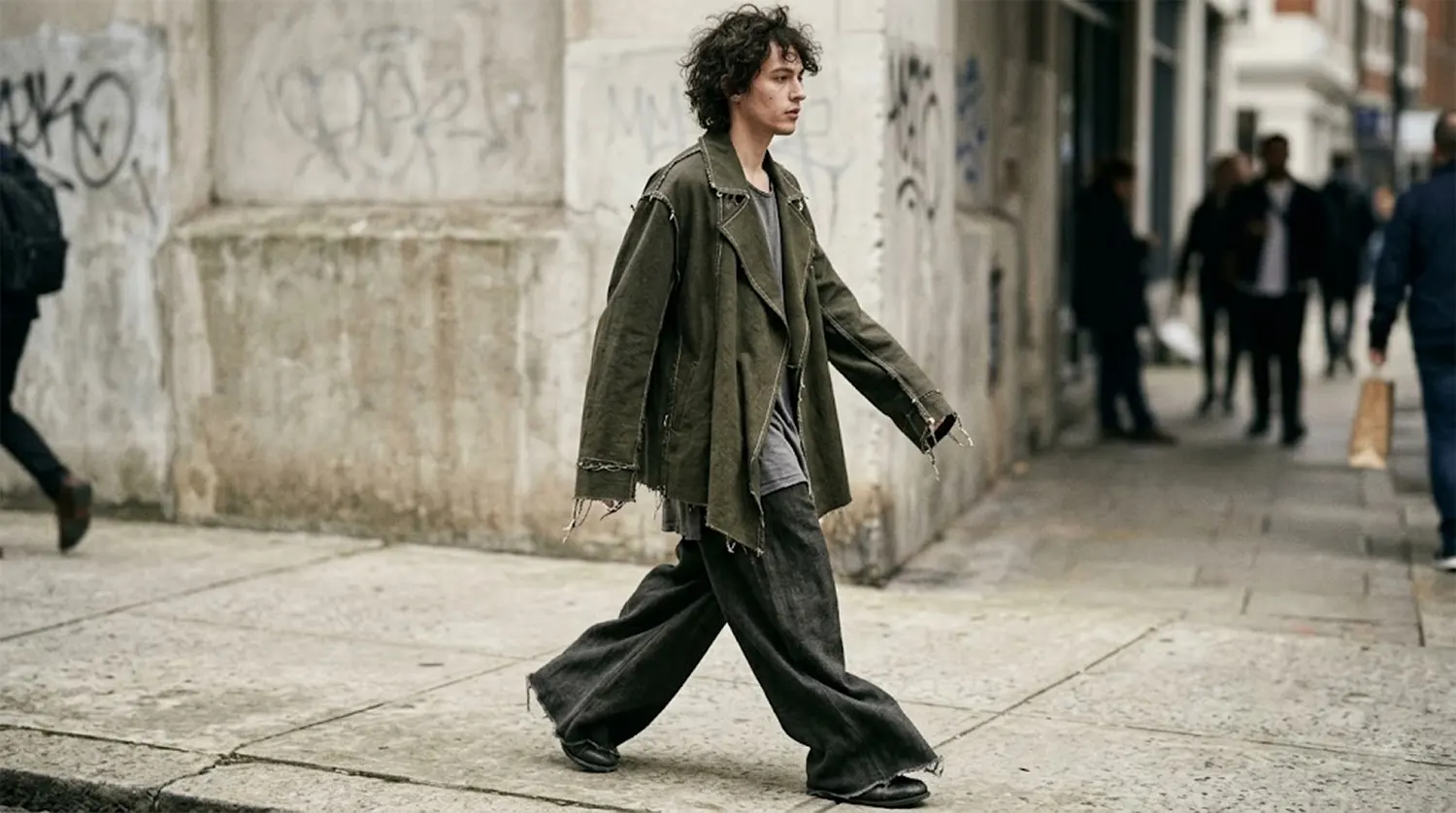
Instead of clothes that hug your body perfectly, 2026 is all about “Anti-Fit.”
We’re talking:
- Oversized shapes
- Asymmetrical cuts
- Pieces that drape, flow, and move
At first glance, it might look “off.” But that’s the point.
Wearing Anti-Fit is like saying:
“I am not a standardized data point.”
And honestly? That feels pretty powerful.
But it’s not just about how it looks, it’s about how it behaves.
Movement over measurements: why silhouette matters now
Here’s something you might not notice right away: perfectly fitted clothes are static. They look good when you stand still but that’s about it.
Anti-Fit pieces, on the other hand, are alive.
Think billowing trousers, jackets that shift as you walk, or hems that “puddle” at your feet. These clothes create movement, drama, and unpredictability.
Even better, they challenge the way systems read us.
Asymmetry and volume disrupt patterns human and algorithmic.
So in a subtle way, your outfit becomes more than style.
It becomes expression, motion, and even a bit of resistance.
And that brings us to the details that really define this trend.
The “glitch” is the whole point
What used to be considered flaws are now front and center.
Designers are intentionally highlighting the “imperfections”:
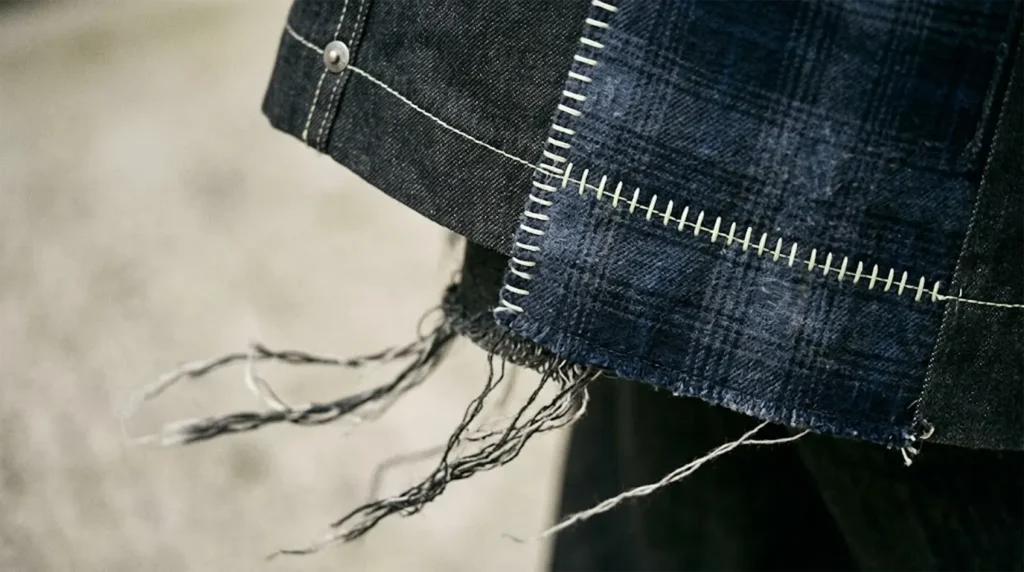
- Raw edges that fray over time
- Contrast stitching that shows every seam
- Upcycled patchwork made from different garments
These aren’t accidents, they’re statements.
If something looks like it came straight out of a machine?
It’s forgettable.
If it looks like someone stayed up until 3 AM making it?
That’s fashion.
And the deeper you look, the more meaningful these details become.
Why raw edges, stitching, and patchwork matter more than ever
Let’s break it down in real life terms.
Raw edges = a living story
That fraying hem? It changes as you wear it. It becomes a record of your life, places you’ve been, moments you’ve lived.
Your clothes grow with you.
Contrast stitching = visible effort
Bright threads on dark fabric highlight every line of construction. It’s like the garment is saying:
“Look at the work that went into me.”
Upcycled patchwork = true individuality
When pieces are made from vintage fabrics, no two are the same.
In a world of duplicates, this gives you something rare:
a true one of one.
And that idea being one of one is where fashion gets really interesting.
The new luxury: not status, but story
Luxury used to mean logos, price tags, and brand recognition.
Now? It’s something completely different.
The real flex in 2026 is having a story.
Maybe it’s a jacket you repaired instead of replacing.
Maybe it’s a piece made from three different vintage shirts.
Maybe it’s something imperfect but uniquely yours.
Because when everything can be copied, generated, or mass-produced,
the only thing that truly stands out is what can’t be replicated.
And yes, people are willing to pay for that.
Why “flawed” is now more valuable than “perfect”
Here’s the surprising part:
People are paying significantly more for clothes that look imperfect.
Why?
Because:
- Machines create perfection instantly
- Humans create variation, effort, and time
So now:
- Perfect = common
- Flawed = rare
That “wonky” seam or uneven cut?
It’s proof that a real person was involved.
And in today’s world, that proof matters.
Fashion as identity and even protection
There’s also a more practical layer to all this.
In cities filled with cameras and tracking systems, Anti-Fit clothing can actually make you harder to read.
Loose shapes, unusual silhouettes, and asymmetry can disrupt how systems track movement or recognize patterns.
So your outfit isn’t just expressive, it’s functional.
It becomes a kind of low-tech privacy shield.
Which makes this trend feel even more relevant.
So what does this mean for you?
You don’t need to overhaul your wardrobe overnight.
But you can start small:
- Try something less structured
- Choose pieces with visible texture or detail
- Embrace items that feel a little “imperfect”
Most importantly, ask yourself:
“Does this feel like me or like something anyone could wear?”
Because that’s what this shift is really about.
The beauty of being unmistakably human
At its core, this trend isn’t just about clothes.
It’s about pushing back against a world that’s becoming more automated, more polished, and more predictable.
It’s about choosing:
- Story over status
- Process over perfection
- Human over machine
And maybe that’s why it resonates so much.
Because in the end, the most stylish thing you can be right now…
is unmistakably, unapologetically human.