Why This Waterway Matters Now
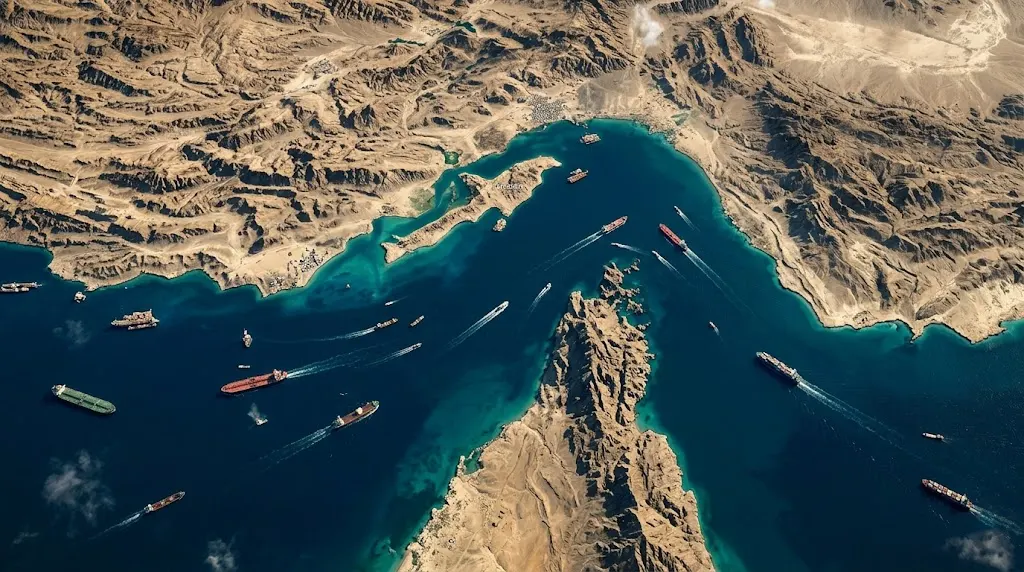
The Strait of Hormuz is one of the most critical chokepoints in the global economy. Nearly 20% of the world’s oil supply passes through this narrow stretch of water.
But as of March 27, 2026, the situation has taken a dramatic turn.
The Strait is now effectively closed for much of the world while remaining selectively open for a few countries. This is not a traditional blockade. Instead, it is something more complex and potentially more disruptive.
The Background: A Lifeline for Global Energy
To understand the current crisis, it is important to grasp the Strait’s role.
The Strait of Hormuz connects the Persian Gulf to global shipping routes, making it essential for oil exports from countries like Saudi Arabia, Iraq, and the UAE.
Under normal conditions, 130 to 150 ships pass through daily.
Because of this, any disruption whether military or political immediately affects energy prices, supply chains, and global markets.
What Just Happened: A “Phantom Blockade” Takes Hold
The current situation is best described as a “de facto” or “phantom” blockade.
There is no formal declaration of closure, but the reality on the water tells a different story.
- Shipping traffic has collapsed from around 150 vessels per day to roughly a dozen
- Major insurers have withdrawn war-risk coverage, making it impossible for most ships to operate
- Iranian forces are actively turning away vessels that do not meet their criteria
In practice, this means the Strait is closed for most of the world without a single official announcement.
As a result, thousands of ships are now stranded, and global trade is slowing.
Iran’s Strategy: Turning a Waterway into a Gatekeeper System
This is where the situation becomes more strategic.
Iran is not blocking all traffic. Instead, it has created a “selective access” system controlled by the Islamic Revolutionary Guard Corps (IRGC).
Think of it as a “members-only” system, where entry depends on political alignment.
The “Friendly” Tier
Countries such as:
- China
- Russia
- India
- Pakistan
- Iraq
are being granted managed passage through a controlled corridor.
Iran has described these nations as “non hostile,” allowing their ships to continue operating albeit under strict coordination.
The “Adversary” Tier
Meanwhile, ships linked to:
- The United States
- Israel
- The United Kingdom
are effectively blocked from entering the Strait.
This creates a two tier global system, one where access to energy depends on geopolitics.
How the System Works: Control Beyond Flags
However, access is not just about a ship’s nationality.
Iran is reportedly vetting cargo, destinations, and ownership structures.
- Even neutral ships must coordinate directly with Iranian authorities
- Some vessels are traveling in “dark mode” (with tracking systems turned off)
- Reports suggest fees or informal arrangements may be required for passage
This level of control transforms the Strait from an open international route into a tightly managed checkpoint.
The Global Impact: Oil, Shipping, and Supply Chains
The consequences are already being felt worldwide.
Oil Prices Surge
With 20% of global oil supply effectively restricted, prices have surged above $110 per barrel.
This is feeding into:
- Higher fuel costs
- Rising inflation
- Economic pressure on importing nations
Shipping Disruptions
Nearly 2,000 vessels are currently stuck inside the Persian Gulf, unable to exit safely.
Major shipping companies have halted operations in the region altogether.
Instead, they are:
- Rerouting around Africa, adding up to two weeks of travel
- Using land bridges via Oman and Saudi Arabia
This is slowing global trade and increasing costs across industries.
A Shift in Global Trade Power
Perhaps the most significant impact is structural.
By allowing select countries through, Iran is reshaping global trade relationships.
- China and Russia are emerging as key intermediaries
- India gains critical energy access during a crisis
- Western economies face higher costs and limited access
In effect, the Strait is becoming a geopolitical tool not just a shipping lane.
The Diplomatic Standoff: A Deadline Approaches
As tensions rise, the situation is approaching a critical point.
U.S. President Donald Trump has issued an ultimatum deadline of April 6, 2026, demanding that the Strait be fully reopened.
If not, he has threatened strikes on Iranian energy infrastructure.
Iran, however, has rejected these demands, insisting:
- The Strait remains open to “non hostile” nations
- Any attack will trigger retaliation against U.S. bases in the region
This creates a dangerous standoff with global consequences.
Why This Matters: A New Kind of Economic Pressure
This crisis is not just about oil, it is about control.
Iran is using the Strait to:
- Break Western led sanctions
- Divide international opposition
- Increase economic leverage
At the same time, the insurance shutdown has created a “phantom blockade” that amplifies the disruption without direct military confrontation.
This is a new model of economic warfare subtle, targeted, and highly effective.
Critical Flashpoints to Watch
Looking forward, several factors will shape the outcome:
- Will the Strait reopen before the April 6 deadline?
- Can neutral countries negotiate safe passage?
- Will military escalation occur if diplomacy fails?
- How long can global markets absorb $110+ oil?
Each of these questions carries significant risks for the global economy.
A Turning Point for Global Trade
The Strait of Hormuz is no longer simply a trade route, it has become a geopolitical weapon.
By controlling who can pass and who cannot, Iran has effectively redrawn the rules of global trade in real time.
For some countries, the flow of energy continues.
For others, it has come to a halt.
And for the world, the consequences are only beginning to unfold.