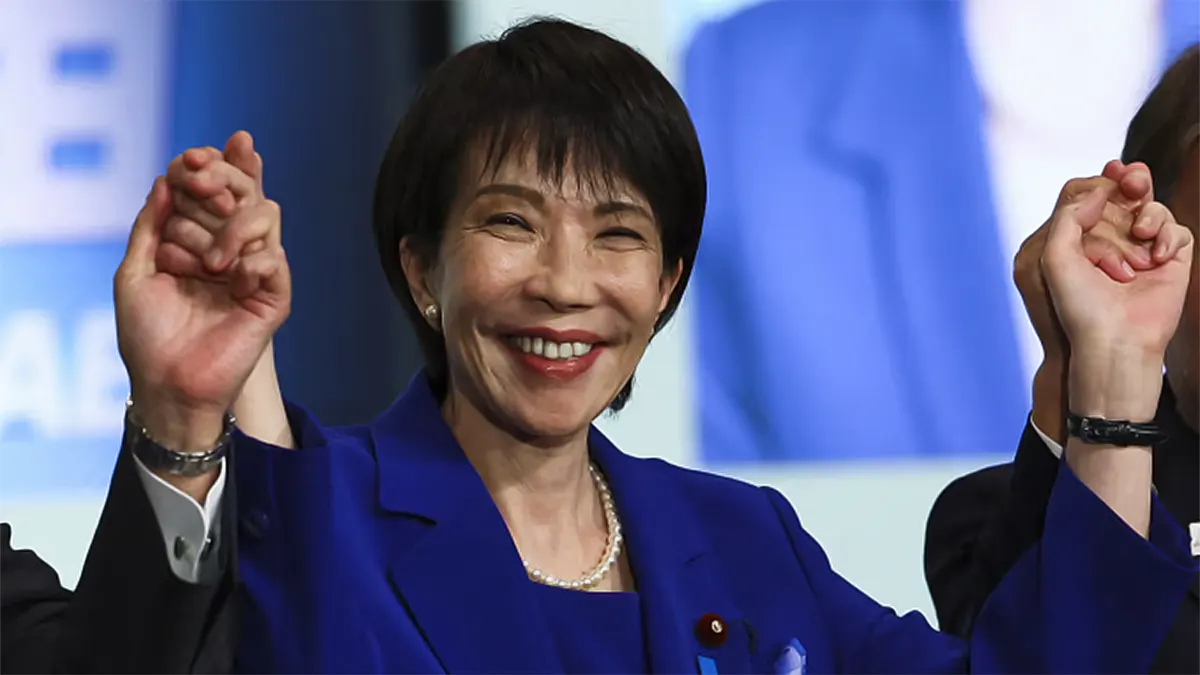
Japan is on the verge of a historic political milestone after Sanae Takaichi won the leadership race of the Liberal Democratic Party (LDP).
The victory places Takaichi in line to become Japan’s first female prime minister, marking a significant moment in a country where national politics has long been dominated by men.
While the result carries enormous symbolic importance, it also raises questions about what her leadership could mean for Japan’s future at a time of economic uncertainty, regional security challenges, and growing calls for political reform.
A Closely Watched Leadership Contest
The LDP leadership race drew national attention as Takaichi faced off against Shinjiro Koizumi, one of the country’s most recognizable younger politicians.
The first round of voting produced a tight result, with Takaichi finishing ahead but falling short of an outright majority. That outcome triggered a runoff between the top two candidates.
In the decisive second round, Takaichi secured stronger support from lawmakers within the Japanese parliament, allowing her to pull ahead and claim the party leadership.
Because the LDP holds significant influence in Japan’s parliament, her victory effectively puts her on track to become the nation’s next prime minister once formal procedures are completed.
Breaking Through a Political Glass Ceiling
Takaichi’s victory represents more than a routine leadership change.
For decades, women have remained underrepresented in Japanese politics, particularly in senior leadership positions. Although progress has been made in recent years, female representation in national government remains lower than in many other developed countries.
That reality makes Takaichi’s rise especially significant.
Her success demonstrates that even one of Japan’s most traditional political institutions is beginning to evolve, opening the door to greater female representation at the highest levels of government.
At the same time, her leadership will likely face heightened scrutiny. As the first woman to reach this position, expectations surrounding her performance and policy decisions are likely to be far greater than those faced by many of her predecessors.
A Politician Shaped by Experience
At 63 years old, Takaichi brings decades of political experience to the role.
She is widely known for her disciplined leadership style, conservative views, and close political ties to the late former Prime Minister Shinzo Abe, who played an important role in her rise within the LDP.
Many supporters view her as a candidate who can provide stability during a period of uncertainty. Her victory suggests that a large portion of the party preferred experience and continuity over a more reform-oriented approach.
That positioning could shape how her administration addresses some of Japan’s most pressing challenges.
Major Challenges Await the Next Government
While making history is one achievement, governing Japan may prove far more difficult.
Takaichi is expected to inherit a lengthy list of challenges that will demand immediate attention.
Reviving Economic Growth
Japan continues to face economic pressures, including inflation, labor shortages, and concerns about wage growth. Maintaining competitiveness while supporting households remains a major priority.
Navigating Regional Security Tensions
The security environment in East Asia has become increasingly complex. Relations with neighboring countries and broader geopolitical developments will require careful diplomatic management.
Restoring Public Trust
Like many long-ruling political parties around the world, the LDP has faced criticism over political scandals and declining voter confidence. Rebuilding trust could become one of the defining tests of her leadership.
Addressing Gender Equality
Whether she intends to prioritize the issue or not, Takaichi’s position will inevitably place a spotlight on women’s representation in Japanese society and politics.
Many observers will be watching to see whether her historic election translates into broader opportunities for women across government and business.
Change or Continuity?
One of the biggest questions surrounding Takaichi’s leadership is whether it will lead to meaningful change.
Although her election represents a breakthrough for gender representation, many of her policy positions align closely with the LDP’s traditional conservative wing.
Supporters argue that continuity provides stability during uncertain times.
Critics contend that symbolic milestones alone are not enough and that meaningful reforms will ultimately determine the significance of her tenure.
The answer may depend on how she balances tradition with the demands of a rapidly changing society.
A Defining Moment for Modern Japan
Takaichi’s victory extends beyond party politics.
It reflects a country that is gradually embracing change while remaining deeply connected to its political traditions. Her leadership will be closely watched both inside Japan and abroad as observers assess what this moment means for the nation’s future.
If confirmed as prime minister, she will enter office carrying both the weight of history and the responsibility of guiding one of the world’s largest economies through a period of significant transformation.
Looking Ahead
Sanae Takaichi’s rise to the top of Japanese politics marks a historic turning point.
Her election signals progress in a country where women have rarely occupied positions of ultimate political authority. Yet the true measure of her legacy will not be the barrier she broke, but the decisions she makes once in power.
As Japan prepares for a new political chapter, the world will be watching to see whether her leadership becomes a symbol of lasting change or a continuation of familiar traditions.