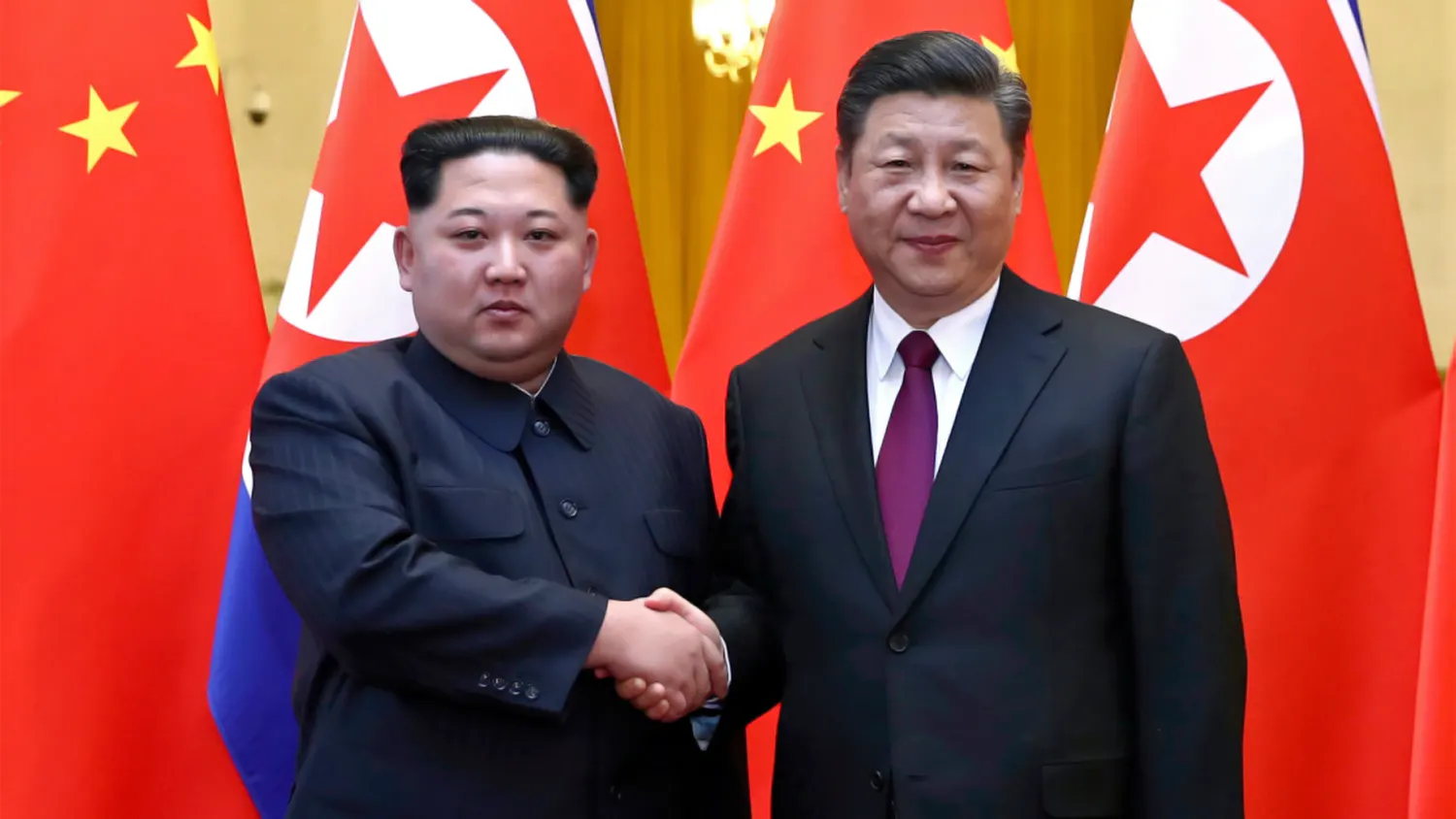
For the first time since 2019, Kim Jong Un stepped onto Chinese soil for a face to face summit with President Xi Jinping in Beijing. The meeting their sixth official encounter since 2018 was brief on public detail but heavy on strategic signal. And in diplomacy, timing is everything.
The summit came just days after both leaders stood alongside Russian President Vladimir Putin at a military parade marking the end of World War II. The optics were deliberate: three leaders, one stage, a shared message to Washington and its allies that a counterweight is being built and it is not hiding.
Kim Pledged “Invariable Support”, Beijing Returned the Favor
North Korean state media reported that Kim used the Beijing meeting to reaffirm Pyongyang’s “invariable support” for China’s sovereignty, territorial integrity, and development interests language that directly mirrors China’s own talking points on Taiwan and the South China Sea.
Kim was quoted saying the traditional friendship between the two nations “remains firm,” and that their resolve to advance the partnership is “unchanged.”
Xi matched the tone. He made clear that China’s commitment to North Korea would not waver regardless of how the international situation evolves, a pointed message at a moment when Western pressure on both Beijing and Pyongyang is at a post-Cold War high.
“No matter how the international and regional situation changes,” Xi stated, “the position of the Chinese party and government to develop friendly and cooperative relations with North Korea will remain unchanged.”
Why Kim Is Reaching Back Toward Beijing Right Now
The backdrop to this summit matters enormously. Over the past two years, North Korea and Russia have grown significantly closer with Pyongyang reportedly supplying munitions and military technology to Moscow for use in Ukraine, drawing sharp condemnation from the United States, South Korea, and European nations.
That deepening Pyongyang-Moscow axis appears to be precisely why Kim is now recalibrating toward Beijing. China remains North Korea’s largest trading partner and its most essential political lifeline. By reaffirming loyalty to Xi, Kim is effectively hedging his bets ensuring he does not become too dependent on Russia while keeping China’s economic support and diplomatic cover intact.
It is a calculated move by a leader who has survived and maneuvered through some of the most intense international pressure any country has faced in recent decades.
What This Means for the Region and for the West
The Beijing summit is not happening in a vacuum. The United States has spent the past several years reinforcing its alliances across the Indo-Pacific deepening security ties with South Korea and Japan, expanding AUKUS, and building multilateral frameworks designed in large part to counter Chinese and North Korean influence.
The Xi–Kim reaffirmation pushes directly against that strategy. A tighter China–North Korea axis complicates any Western effort to isolate Pyongyang through sanctions or diplomatic pressure, since Beijing holds the keys to the economic support that keeps the North Korean state functioning.
It also adds another layer of complexity to already tense flashpoints Taiwan, the South China Sea, the Korean Peninsula where Chinese and American interests are on a collision course and every alliance shift carries outsized consequences.
An Old Partnership, Repurposed for a New World Order
What makes this summit significant is not that China and North Korea are allies they have been for over seven decades. What is significant is how deliberately both sides are leaning into that alliance at this particular moment in history.
As the United States and its partners work to construct one vision of the global order, Beijing and Pyongyang with Moscow increasingly in the orbit are constructing another. The Beijing summit is a data point in that larger story: historical alliances are not relics. In the right conditions, they become the architecture of what comes next.
For North Korea, staying close to China means economic survival and a seat at the table in any future negotiations. For China, keeping North Korea close means a loyal buffer on its northeastern border and a partner willing to mirror its positions on sovereignty and Western interference.
Neither side is doing the other a favor. They are doing themselves one and the rest of the world is watching closely to figure out what it means.