The United States has carried out a second military strike against a vessel allegedly connected to Venezuelan drug traffickers, escalating tensions between Washington and Caracas.
The operation, announced by Donald Trump, reportedly took place in international waters and resulted in the deaths of three people. The strike has quickly triggered international debate over military authority, international law, and the growing risks of conflict in the Caribbean region.
As details continue to emerge, the incident is becoming another flashpoint in the already strained relationship between the United States and Venezuela.
Trump Shares Footage of the Strike
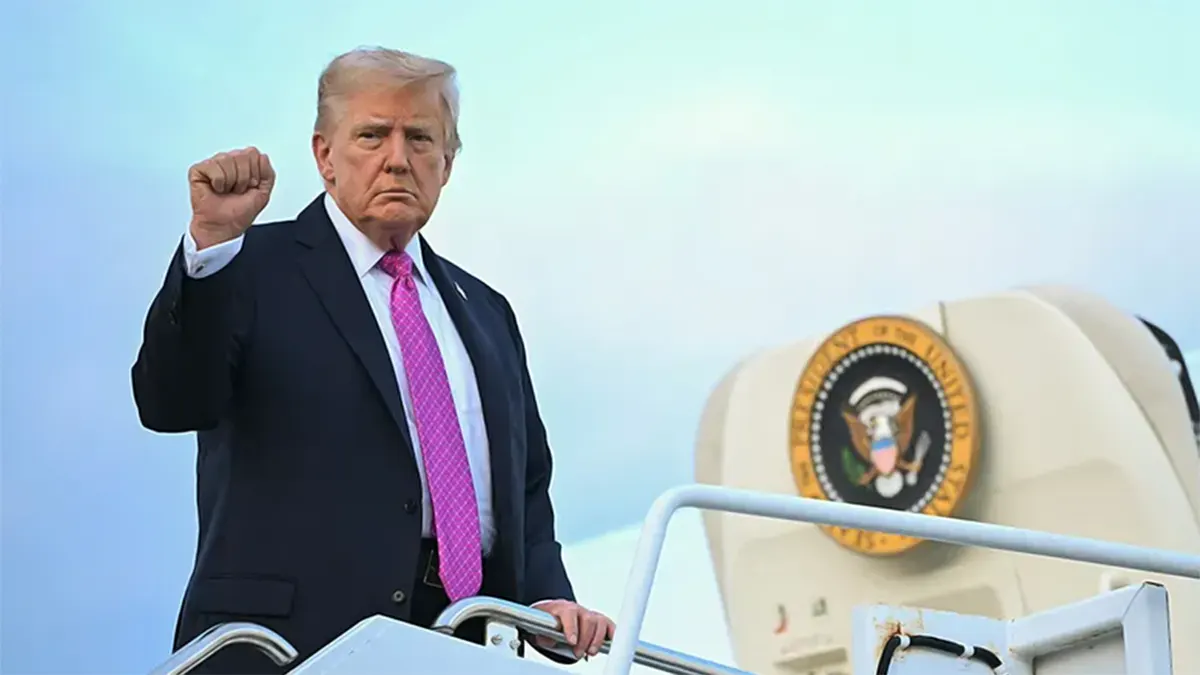
President Trump revealed the operation through a post on Truth Social, where he shared video footage appearing to show a small boat exploding after a missile strike.
According to Trump, the vessel was linked to “violent narcoterrorist networks” operating between Venezuela and the Caribbean.
In his statement, Trump defended the action as part of an aggressive anti-drug strategy aimed at stopping narcotics before they reach American territory.
The latest strike comes only weeks after another deadly operation on September 2, where 11 people were killed aboard a separate vessel allegedly connected to Tren de Aragua, one of the most feared criminal groups in Latin America.
U.S. officials claim the gang is involved in drug smuggling, weapons trafficking, and human trafficking across multiple countries.
Venezuela Calls the Strike an “Act of War”
The Venezuelan government reacted angrily to the attack.
President Nicolás Maduro condemned the strike as an “act of war” and accused the United States of carrying out an extrajudicial execution.
Speaking from Caracas, Maduro denied that the victims were connected to drug cartels and argued that the operation was politically motivated.
According to Venezuelan officials, the strike represents another example of what they describe as American interference in the country’s affairs.
In response, Venezuela has reportedly increased naval patrols along its northern coastline and launched military exercises aimed at preparing for possible future confrontations.
The situation has further deepened the diplomatic divide between the two countries, which have had severely strained relations since official ties broke down in 2019.
Legal Questions Begin to Grow
The strike has also sparked intense legal debate among international law experts and policymakers.
Under international law, military action in international waters is generally limited to cases involving self-defense or authorization from the United Nations Security Council. Critics argue that targeting suspected drug traffickers may not legally justify the use of deadly military force.
Legal scholars have raised concerns about due process, transparency, and executive power.
Some experts note that the U.S. government has not publicly released evidence confirming the presence of drugs or weapons aboard the targeted vessel. Officials say the intelligence remains classified, but critics argue that secrecy alone cannot justify military action.
The debate is now expanding beyond the immediate strike and into broader questions about how far governments can go in combating transnational crime.
Divided Reactions Inside the United States
The operation has also divided political opinion in Washington.
Some lawmakers support the administration’s aggressive approach, arguing that international criminal organizations pose a major threat to American security.
Others warn that the strikes blur the line between military warfare and traditional law enforcement.
Several members of Congress have questioned whether the president has the authority to launch military operations without direct congressional approval, especially in situations not involving a declared war.
Meanwhile, civil liberties groups and human rights organizations are demanding greater transparency from the Pentagon and calling for independent investigations into the attacks.
The growing controversy highlights the broader political divide over how the United States should respond to global criminal networks.
Caribbean Region Faces Rising Uncertainty
Security analysts warn that the repeated strikes could destabilize an already fragile region.
The United States has recently expanded its military presence in the Caribbean, deploying additional warships and surveillance aircraft as part of a larger anti-narcotics mission.
Venezuelan officials claim these operations are being used as cover for broader geopolitical pressure and possible regime change efforts.
At the same time, the growing influence of Tren de Aragua continues to alarm governments across South America and the Caribbean. Authorities in countries such as Colombia, Brazil, and Trinidad and Tobago have all reported increasing activity linked to the gang.
This has created a complicated security environment where organized crime, regional politics, and international military actions are becoming increasingly interconnected.
Fear of a Shadow Conflict
With two military strikes carried out within a single month, some observers fear the United States and Venezuela may be moving toward a prolonged shadow conflict.
Unlike traditional wars, this type of confrontation could involve targeted strikes, intelligence operations, maritime patrols, and covert missions rather than direct military invasions.
President Trump has already suggested that additional operations remain possible, signaling that the administration may continue using military force against suspected trafficking networks.
For now, uncertainty continues to grow over how Venezuela might respond and whether international organizations or U.S. courts could challenge the legality of future operations.
A Risky Turning Point in the War on Drugs
The latest strike represents a major shift in how the United States is approaching the fight against international drug trafficking.
For decades, anti-drug efforts largely focused on law enforcement cooperation, intelligence sharing, and sanctions. The use of direct military force against suspected traffickers in international waters marks a far more aggressive strategy.
Supporters argue the approach sends a strong message to criminal organizations. Critics, however, warn that it could set a dangerous precedent with serious legal and geopolitical consequences.
As tensions rise between Washington and Caracas, the world is watching closely to see whether this strategy will deter organized crime or push the region into even greater instability.