The Caribbean doesn’t usually make front-page military headlines. But right now, it’s sitting at the center of one of the most volatile standoffs between the United States and Venezuela in years and the situation is escalating fast.
The Airstrike That Started It All
It began with a strike that Washington called a success and much of the world called a warning sign.
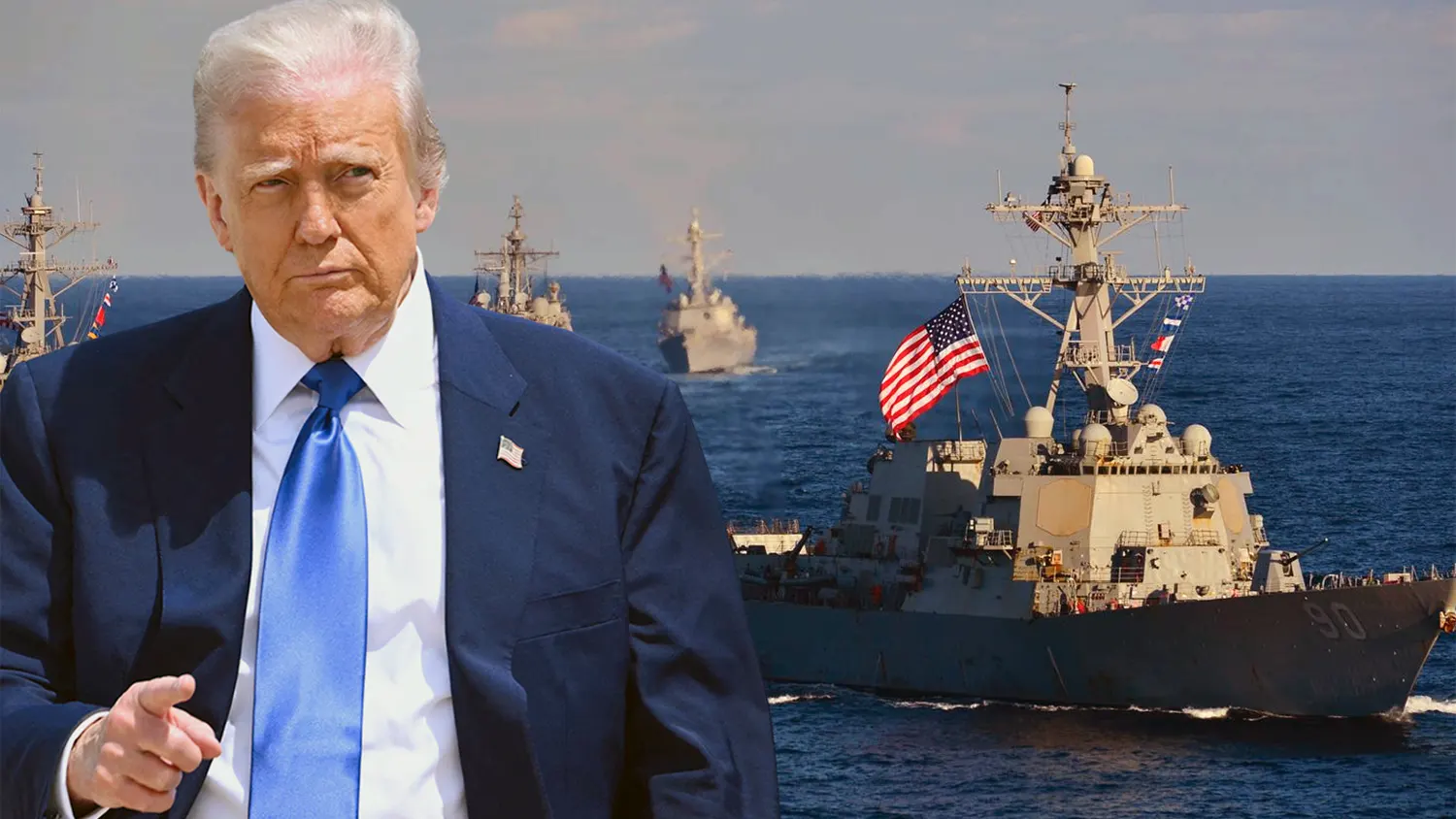
A US military operation in the Caribbean Sea targeted a vessel allegedly linked to Tren de Aragua, a Venezuelan criminal organization with a long rap sheet involving drug and weapons trafficking. President Donald Trump announced that 11 people were killed in the strike, describing them all as “narcoterrorists.”
US defense officials framed it as part of a counter-narcotics campaign. But here’s where things get complicated: no independently verified evidence has been released to confirm who was on that vessel, where it came from, or whether those killed were actually who the US said they were.
Legal experts and human rights groups weren’t quiet about it. They’ve called on Washington to be more transparent, with several warning that conducting lethal strikes in international waters against non-state actors could run afoul of international law and maritime conventions setting a precedent that even US allies might find uncomfortable.
Seven Warships and F-35s in Puerto Rico
Rather than pulling back after the controversy, the Pentagon doubled down.
A carrier strike group of at least seven warships was deployed to the Southern Caribbean, backed by thousands of military personnel. At the same time, ten F-35 stealth fighters were moved to Roosevelt Roads Airfield in Puerto Rico described as one of the largest aerial deployments to the island since the Cold War.
Secretary of State Marco Rubio and Defense Secretary Pete Hegseth made clear this wasn’t a one-off. Both publicly stated that operations like this “will happen again,” with Hegseth going as far as declaring that any designated narco-terrorist in regional waters would be considered a “legitimate target.”
For analysts watching the region, the message was hard to miss: the Caribbean is quietly becoming a testing ground for a new kind of US military posture, one where counter-narcotics, counter-terrorism, and conventional deterrence are increasingly hard to separate.
Venezuela’s Answer: Fighter Jets at Close Range
Caracas didn’t stay silent.
In an incident the Pentagon labeled “highly provocative,” two Venezuelan military aircraft believed to be F-16s, ironically of US origin flew dangerously close to the USS Jason Dunham, a US Navy destroyer operating in international waters. No shots were fired. No one was hurt. But that’s almost beside the point.
Close-range military encounters like this are exactly how accidents happen. Defense analysts are clear on this: when aircraft from two adversarial nations get that close, the margin for miscalculation shrinks dramatically.
It’s also worth noting that Venezuela’s military didn’t get to this point alone. Over the years, strategic partnerships with Russia, Iran, and China have helped the Maduro government modernize its armed forces financially and in terms of actual weapons systems.
Maduro Puts the Country on War Footing
President Nicolás Maduro followed the aerial incident with a broader move: a full national military mobilization, placing Venezuela’s armed forces on high alert and calling for mass enlistment in the Bolivarian Militia, a civilian force that now reportedly claims over 4 million members.
In a televised address, Maduro said Venezuela would “immediately enter a period of armed struggle” if attacked, accusing the US of using counter-narcotics as a cover story for a regime change operation.
Regional observers read this on two levels. Yes, it’s a defensive posture. But it’s also a domestic political play rallying nationalist sentiment in a country already buckling under hyperinflation, economic sanctions, and a healthcare system in freefall. When a government is under that kind of internal pressure, an external threat can be a useful unifier.
The Legal Question Washington Hasn’t Answered
Beyond the military maneuvering, there’s a question that keeps surfacing in legal and diplomatic circles: was the airstrike actually legal?
The US argues it has the authority to act against Foreign Terrorist Organizations that threaten its national security. But international law experts say that designation alone doesn’t grant a blank check for lethal force especially outside an active armed conflict zone.
“The designation of a group as a terrorist entity doesn’t give blanket authority to use lethal force outside an armed conflict,” said Dr. Carla Mendes, a professor of international law at Georgetown University. “This could set a dangerous precedent for unilateral military actions under vague justifications.”
Even US-friendly governments in Latin America including Colombia and Brazil have been careful in how they’ve responded, leaning toward calls for dialogue rather than endorsements of the strike.
Who Else Is Watching and Why That Matters
This isn’t just a US-Venezuela story anymore.
Intelligence reports suggest Iranian and Russian advisors have been spotted near Venezuelan military facilities. China’s economic footprint in the country continues to grow. And Venezuela, sitting on the world’s largest proven oil reserves, is a prize that no major power is ignoring.
Former CIA analyst Michael Crowder put it bluntly: “Combine that with increasing Chinese influence and Russian presence, and you’ve got a geopolitical powder keg.”
The concern isn’t necessarily that the US and Venezuela go to war directly. It’s that the conflict becomes a proxy battleground similar to what’s played out in Syria or Ukraine where outside powers pour in resources and the local population pays the heaviest price.
Maduro Talks Tough, But Leaves the Door Open
For all the military theater, Maduro has been careful not to fully slam the door on diplomacy. He’s repeatedly expressed “respect” for Trump and called for bilateral talks, signaling that he’d rather negotiate than escalate at least publicly.
Washington, for its part, isn’t buying it. Many US policymakers view these peace overtures as a stalling tactic, a way for Maduro to buy time while strengthening alliances and tightening his grip at home.
It’s a pattern that’s played out before across Latin America, US pressure through sanctions and military signaling, a government that holds on anyway, and a population left worse off in the long run regardless of how it ends.
What Each Side Stands to Lose
The stakes are different depending on where you sit.
For the United States, this is about maintaining regional dominance, keeping maritime trade routes secure, and pushing back against the growing influence of Russia, China, and Iran in the Western Hemisphere.
For Venezuela, it’s simpler and more desperate: regime survival, national sovereignty, and holding the country together while the economy crumbles.
For the rest of Latin America, the fear is collateral damage, a potential refugee surge, economic shockwaves, and being forced to pick sides in a fight that isn’t theirs.
For the broader international community, the concern is what this signals about how the US defines its right to use military force and what that means for every other country in a contested region.
The Caribbean Can’t Afford to Be an Afterthought
For too long, the Caribbean has been treated as a geopolitical footnote. That’s changing not by choice, but by circumstance.
Both Washington and Caracas are now locked in a cycle of action and reaction, each move raising the temperature a little more. Whether this ends in a negotiated stand down, a prolonged cold standoff, or something far worse depends on decisions being made right now, in military briefing rooms, diplomatic back-channels, and the offices of presidents who may not fully grasp how quickly things can spiral.
The window for a quiet resolution is still open. But it’s closing.