It was supposed to be a commemorative gathering. It ended in body parts and bloodshed.
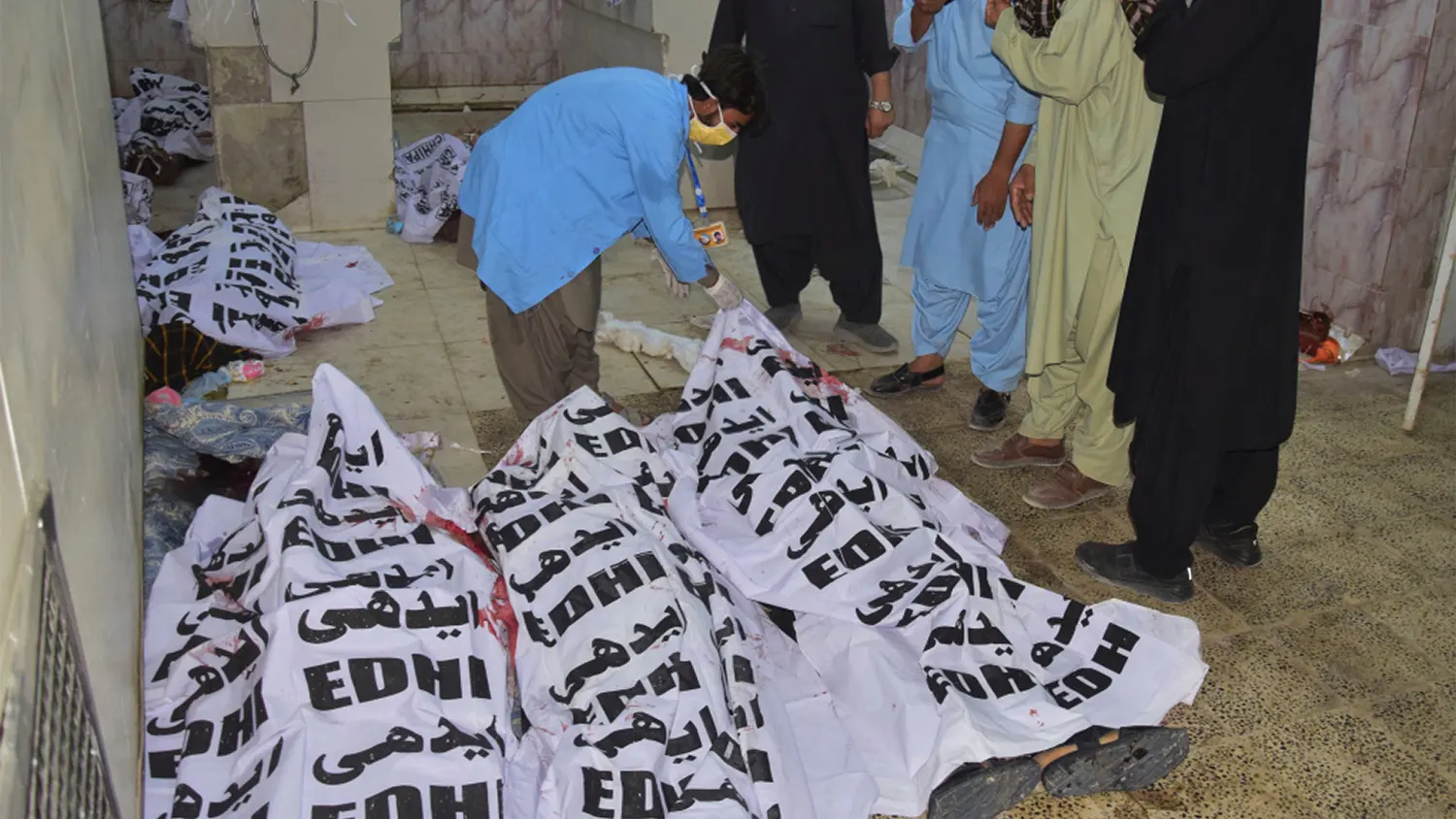
On Tuesday evening, a suicide bomber struck a crowd of supporters leaving a political rally on the outskirts of Quetta, the capital of Pakistan’s Balochistan province killing at least 13 people and wounding 30 more, some in critical condition. The attack targeted followers of the Balochistan National Party (BNP), who had gathered at a stadium to mark the death anniversary of revered nationalist leader Sardar Ataullah Mengal.
His son and current BNP chief, Akhtar Mengal, escaped unharmed. His supporters were not so fortunate. Local police chief Majeed Qaisrani confirmed that the attacker’s remains were found at the scene. Hospital officials received 13 bodies. The chaos left behind was immediate the message, deliberate.
Why a Peaceful Political Rally Became a Target
The BNP isn’t a militant organization. That’s precisely what makes this attack so significant.
Akhtar Mengal and the BNP represent the political path pushing for Baloch rights through parliament and constitutional channels rather than armed resistance. Their rallies are expressions of peaceful political identity in a province where simply being Baloch and speaking up has long carried risk.
By striking this gathering, whoever carried out the attack sent an unmistakable message: that even the non-violent path isn’t safe. That political expression itself is now a target.
Balochistan has been wrestling with a low-level insurgency for decades, driven by deep frustration over what residents and nationalist groups describe as the systematic exploitation of the province’s enormous natural wealth its minerals, its gas, its land with little benefit flowing back to the people who live there. Armed groups like the Balochistan Liberation Army (BLA) have waged campaigns for greater autonomy and a fairer share of those resources. The bombing fits into that broader campaign of terror, even as no group has immediately claimed responsibility.
This Wasn’t the Only Attack That Day
The Quetta bombing didn’t happen in isolation and that’s what’s making security analysts particularly alarmed.
On the very same day, at least six Pakistani soldiers were killed in a separate militant assault in Khyber Pakhtunkhwa, the troubled province bordering Afghanistan. Two major attacks, two provinces, one day. For analysts tracking the pattern, it points to something more organized than opportunistic violence.
2024 was already one of the deadliest years for Pakistan in over a decade, with casualties rising sharply among both civilians and security personnel. The attacks in Balochistan and Khyber Pakhtunkhwa suggest that multiple armed groups are operating with increasing confidence and coordination.
Pakistan’s Interior Minister was quick to blame “India-backed terrorists” following the Quetta attack, an allegation New Delhi flatly denied. It’s a familiar cycle blame, denial, and little accountability that tends to obscure the far more complicated internal dynamics actually driving the conflict.
The Billion-Dollar Project Caught in the Crossfire
There’s a reason the world pays attention when Balochistan burns and it’s not just humanitarian.
The province sits at the heart of the China-Pakistan Economic Corridor (CPEC), a multi-billion-dollar infrastructure project and one of the flagship investments of China’s Belt and Road Initiative. At its center is the development of Gwadar Port, a strategically vital deep-sea port that China has invested heavily in.
But many Baloch residents see CPEC not as development, but as another chapter in the same story of outside exploitation. The jobs, the profits, the decisions they believe these will flow to Islamabad, Beijing, and foreign contractors, while local communities remain sidelined.
That resentment has made CPEC projects and Chinese workers prime targets for militant groups. Every attack in the province sends a signal that stretches far beyond Pakistan’s borders to Beijing, to global investors, and to the governments watching the region’s stability with growing unease.
Why Bombs Alone Won’t Solve This
Pakistan’s security forces have pursued military solutions in Balochistan for years. Insurgents have been killed, operations launched, and crackdowns carried out. The bombings keep coming.
That cycle points to an uncomfortable truth that analysts and even some officials quietly acknowledge: you cannot bomb your way out of a political problem. The grievances feeding the insurgency economic exclusion, political alienation, the sense that Balochistan’s wealth is being taken while its people are left behind haven’t been addressed in any meaningful way.
Until they are, the province will remain a place where a crowd gathered to honor a nationalist leader can become a killing ground in seconds.
The government’s challenge isn’t just to find who planted the bomb. It’s to give the people of Balochistan a reason to believe the political path, the peaceful path is actually worth walking.
Right now, Tuesday’s attack suggests someone is determined to prove it isn’t.