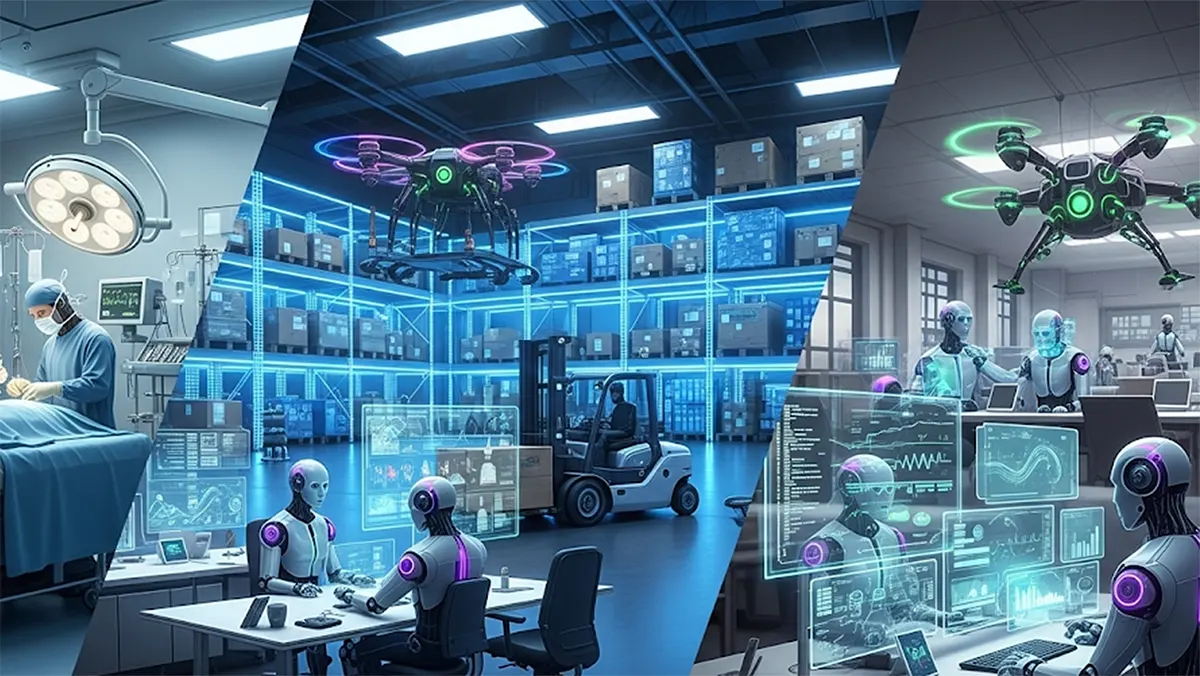
Artificial intelligence is entering a new phase.
For the past few years, most AI systems have worked like assistants: users type a prompt, the AI responds, and the interaction ends there. But a new category known as agentic AI is changing that model entirely.
Instead of simply reacting to instructions, agentic AI systems can plan tasks, make decisions, use digital tools, and continue working with minimal human supervision.
That shift is why many technology analysts now see agentic AI as one of the most important trends shaping 2025.
What Makes Agentic AI Different?
Traditional AI systems are mostly reactive. They answer questions, generate text, or complete one task at a time.
Agentic AI works differently.
These systems operate in an ongoing cycle that includes:
- perception
- reasoning
- action
- adaptation
In simple terms, agentic AI can gather information, decide what steps to take, execute tasks, learn from results, and continue improving its approach without needing constant user input.
For example, an AI agent could:
- monitor inventory levels
- analyze shipping delays
- reroute deliveries automatically
- notify managers only if problems escalate
Instead of acting like a chatbot, it behaves more like a digital co-worker.
How AI Agents Actually Work
Most agentic AI systems combine large language models with memory systems, APIs, and software tools.
The process usually works like this:
Gathering Information in Real Time
The AI first collects data from sources such as:
- databases
- apps
- cloud platforms
- sensors
- websites
- APIs
This allows the system to understand what is happening before making decisions.
Breaking Goals Into Smaller Tasks
Once the AI understands the goal, the language model breaks the problem into smaller actions.
For instance, if asked to organize a project timeline, the AI might:
- review deadlines
- assign priorities
- create schedules
- send updates
- monitor progress automatically
Taking Action Without Constant Supervision
Unlike traditional AI tools, agentic systems can execute tasks independently using connected software tools.
That may include:
- writing code
- updating spreadsheets
- sending emails
- managing workflows
- generating reports
Learning and Adjusting
Perhaps the biggest difference is memory.
Agentic AI systems can remember past actions and outcomes, helping them improve over time instead of starting from scratch during every interaction.
Why Tech Companies Are Investing Heavily
The rise of agentic AI has accelerated quickly thanks to projects like Auto-GPT and BabyAGI, which demonstrated how AI could complete multi-step goals with limited oversight.
Technology companies are now turning those ideas into commercial products.
For example, Replit introduced Agent 3, a system capable of generating, testing, and fixing software code with far greater autonomy than traditional coding assistants.
Industry analysts believe this type of workflow automation could transform multiple sectors over the next few years.
Industries Likely to See the Biggest Impact
While agentic AI is still evolving, several industries are already seeing practical use cases emerge.
Software Development
AI coding agents can now:
- generate code
- run tests
- detect bugs
- suggest fixes
- create pull requests automatically
This could significantly reduce repetitive development work.
Logistics and Supply Chains
Shipping and logistics companies are experimenting with AI agents that monitor:
- traffic conditions
- weather disruptions
- warehouse inventory
- delivery routes
The goal is to improve efficiency and reduce delays in real time.
Customer Service
Companies are increasingly deploying AI agents to:
- sort support tickets
- answer common questions
- resolve routine problems
- escalate complex issues to human staff
This allows support teams to focus on higher-level cases.
Healthcare Operations
Healthcare providers are also exploring AI agents for administrative tasks such as:
- appointment scheduling
- patient monitoring
- wearable device tracking
- automated alerts for medical staff
The technology could help reduce operational pressure in overloaded healthcare systems.
The Risks Behind Autonomous AI
Despite the excitement, experts warn that agentic AI introduces serious technical and security challenges.
Unlike simple chatbots, autonomous systems can interact with real software, databases, and infrastructure. That increases both their usefulness and their risk.
Some of the biggest concerns include:
- inaccurate decisions
- hallucinated information
- excessive automation
- unauthorized system access
- cybersecurity vulnerabilities
Researchers also warn about prompt injection attacks, where malicious instructions could manipulate an AI agent into performing harmful actions.
Because these systems can store memory and access external tools, mistakes may spread much further than with traditional AI chatbots.
Why Human Oversight Still Matters
Most companies are approaching agentic AI carefully rather than giving systems full autonomy immediately.
Experts recommend several safeguards:
- limiting system permissions
- requiring human approval for sensitive actions
- monitoring all AI activity
- creating rollback systems
- testing agents in low-risk environments first
Organizations are increasingly treating AI agents more like enterprise software systems than simple productivity tools.
That means governance, auditing, and security controls are becoming just as important as the AI models themselves.
AI Is Becoming More Like a Digital Teammate
One of the biggest shifts happening with agentic AI is the changing relationship between humans and software.
Instead of simply assisting workers, AI agents may begin handling entire workflows independently while humans focus on strategy, oversight, and decision-making.
This does not necessarily mean replacing workers entirely. In many cases, it means automating repetitive operational tasks so people can concentrate on higher-level responsibilities.
As businesses continue experimenting with AI agents, the distinction between “tool” and “co-worker” may become increasingly blurred.
The Future of Agentic AI
Agentic AI is still in its early stages, but momentum is growing quickly.
The technology is already showing promise in software development, logistics, healthcare, and customer support. At the same time, companies are learning that autonomous systems require strong safeguards, careful testing, and clear governance.
The organizations that succeed with agentic AI will likely be the ones that balance innovation with control.
Rather than rushing toward fully autonomous systems, many experts believe the smartest path forward is gradual adoption paired with strong oversight.
In 2025, agentic AI may no longer be just a futuristic idea. It is becoming a real part of how businesses operate.