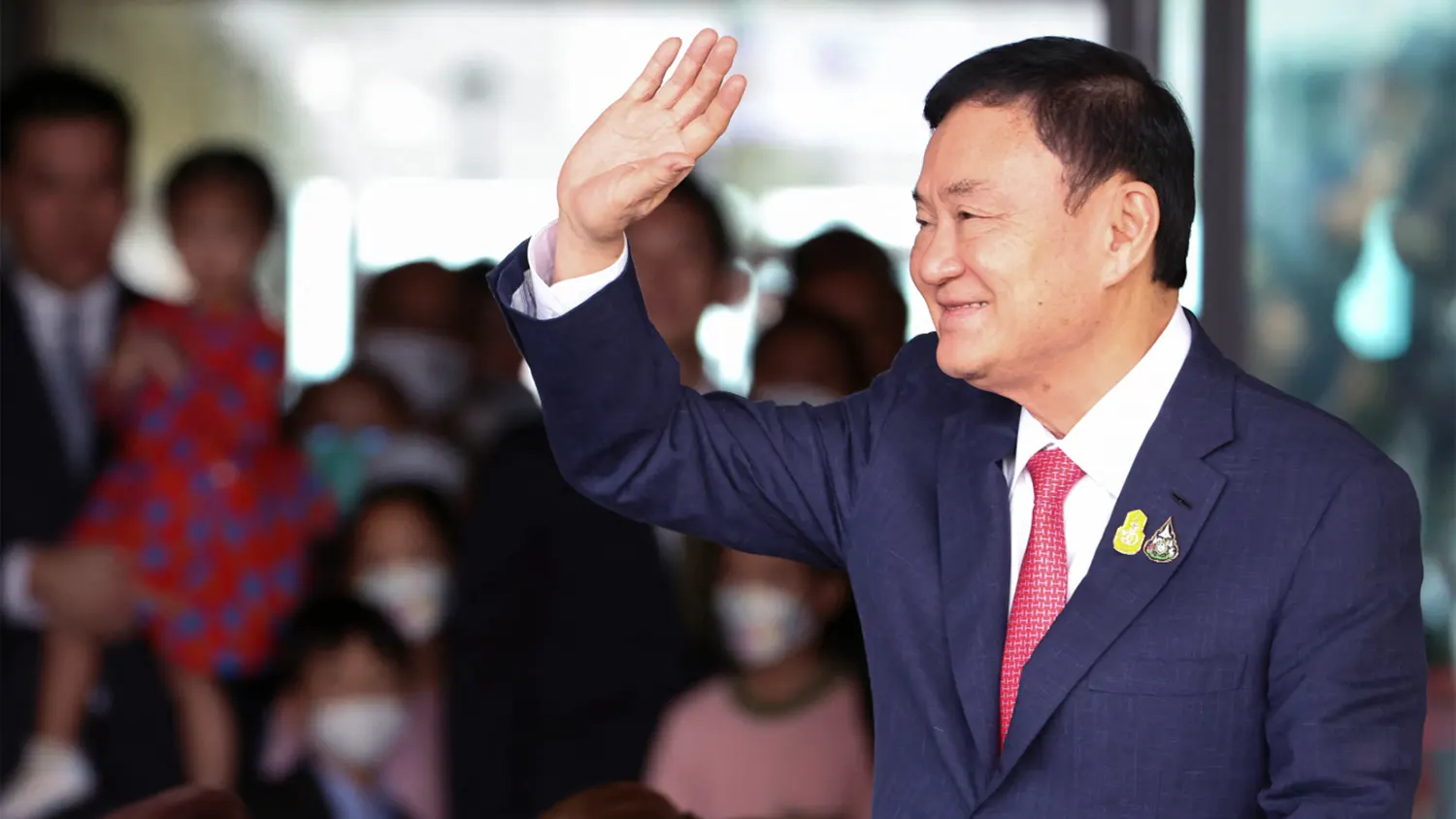
Former Thai Prime Minister Thaksin Shinawatra has been ordered to serve a full one-year prison sentence after Thailand’s Supreme Court ruled that his months long stay in a private hospital could not legally count as jail time.
The landmark ruling has reignited political tensions across Thailand and dealt a major blow to the powerful Shinawatra political dynasty, which has dominated the country’s politics for more than two decades.
Supreme Court Rejects Hospital Stay as Jail Time
Thailand’s Supreme Court issued the ruling on September 9, 2025, stating that Thaksin’s six-month stay in a police hospital was an improper attempt to avoid imprisonment.
The court concluded that his medical condition was not serious enough to justify remaining outside prison and said the transfer process violated proper legal procedures.
In its decision, the court stated that Thaksin “knew his sickness was not an urgent matter,” adding that staying in a hospital could not be treated as serving a prison sentence.
The verdict effectively forces the former leader back behind bars and closes one of Thailand’s most controversial legal chapters in recent years.
A Return Home That Sparked Suspicion
Thaksin’s dramatic return to Thailand in August 2023 ended 15 years of self-imposed exile. Upon landing in Bangkok, he was immediately taken into custody to begin serving an eight-year sentence linked to corruption and abuse of power convictions.
However, the situation quickly raised eyebrows.
Only hours after entering prison, authorities transferred him to a police hospital, citing health concerns. Critics immediately questioned why one of the country’s most influential political figures appeared to receive special treatment unavailable to ordinary prisoners.
During his stay, Thaksin remained in a VIP section of the hospital for six months. His original sentence was later reduced from eight years to one year through a royal pardon.
By February 2024, he was released on parole without spending a single night in a standard prison cell.
That sequence of events fueled public suspicion that a political backroom deal had been arranged to protect the billionaire politician.
Political Alliances Raised More Questions
Public skepticism intensified because Thaksin’s return happened at the same time his party, Pheu Thai Party, returned to power through a surprising coalition with military backed parties that had long opposed him.
For years, Thaksin’s supporters battled against conservative royalist and military groups. The sudden alliance shocked many voters who viewed it as a betrayal of the movement’s original ideals.
Opponents argued the arrangement allowed Thaksin to safely return home while avoiding meaningful jail time.
The Supreme Court’s latest decision now appears to validate many of those concerns.
Judges Found Multiple Irregularities
Before issuing its verdict, the court conducted a lengthy investigation into Thaksin’s hospital stay.
Judges reviewed medical documents and questioned 31 witnesses, including doctors, prison officials, and senior corrections officers.
According to the ruling, investigators found several procedural inconsistencies and concluded that Thaksin’s condition could have been treated inside a prison medical facility.
The court also determined that his stay was deliberately prolonged.
Those findings turned the case from a political controversy into a major legal embarrassment for both the Shinawatra family and the institutions involved.
Shinawatra Dynasty Faces Major Decline
The ruling comes during an especially difficult period for the Shinawatra political family.
Just weeks earlier, Thaksin’s daughter, Paetongtarn Shinawatra, was removed from office by Thailand’s Constitutional Court over ethical violations.
Her removal marked the sixth time in 15 years that a prime minister linked to the Shinawatra family was forced from power through either military intervention or judicial action.
The combined impact of Paetongtarn’s dismissal and Thaksin’s imprisonment has severely weakened the family’s political influence.
Meanwhile, the pro-military Bhumjaithai Party has emerged stronger, with Anutin Charnvirakul becoming the country’s new prime minister.
For a political dynasty once seen as nearly unstoppable, the recent developments represent a stunning fall from power.
Deep Divisions Still Shape Thailand’s Politics
Despite the ruling, opinions about Thaksin remain deeply divided across Thailand.
Supporters continue to see him as a leader who transformed rural communities, expanded healthcare access, and challenged the traditional elite.
Critics, however, believe the court decision represents long-overdue accountability for a politician they accuse of corruption and abuse of power.
After the verdict, Thaksin accepted the ruling publicly. His daughter Paetongtarn told reporters she was proud of her father, describing him as the “first prime minister to go to jail.”
Even with his return to prison, many analysts believe Thaksin’s political influence will not disappear entirely. His allies still maintain strong support in parts of the country, and legal efforts to reduce his sentence could continue.
Thailand’s Political Turmoil Is Far From Over
The Supreme Court’s ruling may have ended the controversy surrounding Thaksin’s hospital stay, but it has not resolved the deeper political divisions shaping Thailand.
The country remains split between supporters of populist political movements and conservative institutions tied to the military and royal establishment.
As Thailand enters another uncertain political chapter, the fate of the Shinawatra family may continue to influence the nation’s future for years to come.