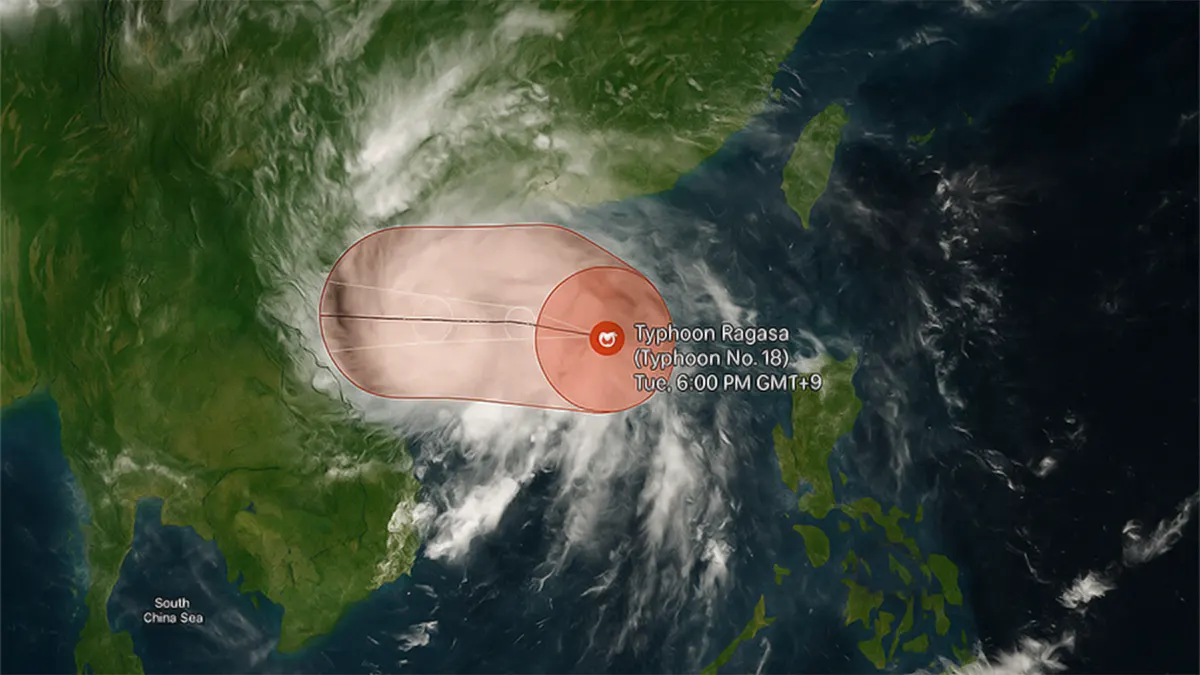
Super Typhoon Ragasa has left a path of destruction across parts of Asia after tearing through the Philippines and moving toward southern China and Hong Kong. The massive storm forced hundreds of thousands of people to evacuate, shut down major cities, and raised fresh concerns about the growing impact of climate change-driven extreme weather.
Meteorologists are already calling Ragasa one of the most powerful storms of 2025, with wind speeds reaching up to 270 km/h (168 mph). Its rapid growth over unusually warm ocean waters has also renewed debate over how rising global temperatures are making typhoons stronger and more dangerous.
A Storm That Intensified at Alarming Speed
Ragasa first formed as a tropical depression over the Philippine Sea on September 17, 2025. Within days, the storm rapidly strengthened into a Category 5-equivalent super typhoon, becoming the strongest tropical cyclone recorded this year.
Scientists say the storm gained energy from extremely warm sea surface temperatures, a condition increasingly linked to global warming. The speed at which Ragasa intensified stunned weather experts and gave vulnerable communities little time to prepare.
The typhoon initially slammed into the Babuyan Islands in northern Luzon, where residents faced violent winds, flooding, and landslides almost immediately.
Northern Philippines Hit by Floods and Landslides
In the Philippines, where the storm was locally named “Nando,” the first days of impact were devastating.
At least three people were confirmed dead, while several others were reported missing after flash floods and landslides swept through mountainous areas. One of the victims, a 74-year-old man, died after a landslide crushed his vehicle.
Entire communities were left without electricity after power lines collapsed across parts of northern Luzon. On Calayan Island and in Apayao province, blackouts disrupted communication and rescue efforts.
More than 17,500 residents were displaced, forcing thousands into temporary evacuation shelters. Farmers and fishing communities also suffered major losses as crops, boats, and coastal infrastructure were destroyed by the storm surge and strong winds.
Corruption Scandal Adds to Public Anger
The disaster unfolded during a tense political moment in the Philippines.
Days before Ragasa arrived, protests erupted over allegations of corruption tied to flood control projects worth more than 118.5 billion pesos ($2 billion). Critics claimed some projects were poorly built, incomplete, or entirely fake despite receiving public funding.
As floodwaters rose, many residents questioned whether weak infrastructure made the disaster even worse.
Facing mounting pressure, Philippine President Ferdinand Marcos Jr. suspended government work and school classes across Metro Manila and much of Luzon. Disaster response agencies were also placed on full alert as rescue teams rushed into affected areas.
China Launches Massive Emergency Response
After crossing the South China Sea, Ragasa moved toward China’s densely populated Pearl River Delta, one of the country’s most important economic zones.
Chinese authorities responded with unusually aggressive preparations.
Officials in Guangdong Province activated their highest emergency warning level, describing the situation as a “war-ready state.” Large-scale evacuations followed across multiple cities.
In Shenzhen alone, more than 400,000 residents were ordered to leave flood-prone and low-lying areas. Similar evacuations took place in Zhuhai, Foshan, and other coastal cities expected to face severe flooding.
Authorities also shut down schools, factories, public transportation, and businesses in several areas to reduce risks and protect infrastructure.
Flights at Shenzhen airport were suspended, while railway services across parts of southern China were halted as the storm approached.
Hong Kong and Macau Brace for Direct Impact
Hong Kong and Macau also prepared for dangerous conditions as Ragasa moved closer to the region.
The Hong Kong Observatory issued Typhoon Signal No. 8, effectively slowing the city to a standstill. Public transportation services were reduced, ferry routes were suspended, and many flights were canceled or delayed.
Officials distributed extra sandbags to neighborhoods vulnerable to flooding after lessons learned from previous typhoons such as Hato and Mangkhut.
Meanwhile, Macau took rare emergency measures by shutting down its famous casino industry for the first time since Typhoon Mangkhut in 2018.
Authorities warned that storm surges could raise water levels by as much as five meters in some areas, prompting evacuations from low-lying districts and the closure of major bridges.
Climate Change Concerns Grow After Ragasa
Weather experts are now closely studying Ragasa because of how quickly and aggressively the storm intensified.
Climate scientists have long warned that warmer oceans can fuel stronger tropical cyclones. While the total number of storms may not dramatically increase, experts believe future typhoons are likely to become more intense and destructive.
Ragasa appears to fit that pattern.
The storm’s explosive growth over warm Pacific waters has become another example of how climate change may be reshaping weather systems across Asia’s typhoon belt, where millions of people live in vulnerable coastal areas.
Billions in Economic Losses Expected
The full financial impact of Ragasa is still being calculated, but early estimates suggest billions of dollars in economic damage.
Factory shutdowns and transportation disruptions in southern China are expected to affect global supply chains, especially in manufacturing and technology sectors centered around the Pearl River Delta.
In the Philippines, farming and fishing industries face a long recovery period after widespread damage to crops, equipment, and coastal communities.
Analysts warn that rebuilding costs could continue rising as stronger storms become more common across the region.
A Stark Reminder for Disaster-Prone Nations
Super Typhoon Ragasa exposed both the strengths and weaknesses of disaster preparedness across Asia.
China, Hong Kong, and Macau moved quickly with mass evacuations and emergency shutdowns, showing how lessons from previous storms helped reduce potential casualties.
But in the Philippines, questions over infrastructure corruption highlighted how governance failures can worsen the impact of natural disasters.
As climate risks continue to grow, experts say governments across Asia will need stronger infrastructure, faster emergency response systems, and better long-term planning to protect millions of people living in coastal regions.
For many survivors, recovery from Ragasa may take months or even years. But the storm has already become a powerful warning about the future of extreme weather in a warming world.