Super Typhoon Ragasa has left a devastating trail across several parts of East Asia, becoming one of the strongest storms recorded in 2025. The powerful typhoon battered the Philippines, Taiwan, Hong Kong, Macau, and southern China with extreme winds, torrential rain, and dangerous flooding.
Thousands of families were displaced, transportation systems were disrupted, and entire communities were left underwater as governments rushed to respond to the disaster.
Deadly Flood Disaster Strikes Taiwan
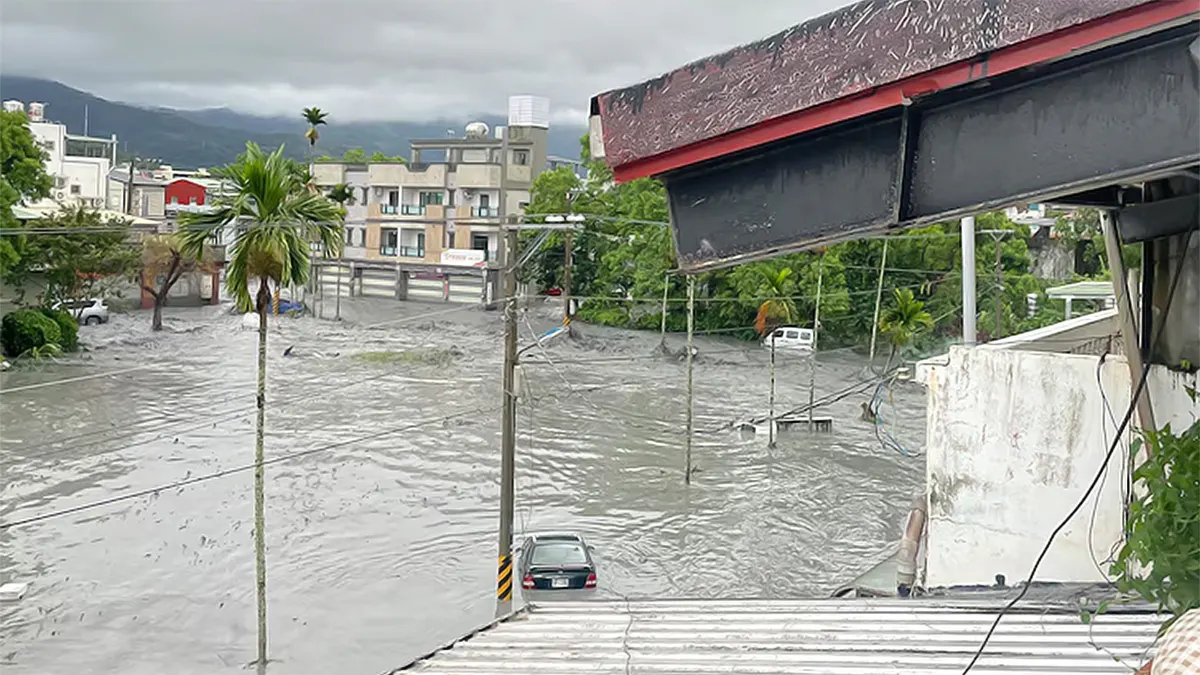
Taiwan suffered some of the worst damage caused by the storm, particularly in Hualien County, where a sudden flood disaster turned deadly.
Days of nonstop rain triggered a massive landslide that blocked a river and formed a temporary natural dam near Guangfu township. When the barrier eventually collapsed, a huge wall of water surged through nearby communities, destroying homes, roads, and bridges within minutes.
Authorities confirmed that at least 14 people were killed, while more than 124 others remain missing following the flood.
Survivors described scenes of chaos as floodwaters swept through neighborhoods with little warning. Many residents later criticized local emergency alerts, saying evacuation notices came too late or failed to reach vulnerable communities in time.
The tragedy has now sparked growing concerns over Taiwan’s disaster response systems and emergency preparedness during extreme weather events.
Philippines Hit First as Thousands Forced to Evacuate
Before reaching Taiwan, the storm first slammed into the northern Philippines, where it was locally known as Typhoon Nando.
Heavy rainfall triggered flash floods and landslides across several provinces, damaging homes and forcing thousands of residents to flee to evacuation centers.
Local authorities reported multiple deaths linked to the storm, while rescue teams worked to reach isolated communities cut off by flooding and blocked roads.
The typhoon also caused power outages and disrupted transportation in several affected regions.
Southern China Launches Massive Emergency Response
As Ragasa moved northward, Chinese authorities began one of the region’s largest evacuation operations this year.
More than one million residents were relocated from vulnerable coastal and low-lying areas across Guangdong province ahead of the storm’s arrival.
Major cities including Guangzhou, Shenzhen, and Zhuhai were placed on high alert as officials warned of possible storm surges, flooding, and destructive winds.
Flights, train services, schools, and businesses were temporarily shut down across multiple cities to reduce risks during the storm.
Emergency crews were also deployed to reinforce flood defenses and prepare rescue operations if conditions worsened.
Hong Kong and Macau Battle Strong Winds and Flooding
Hong Kong also faced dangerous conditions as the super typhoon passed close to the territory.
Authorities issued the city’s highest typhoon warning signals while hurricane-force winds lashed buildings and heavy rain flooded streets and coastal areas.
Several areas experienced storm surges powerful enough to send seawater crashing over promenades and into buildings. One hotel lobby was reportedly flooded after waves breached nearby barriers.
Public transportation services were suspended throughout the city, while schools and many businesses were ordered to close.
Dozens of people were injured during the storm as strong winds uprooted trees and sent debris flying through crowded urban areas.
Neighboring Macau experienced similar flooding problems, with hundreds of residents seeking temporary shelter as floodwaters rose across low-lying districts.
Climate Experts Warn Stronger Storms Could Become More Common
Meteorologists say Ragasa’s rapid strengthening is another sign of how climate change may be increasing the intensity of tropical storms.
Experts noted that the typhoon underwent “rapid intensification,” a process where storms become dramatically stronger within a short period of time due to warmer ocean temperatures.
The storm has already drawn comparisons to past disasters such as Typhoon Mangkhut in 2018 and Typhoon Morakot in 2009, both of which caused catastrophic damage across the region.
Scientists warn that as global temperatures continue rising, stronger and less predictable storms may become increasingly common throughout Asia.
The disaster has renewed calls for governments to improve early-warning systems, strengthen flood defenses, and invest in more climate-resilient infrastructure to protect vulnerable communities.
East Asia Faces Another Wake-Up Call
The destruction left behind by Super Typhoon Ragasa highlights the growing risks many Asian countries now face from extreme weather events.
From deadly flash floods in Taiwan to mass evacuations in China and severe flooding in Hong Kong and Macau, the storm exposed how quickly natural disasters can overwhelm even densely populated urban areas.
As recovery efforts continue, many experts believe Ragasa may become another major warning sign of the urgent need for stronger disaster preparedness in an era of intensifying climate threats.