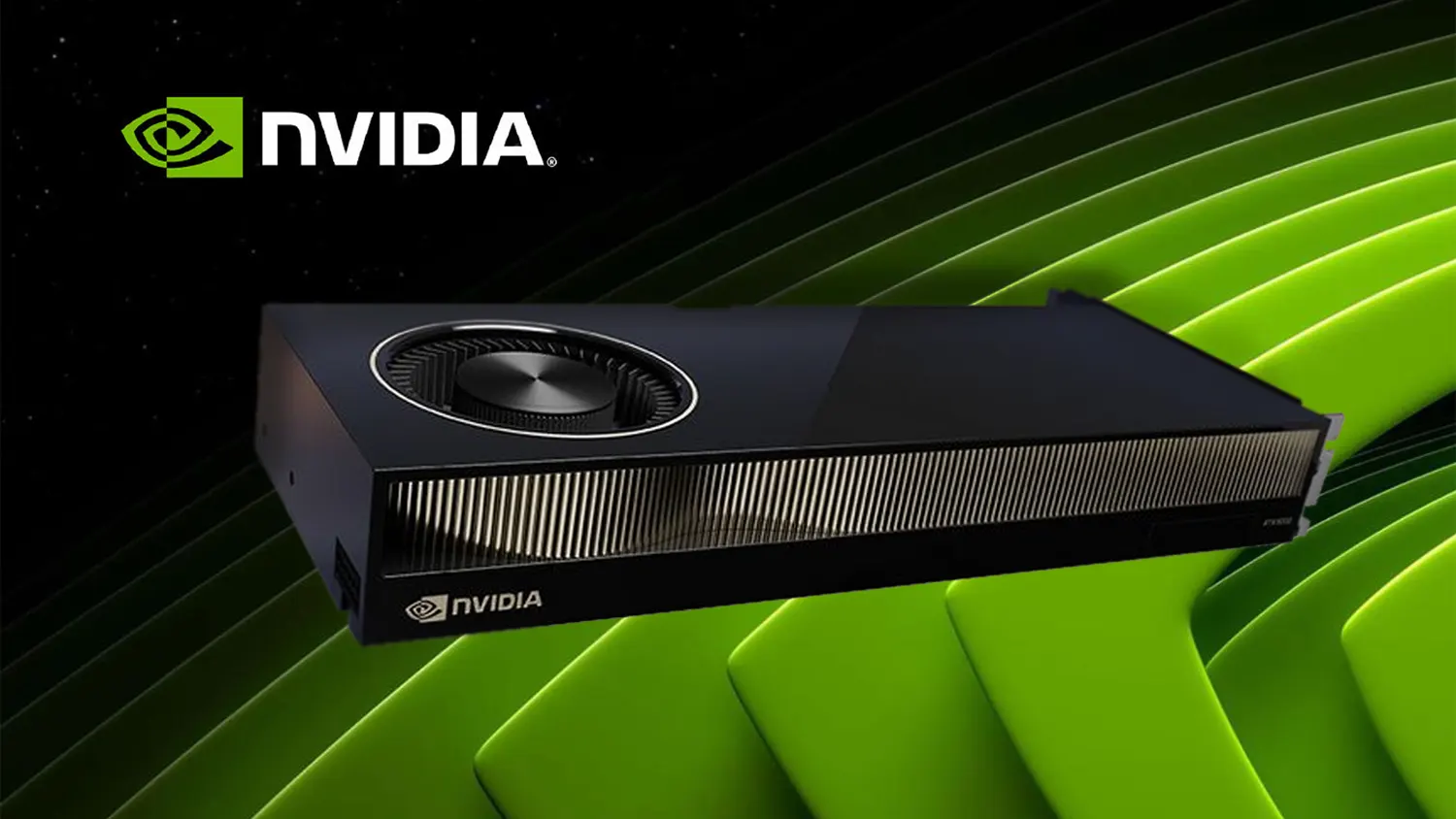
When Nvidia introduced the RTX6000D, the company hoped the China-specific AI chip would help maintain its position in one of the world’s largest artificial intelligence markets despite growing U.S. export restrictions.
Instead, the chip is receiving a lukewarm response across China’s tech industry.
Several months after launch, major Chinese companies appear hesitant to adopt the RTX6000D, raising questions about Nvidia’s long-term strategy in China and the rapidly changing global AI hardware market.
Why Chinese Tech Firms Are Hesitating
On paper, the RTX6000D was designed to comply with tightening U.S. export controls while still offering enough performance for Chinese AI companies.
But many buyers believe the product lands in an awkward middle ground.
Priced at around ¥50,000, or roughly $7,000, the chip is considered expensive compared to alternative options available through unofficial channels or from domestic Chinese manufacturers.
According to reports from industry insiders, companies such as Alibaba, Tencent, and ByteDance are questioning whether the RTX6000D offers enough performance to justify the cost.
Many analysts believe the chip performs below Nvidia’s more advanced GPUs, including the RTX5090, which remains restricted under U.S. export regulations.
Ironically, some banned chips are still reportedly entering China through grey-market channels at significantly lower prices.
That has left many Chinese buyers asking a simple question: why pay more for weaker hardware?
Nvidia’s Bigger Chips Could Change the Market
Another reason companies are delaying purchases is uncertainty over Nvidia’s future China lineup.
Several Chinese AI firms are reportedly waiting for more powerful Nvidia processors that may soon become available.
Among the most closely watched are:
- H20
- B30A
The H20 chip, previously affected by export restrictions, has reportedly been approved again for shipment, though supply remains limited.
Meanwhile, the B30A is rumored to deliver performance much closer to Nvidia’s top-tier AI hardware, making it potentially more attractive for companies planning large-scale AI investments over the next few years.
Until there is more clarity, many companies appear willing to wait rather than commit to the RTX6000D.
China’s Domestic AI Chip Industry Is Growing Fast
Perhaps the biggest challenge for Nvidia is that China’s AI chip ecosystem is becoming increasingly self-sufficient.
For years, Nvidia dominated China’s AI infrastructure market. That dominance is now being challenged by rapidly improving domestic alternatives.
Chinese companies including:
- Alibaba
- Baidu
- Huawei
- Biren Technology
- Moore Threads
have all invested heavily in developing local AI processors.
While many Chinese chips still trail Nvidia’s best hardware in raw performance, they offer one major advantage: stability.
Unlike imported chips, domestic products are not vulnerable to sudden U.S. export bans or geopolitical restrictions.
That reliability is becoming increasingly valuable for Chinese cloud providers and AI developers planning long-term infrastructure investments.
Beijing Pushes for Semiconductor Independence
China’s government has also made semiconductor independence a national priority.
Beijing has poured billions into local chip development through funding programs, subsidies, and industrial policy support.
The goal is clear: reduce dependence on foreign technology in strategic sectors such as artificial intelligence, cloud computing, and advanced manufacturing.
This shift means Nvidia is no longer competing only on technology performance. It is also competing against national policy, political priorities, and growing demand for supply-chain security.
Industry analysts say many Chinese firms now see locally developed chips as a safer long-term choice, even if they currently offer slightly lower performance.
Nvidia Faces Pressure From Both Washington and Beijing
Nvidia’s position has become increasingly complicated as geopolitical tensions continue to reshape the global tech industry.
In the United States, the company must comply with strict export controls aimed at limiting China’s access to advanced AI hardware.
At the same time, Chinese regulators are reportedly examining Nvidia more closely, including discussions around possible anti-monopoly scrutiny.
This leaves Nvidia balancing pressure from both sides.
Some Chinese investors and industry observers argue that Nvidia’s close alignment with U.S. policy may make Chinese companies less willing to rely heavily on its products in the future.
The result is a growing trust gap that extends beyond hardware performance alone.
The RTX6000D May Signal a Bigger Industry Shift
The RTX6000D was intended to be a compromise product capable of keeping Nvidia active in China without violating U.S. export laws.
Instead, the chip has become an example of how difficult it is to navigate today’s AI hardware market, where technology, politics, and national security are increasingly interconnected.
Nvidia remains an important player in China’s AI ecosystem, and demand for its products has not disappeared.
However, the slow adoption of the RTX6000D highlights a larger trend: Chinese companies are becoming less dependent on foreign AI chips and more focused on building domestic alternatives.
As the global AI race intensifies, the future of the semiconductor industry may depend just as much on geopolitics as on raw computing power.