What started as a government attempt to control online speech has rapidly transformed into one of Nepal’s most serious political crises in years.
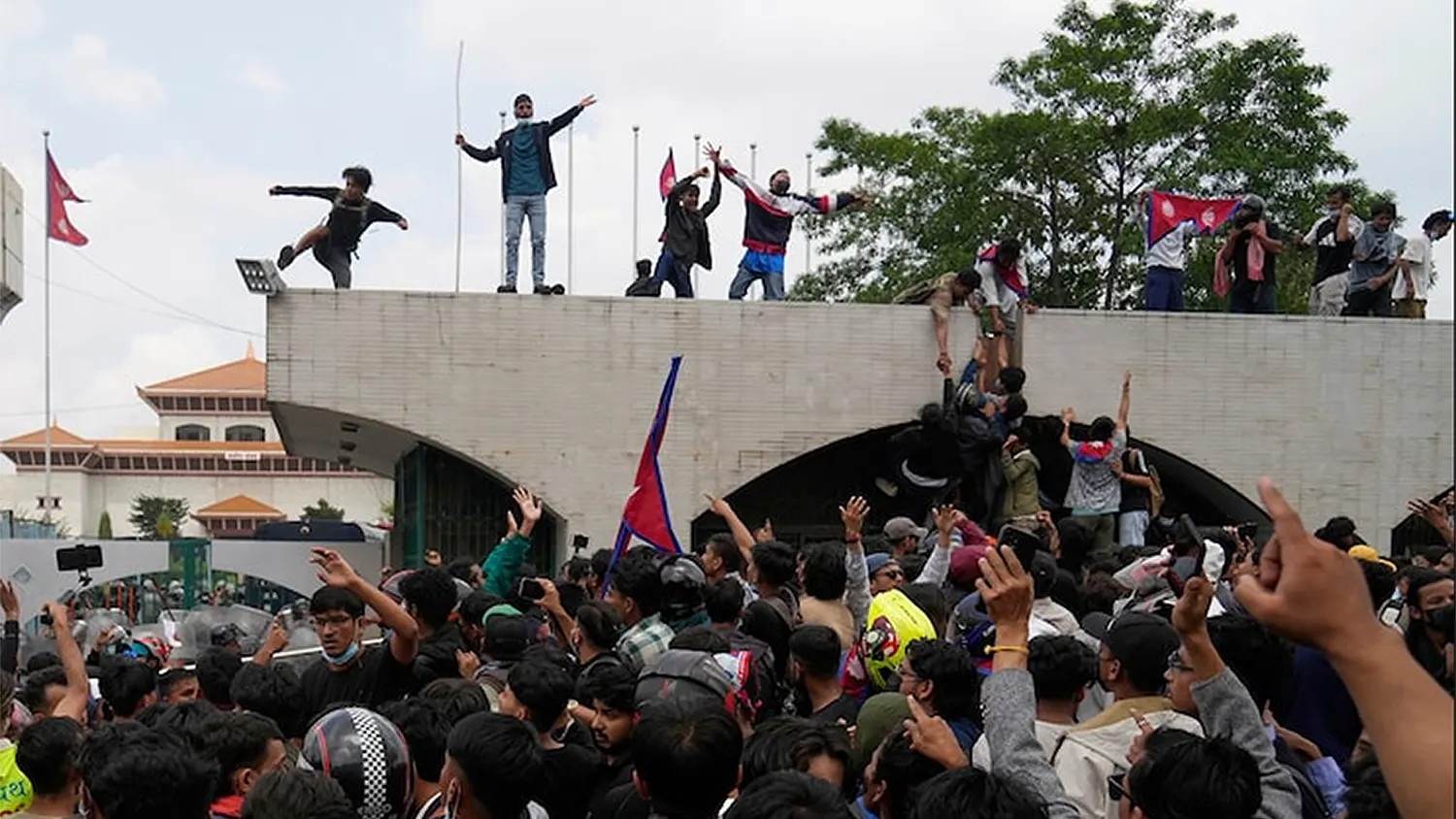
A nationwide wave of protests led largely by young people has erupted across the country after authorities temporarily blocked access to major social media platforms, including Meta’s Facebook and Instagram, as well as X. The unrest has already left at least 19 people dead and dozens injured, according to local reports and hospital officials.
But the demonstrations are no longer just about social media.
Instead, the ban appears to have triggered a much deeper explosion of public anger over corruption, economic frustration, and growing distrust in Nepal’s political establishment. What the government presented as a temporary security measure is now being viewed by many young Nepalis as the final symbol of a political system they believe has failed them for years.
The Internet Shutdown Became the Breaking Point
The crisis began when the government abruptly restricted access to dozens of major social media platforms earlier this week.
Officials argued the move was necessary to combat “misinformation” and protect national stability, claiming several companies had failed to comply with newly introduced registration requirements. Authorities framed the shutdown as temporary and administrative.
But for millions of Nepalis, especially younger citizens, social media is not simply entertainment.
It is where people work, organize businesses, follow news, discuss politics, and communicate daily. In a country where traditional institutions often struggle to maintain public trust, digital platforms have become central to public life.
That is why the ban immediately triggered outrage.
Many citizens interpreted the move as an attempt to suppress criticism and limit political discussion at a time when allegations of government corruption were already dominating national conversation.
“The social media ban was just the last straw,” one student protester in Kathmandu said during demonstrations this week. “They thought they could silence us by shutting down the internet, but they only pushed us into the streets.”
That sentiment has quickly spread across the country.
Nepal’s Gen Z Is Turning Economic Frustration Into Political Anger
What makes the protests especially significant is the generation driving them.
Young Nepalis particularly students and first-time workers have become the face of the movement. Many say they feel trapped between rising living costs, limited economic opportunity, unemployment, and a political system they see as dominated by corruption and patronage networks.
The protests reflect frustrations that have been building for years.
Nepal’s younger generation has grown up during a period marked by political instability, frequent changes in government, slow economic development, and recurring corruption scandals. For many, the social media ban became symbolic of something larger:
a government trying to control public frustration instead of addressing it.
Unlike earlier protest movements focused on single political demands, this unrest carries a broader anti establishment tone. Demonstrators are not only opposing internet restrictions they are questioning the credibility of the country’s leadership itself.
That shift makes the situation far more difficult to contain.
The Government’s Response Intensified the Crisis
What began as peaceful demonstrations escalated sharply after clashes between protesters and security forces.
In Kathmandu and Pokhara, police reportedly used tear gas and rubber bullets to disperse crowds. Witnesses and local media reports from other regions also alleged the use of live ammunition during confrontations.
Hospitals across Nepal have confirmed at least 19 deaths, many involving students and young adults. Dozens more remain hospitalized with serious injuries.
The rising death toll has intensified domestic and international criticism of the government’s handling of the unrest.
Human Rights Watch condemned what it described as the use of excessive force against protesters and called for an independent investigation into the violence.
“The use of lethal and disproportionate force against protesters is a grave violation of human rights,” a representative from the organization said.
The government now faces growing pressure not only from protesters but also from civil society groups and opposition figures demanding accountability.
Rolling Back the Ban May No Longer Be Enough
In an effort to calm tensions, officials have already begun reversing parts of the policy.
Internet access has reportedly been restored across most areas, and one senior minister has offered his resignation in what many observers see as an attempt to defuse public anger.
But the concessions have done little to stop the demonstrations.
For many protesters, the issue has moved beyond social media access entirely. The rollback is being viewed less as a solution and more as evidence that public pressure forced the government to retreat.
That dynamic has energized the movement further.
Opposition groups and protest organizers are now demanding broader reforms tied to transparency, corruption investigations, economic policy, and political accountability.
The government’s challenge is becoming increasingly difficult because each concession risks encouraging larger demands.
Nepal’s Political Establishment Is Facing a Generational Reckoning
The protests now unfolding across Nepal represent more than temporary unrest.
They reveal a widening divide between a younger, digitally connected generation and a political establishment many see as outdated, unresponsive, and insulated from everyday struggles.
For years, Nepal’s leaders have managed periodic political dissatisfaction through coalition reshuffling and negotiated compromises among elites. But this movement operates differently. It is decentralized, highly networked, emotionally charged, and driven by people who feel excluded from the country’s economic and political future.
That makes it harder to negotiate away.
The deeper danger for the government is that the social media ban unintentionally gave the protest movement a unifying cause powerful enough to connect multiple frustrations into one national uprising.
And once a generation begins to believe the system itself is the problem, restoring internet access alone may no longer restore public trust.
Because in Nepal today, the fight is no longer just about online freedom, it is about who gets to shape the country’s future.