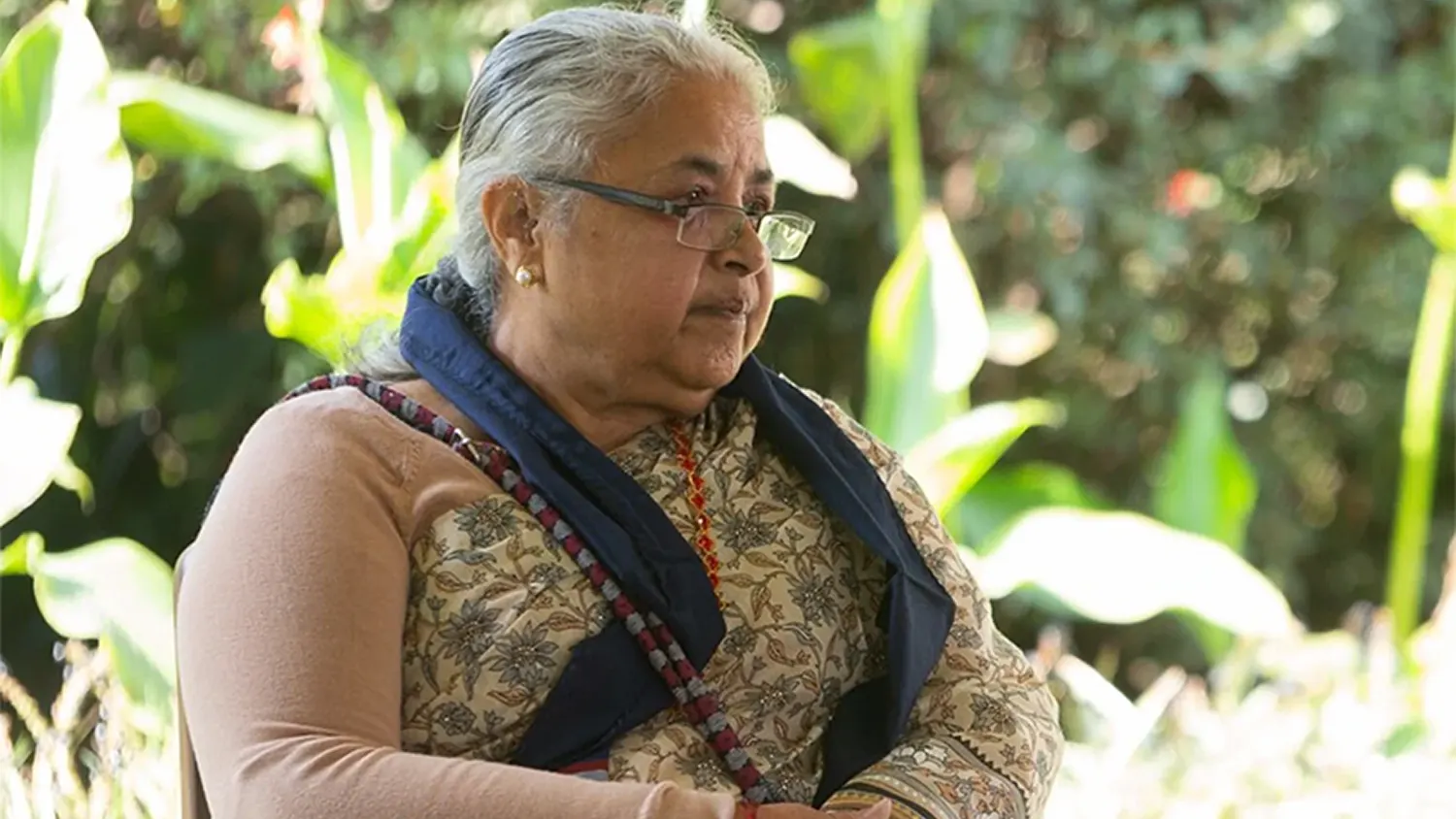
Nepal has entered one of the most dramatic political transitions in its modern history. After days of mass protests, deadly unrest, and mounting pressure on the government, former Supreme Court Chief Justice Sushila Karki was sworn in as the country’s first female prime minister on September 12, 2025.
Her appointment followed the collapse of the government led by K. P. Sharma Oli and marked a powerful turning point driven largely by young protesters demanding political reform, economic fairness, and accountability.
What began as anger over a social media ban quickly evolved into a nationwide movement that challenged Nepal’s political establishment.
The Social Media Ban That Ignited Public Anger
The protests first erupted on September 8 after the government blocked more than two dozen social media platforms, including Facebook, YouTube, Instagram, TikTok, and X.
Officials argued the restrictions were necessary to enforce digital regulations and push tech companies to register locally. But many citizens, especially younger Nepalis, saw the move as a direct attack on freedom of expression.
For Nepal’s digitally connected generation, social media is more than entertainment. It has become a space for political discussion, organizing, education, and economic opportunity. The sudden blackout triggered immediate backlash across major cities.
Within hours, online frustration turned into street demonstrations as students, creators, and young professionals coordinated protests both digitally and on the ground.
A Generation Frustrated by Corruption and Nepotism
Although the social media ban sparked the unrest, the deeper frustration had been building for years.
Many young people in Nepal have grown increasingly angry over political instability, corruption, unemployment, and elite privilege. Viral images showing the children of political leaders enjoying luxury lifestyles fueled public resentment at a time when many families were struggling with inflation and limited job opportunities.
Protest slogans quickly reflected a broader generational divide.
“We Are Not Our Fathers’ Country” became one of the defining messages of the movement, alongside calls to end dynastic politics and dismantle systems of favoritism.
Thousands gathered in Kathmandu demanding systemic reform, transparency, and equal opportunity.
Peaceful Demonstrations Descend Into Violence
As protests intensified, tensions between demonstrators and security forces escalated rapidly.
On September 10, violent clashes broke out across multiple cities after protesters stormed several government buildings. In Kathmandu, fires engulfed parts of the Parliament building and the prime minister’s private residence.
Authorities responded with tear gas, rubber bullets, and mass arrests. As the situation worsened, the military was deployed and a nationwide curfew was imposed.
By the end of the unrest, at least 51 people had been killed and more than 1,300 injured. Government vehicles were destroyed, dozens of protesters were detained, and international human rights groups raised concerns about the use of force against civilians.
Meanwhile, Army Chief Ashok Raj Sigdel warned that a state of emergency could be declared if order was not restored.
The Fall of the Government
Political pressure reached a breaking point on September 11.
Facing nationwide protests and growing instability, Prime Minister K. P. Sharma Oli resigned and reportedly left his residence under military escort. Parliament was dissolved shortly afterward, leaving the country without a formal elected government.
For several days, Nepal entered a period of political uncertainty as temporary authority shifted to a transitional body made up of senior judiciary and defense officials.
At the same time, protest organizers continued coordinating online through Discord and other digital platforms. In an unusual development, thousands of participants joined a public nomination process to suggest a neutral interim leader.
That process eventually elevated one name above the rest: Sushila Karki.
Why Sushila Karki Became the Face of Transition
At 73 years old, Karki is widely respected in Nepal for her record on judicial independence and anti-corruption rulings during her time as Chief Justice.
She built a reputation for challenging powerful political figures and defending institutional accountability, even under pressure from political elites.
Support for her interim leadership grew quickly among protesters, civil society groups, and influential state institutions. Her image as a nonpartisan figure helped ease fears of a broader political power struggle.
On September 12, she officially became Nepal’s interim prime minister, making history as the nation’s first woman to hold the office.
Karki Promises Justice and Political Reform
In her first national address, Sushila Karki acknowledged the lives lost during the unrest and referred to the victims as “martyrs.”
She announced compensation for affected families and pledged an independent investigation into the violence, including the actions of police and military personnel.
Karki also promised to pursue several key demands raised by protesters, including:
- Anti-corruption reforms
- Government nepotism audits
- Electoral oversight reforms
- Greater transparency in public institutions
Her interim administration is expected to remain in power until general elections scheduled for March 5, 2026.
Nepal Faces a Difficult Road Ahead
Despite the optimism surrounding Karki’s appointment, major challenges remain.
Nepal’s political system has long been shaped by coalition instability and entrenched patronage networks. Analysts warn that implementing meaningful reforms without a functioning parliament will be difficult.
Her government must also balance relations with the military, judiciary, and competing political factions while maintaining public trust.
Still, many observers believe this moment represents something larger than a temporary leadership change.
For many young Nepalis, the protests proved that digital activism can translate into real political influence.
One protester summarized the mood by saying:
“For the first time, someone we chose, not someone chosen for us is in charge.”
A Defining Moment for Nepal’s Democracy
Nepal’s youth-led uprising may become one of the most significant political movements in South Asia in recent years.
What started as opposition to a social media ban transformed into a nationwide demand for accountability and generational change. The movement showed how online communities can evolve into organized political forces capable of reshaping national leadership.
Whether the interim government succeeds or struggles, one thing is already clear: a generation that once felt ignored has stepped directly into Nepal’s political future.