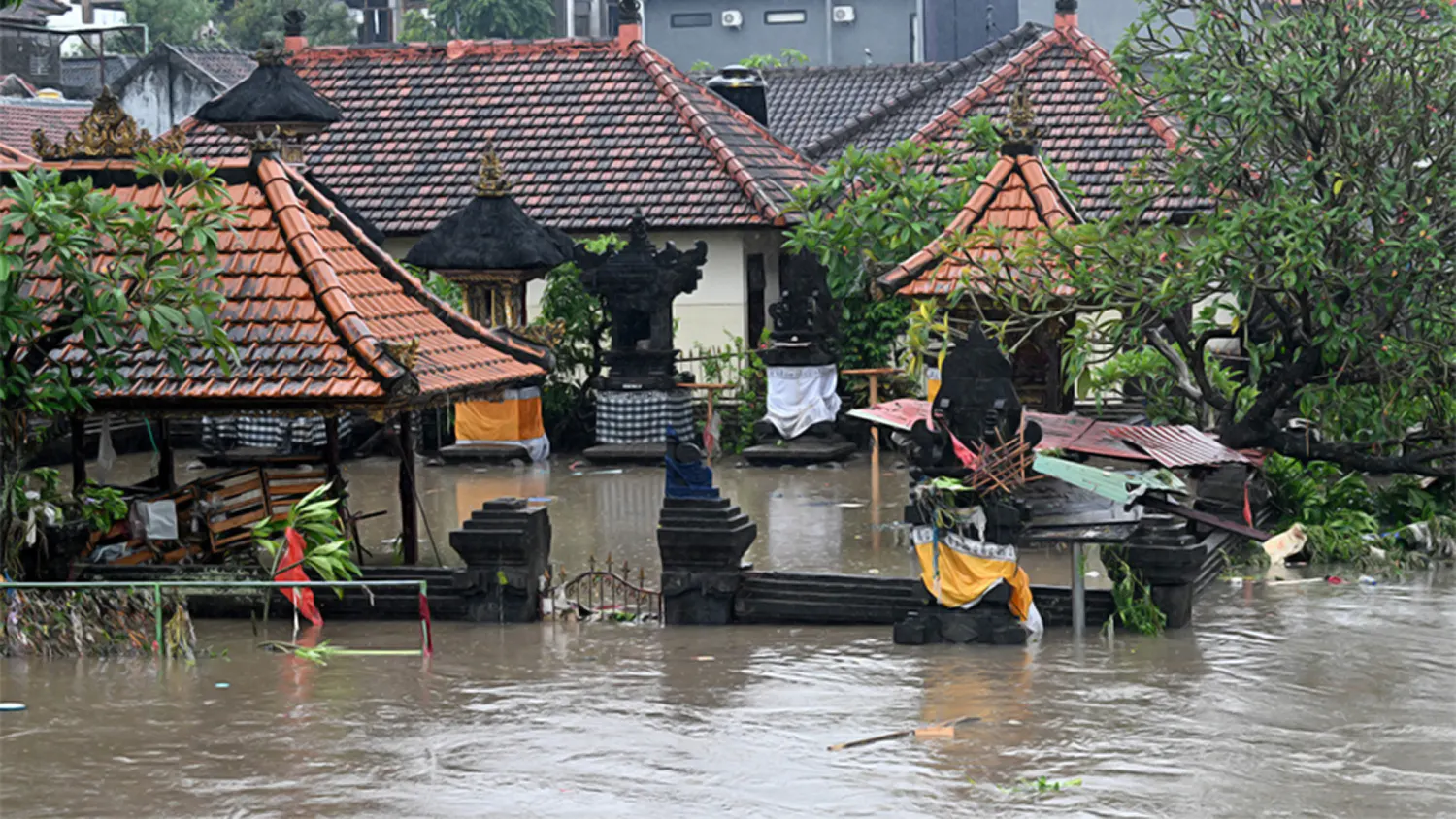
Bali, one of Indonesia’s most popular tourist destinations, is facing a major humanitarian crisis after deadly flash floods and landslides swept across the island following days of relentless rain.
The disaster has already claimed 21 lives in Bali, while at least 23 people have died nationwide, according to Indonesia’s National Disaster Mitigation Agency (BNPB). Rescue teams are still searching for two missing residents as floodwaters continue to affect several regions.
The scale of the destruction has pushed Bali’s provincial government to declare a seven-day state of emergency, allowing authorities to speed up rescue missions and emergency aid distribution.
Heavy Rain Turns Streets Into Rivers
The flooding began after continuous downpours overwhelmed rivers, drainage systems, and low-lying communities across Bali. Areas in and around Denpasar were among the hardest hit, with entire neighborhoods submerged under muddy water.
Residents described terrifying scenes as water rushed into homes during the night, carrying debris, vehicles, and even sections of damaged buildings.
Several major roads became impassable after landslides and collapsed infrastructure cut access to affected communities. Authorities also reported damaged bridges, flooded markets, and destroyed public facilities across multiple districts.
More than 500 buildings have reportedly suffered serious damage, with financial losses expected to reach millions of dollars.
Emergency Shelters Struggle to Handle Growing Numbers
As the flooding intensified, hundreds of families were forced to flee their homes and move into temporary shelters set up in schools, village halls, and community centers.
However, aid workers say many shelters are already overcrowded, creating new concerns over sanitation, food shortages, and medical care.
Relief teams on the ground continue to distribute:
- Clean drinking water
- Emergency food supplies
- Blankets and dry clothing
- Basic medical assistance
Accessing remote villages remains difficult because many roads are still blocked by mud, fallen trees, and flood debris.
Despite challenging conditions, rescue teams from the Indonesian military, police, and disaster response agencies continue working around the clock to evacuate residents and search for missing victims.
Experts Say Human Activity Worsened the Disaster
Although Bali experiences seasonal heavy rain every year, environmental experts believe the severity of this disaster was made worse by rapid development and poor infrastructure planning.
One major issue highlighted by analysts is the island’s clogged drainage systems. Rapid urban expansion has outpaced infrastructure improvements, while garbage buildup in waterways has reduced the flow of floodwater during storms.
Environmental groups have also raised concerns about uncontrolled land conversion linked to tourism growth. Forests and wetlands that once absorbed rainwater have increasingly been replaced by hotels, commercial buildings, and paved areas.
As a result, rainwater now moves faster through urban areas, increasing the risk of sudden flooding.
Poor waste management has further contributed to the crisis, with plastic waste and debris blocking rivers and drainage canals across several districts.
Environmental scientist Dr. Luh Ketut Arini warned that Bali is now facing the consequences of years of unsustainable development.
According to her, the disaster is not only about extreme weather but also about how cities prepare for climate-related risks.
Authorities Race to Prevent More Casualties
Even though water levels have started to recede in some areas, weather forecasts still predict moderate rainfall in the coming days.
Officials fear additional flash floods and landslides could hit unstable hillside regions, especially where soil conditions have weakened after days of heavy rain.
Residents living near rivers and slopes have been urged to stay alert and prepare for possible evacuations if conditions worsen.
Emergency teams are currently focused on:
- Searching for missing residents
- Clearing blocked roads and bridges
- Delivering aid to isolated communities
- Restoring damaged public infrastructure
- Providing trauma counseling and healthcare services
The Indonesian government has also begun reviewing infrastructure vulnerabilities across Bali as part of a wider climate resilience initiative.
Bali Disaster Sparks Calls for Long-Term Reform
The flooding has reignited debate over Bali’s fast-paced development and environmental management policies.
Urban planners and environmental advocates are now calling for:
- Stricter land-use regulations
- Better flood mitigation systems
- Restoration of natural drainage ecosystems
- Improved waste management
- Stronger disaster preparedness programs
Many experts believe Bali’s disaster should serve as a warning for other rapidly developing regions facing increasing climate threats.
As recovery efforts continue, communities across the island are now dealing with the emotional and financial impact of losing homes, businesses, and loved ones.
For many residents, rebuilding will take months possibly years.
Still, amid the devastation, rescue workers, volunteers, and local communities continue working together to help Bali recover from one of the island’s most destructive flood disasters in recent memory.