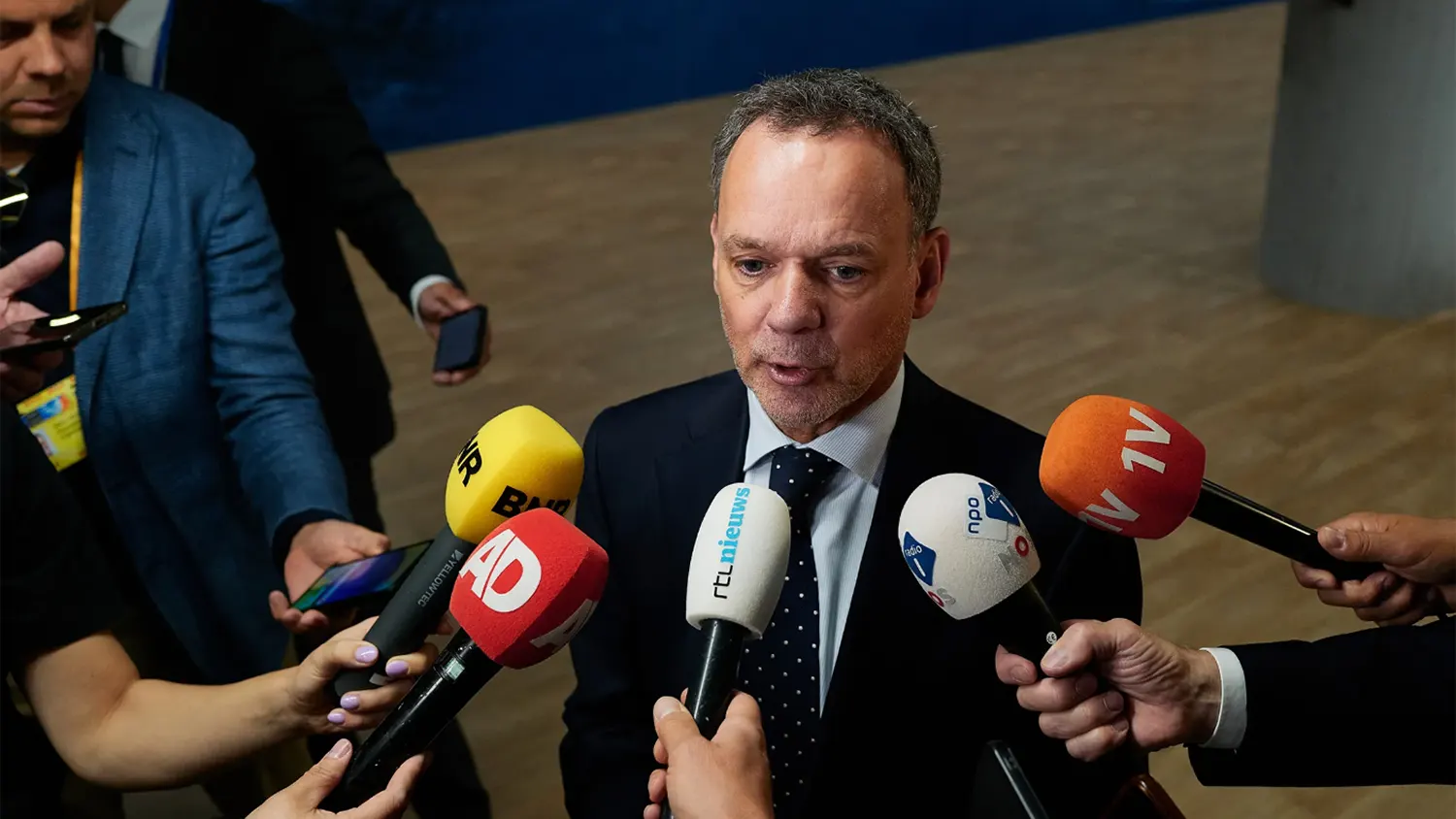
The Netherlands is facing a sudden political crisis after Foreign Minister Caspar Veldkamp resigned late Friday and his entire party walked out with him.
The trigger: his coalition partners’ refusal to support stronger sanctions against Israel in response to the worsening humanitarian crisis in Gaza.
Who Is Caspar Veldkamp?
Veldkamp is not a newcomer to this issue. Before becoming foreign minister, he served as the Dutch ambassador to Israel making his resignation over the Gaza crisis all the more striking.
He had been quietly pushing inside the cabinet for tougher measures, including a proposed ban on imports from Israeli settlements in the occupied West Bank. Those efforts hit a wall.
In his resignation statement, Veldkamp said he felt “insufficiently able to take meaningful additional measures” and could no longer “chart the course I deem necessary.”
Why Did the Entire Party Quit?
In a rare show of political solidarity, all ministers from Veldkamp’s party, the New Social Contract (NSC) resigned alongside him.
The NSC released a sharp statement placing the blame squarely on their coalition partners particularly the People’s Party for Freedom and Democracy (VVD) and the populist Farmer-Citizen Movement (BBB) accusing them of refusing to “acknowledge the alarming situation in Gaza and take necessary action.”
The walkout has left key government ministries without leadership at a deeply sensitive moment both for the Netherlands and for the broader international response to the Gaza conflict.
What Did the Netherlands Already Do?
It is worth noting that the Dutch government had already taken some limited steps on the Israel issue prior to this crisis:
- A travel ban on two far-right Israeli ministers
- The revocation of export permits for certain navy ship components destined for Israel
But Veldkamp believed these measures did not go nearly far enough and his coalition partners were unwilling to go further. That impasse ultimately proved irreconcilable.
Why Does the Timing Matter?
The resignation lands at an extraordinarily difficult moment both at home and abroad.
On the same day Veldkamp quit, a UN-backed body formally declared famine in Gaza City. UN Secretary General António Guterres described the situation as a “man made disaster” language that added immediate moral urgency to the political debate inside the Dutch cabinet.
At home, the Netherlands is already politically fragile. The current government is a caretaker administration, it has been running the country in a limited capacity since a previous coalition collapsed in June. A general election is scheduled for October, meaning the country is now heading into a critical campaign period without a fully functioning government.
A Wider European Divide
The Dutch crisis is not happening in isolation. It reflects a growing split across Europe over how governments should respond to the Gaza war.
Some countries have been pushing for stronger action tighter sanctions, arms restrictions, and louder diplomatic pressure on Israel. Others, including Germany, have taken a far more cautious approach, wary of the historical and political sensitivities involved.
The Netherlands now finds itself publicly and visibly divided on one of the most consequential foreign policy questions facing Europe today.
What Happens Next?
With NSC ministers gone, the caretaker government is left weakened and rudderless on a major foreign policy issue just as international pressure over Gaza is intensifying.
The October election will now almost certainly be fought, in part, on the question of how the Netherlands should position itself on the Middle East conflict and whether Veldkamp’s resignation was an act of principle or a political miscalculation.
For now, the Dutch government has no clear answers and the people of Gaza are still waiting for the world to act.