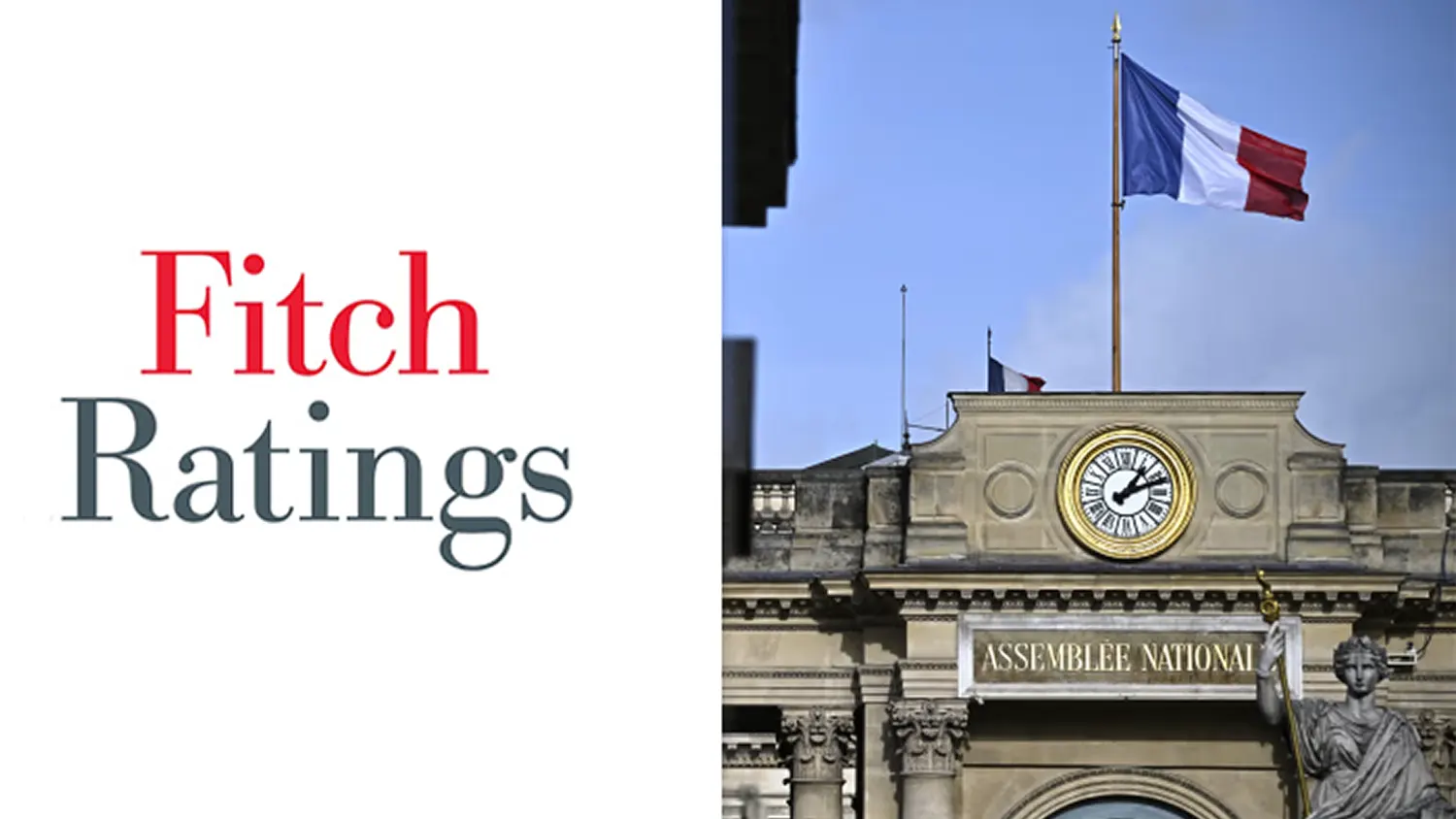
France is facing growing financial pressure after Fitch Ratings downgraded the country’s long-term sovereign credit rating from AA- to A+, marking the lowest rating France has ever received from a major credit agency.
The downgrade has rattled European financial markets and raised fresh concerns about the future of the eurozone’s second-largest economy.
According to Fitch, the decision was driven by a combination of rising public debt, political instability, and weak fiscal discipline, problems that have become increasingly difficult for the French government to manage.
The timing could hardly be worse, as France enters another period of political uncertainty following major leadership changes and growing divisions inside parliament.
Mounting Debt Raises Alarm Across Financial Markets
At the center of Fitch’s decision is France’s rapidly growing debt burden.
The agency estimates that France’s public debt could reach 121% of GDP by 2027, up sharply from 113.2% in 2024.
That figure is far above the European Union’s recommended debt ceiling of 60% of GDP, a benchmark designed to maintain fiscal stability across eurozone member states.
While several developed countries carry high debt levels, investors become more concerned when rising debt is paired with slow economic growth and political uncertainty.
Fitch warned that France currently lacks a clear and credible plan to stabilize its finances over the long term.
The agency also noted there is “no clear horizon” for reducing the country’s debt trajectory, increasing fears that borrowing pressures could continue worsening in the years ahead.
Political Chaos Complicates France’s Recovery Efforts
The downgrade was not based on economics alone.
Fitch also highlighted France’s increasingly fractured political environment as a major risk to fiscal recovery.
Just days before the downgrade announcement, Prime Minister François Bayrou resigned after losing a confidence vote linked to his proposed austerity budget.
His resignation exposed deep divisions within France’s parliament and reinforced concerns that the government may struggle to pass meaningful economic reforms.
According to Fitch, political fragmentation is now limiting France’s ability to implement spending cuts, tax reforms, and broader structural changes needed to improve public finances.
The country’s National Assembly remains deeply divided, making it harder for any administration to secure support for difficult economic measures.
France’s Fiscal Targets Continue to Slip
France has repeatedly struggled to meet its own deficit reduction goals in recent years.
In 2024, the country recorded a budget deficit of 5.8% of GDP, nearly double the eurozone’s official 3% limit.
Although French officials have promised to reduce the deficit to 3% by 2029, Fitch said the target appears unrealistic under current political and economic conditions.
Repeated failures to meet fiscal goals have weakened investor confidence and damaged France’s credibility with international markets.
Without stronger budget control, analysts warn the country could face additional downgrades from other major rating agencies in the future.
Borrowing Costs Are Already Rising
One of the most immediate consequences of a credit downgrade is higher borrowing costs.
When investors view a country as riskier, they demand higher interest rates in exchange for lending money.
That process has already begun in France.
Yields on 10-year French government bonds have started climbing, signaling that the government may now pay significantly more to finance debt and public spending.
Over time, rising borrowing costs can place enormous pressure on national budgets.
Money that could otherwise support healthcare, education, infrastructure, or economic growth may instead be redirected toward debt repayments and interest costs.
New Prime Minister Faces Immediate Pressure
The downgrade also creates a difficult challenge for newly appointed Prime Minister Sébastien Lecornu, who now inherits both a fragile economy and a divided political system.
One of his first major tests will be presenting France’s next national budget in early October.
That budget must not only satisfy lawmakers at home but also convince international investors that France remains capable of managing its growing debt crisis.
Passing major spending cuts or tax reforms through a fractured parliament will likely prove difficult.
Failure to deliver a credible fiscal plan could increase the risk of further downgrades from agencies like Moody’s or S&P Global.
Why Europe Is Watching Closely
France’s financial health matters far beyond its own borders.
As one of the eurozone’s largest economies, instability in France can quickly affect confidence across Europe.
Economists warn that prolonged fiscal weakness in France could:
- Increase borrowing costs across the eurozone
- Weaken investor confidence in European markets
- Complicate future EU economic programs and recovery initiatives
- Add pressure to already fragile European political systems
France also plays a major role in shaping European Union policy, meaning political instability in Paris can have broader consequences for the entire region.
A Critical Moment for France’s Economic Future
Fitch’s downgrade represents more than just a symbolic warning.
It reflects growing concern that France is entering a period where economic pressure and political instability are feeding into each other, making reform increasingly difficult.
The coming months will likely determine whether the French government can restore market confidence and regain control over its finances.
For now, investors, European leaders, and financial institutions will be closely watching how France responds to one of the most serious fiscal warnings in its modern history.