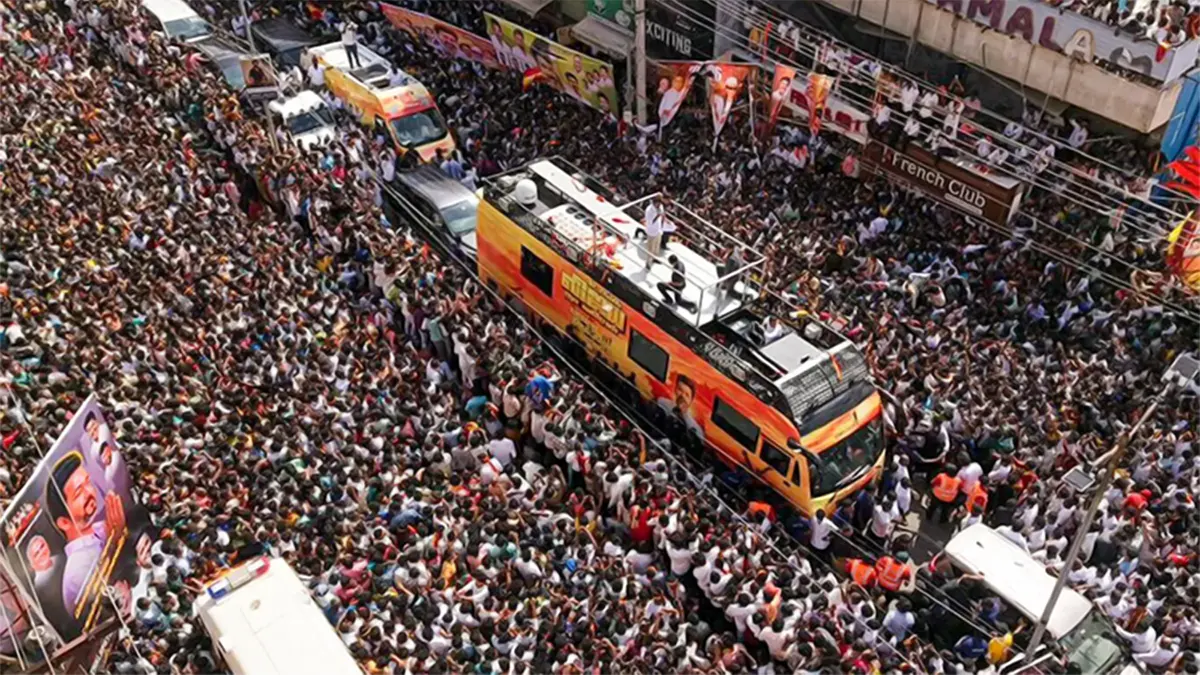
A political rally in Karur, Tamil Nadu, turned tragic on September 27, 2025, after a massive crowd crush left at least 36 people dead and dozens more injured. The event, organized by the Tamilaga Vettri Kazhagam (TVK) party led by actor-turned-politician Vijay, has sparked renewed concerns about crowd management and safety standards at large public gatherings across India.
As families mourn the victims, attention is now shifting toward how such a devastating incident could occur and whether better planning could have prevented the loss of life.
Massive Turnout Creates Dangerous Conditions
Thousands of supporters gathered along the Karur-Erode highway near Veluswamypuram to attend the highly anticipated rally. The crowd reportedly far exceeded expectations, creating severe congestion around the venue hours before the event began.
Many attendees had been waiting outdoors under intense heat for an extended period, leading to exhaustion, dehydration, and growing discomfort among the crowd.
Witnesses described increasingly crowded conditions as people attempted to secure better views of the stage ahead of Vijay’s arrival.
Crowd Surge Triggers Deadly Crush
According to preliminary accounts, the situation worsened when Vijay arrived several hours later than scheduled.
The arrival reportedly triggered a sudden surge as large sections of the crowd moved toward the stage area. With thousands pushing forward at the same time, barriers and crowd-control measures were unable to contain the pressure.
The resulting crush caused people to become trapped in tightly packed conditions, leading to fatal injuries. Authorities confirmed that several children were among those who lost their lives.
Emergency responders rushed victims to nearby hospitals, where medical teams worked to treat dozens of injured attendees.
Multiple Safety Concerns Under Scrutiny
While investigators continue to examine the incident, several factors have emerged as potential contributors to the disaster.
Overcrowding Beyond Venue Capacity
One of the biggest concerns is the sheer number of people who attended the rally. Reports suggest the crowd size may have significantly exceeded what the venue and surrounding infrastructure could safely accommodate.
Large gatherings require carefully planned entry points, exit routes, and crowd-flow systems. When attendance surpasses expectations, the risk of dangerous bottlenecks rises dramatically.
Extreme Heat Added to the Pressure
Attendees reportedly spent hours waiting in high temperatures before the event began.
Experts note that prolonged exposure to heat can increase fatigue, dehydration, and panic, making crowds more vulnerable during sudden movements or emergencies.
Delayed Arrival Intensified Crowd Movement
The delay in the main event may have contributed to rising frustration and anticipation among supporters.
When the political leader eventually arrived, the sudden rush of excitement appears to have triggered a powerful crowd movement toward the stage, creating conditions that quickly became uncontrollable.
Questions Over Crowd-Control Measures
Perhaps the most significant issue involves the adequacy of safety arrangements.
Investigators are expected to review whether sufficient barricades, security personnel, emergency exits, medical teams, and trained volunteers were in place to handle a gathering of that scale.
Crowd safety specialists have long warned that large events require extensive preparation and real-time monitoring to prevent potentially fatal surges.
Government Orders Investigation
In response to the tragedy, the Tamil Nadu government has announced a formal inquiry into the incident.
Chief Minister M.K. Stalin and Health Minister Ma Subramanian visited hospitals treating the injured and met with affected families. Officials have pledged a thorough investigation to determine exactly what went wrong and whether any negligence contributed to the disaster.
The inquiry, reportedly led by a retired judge, will examine planning procedures, crowd estimates, security arrangements, and emergency response efforts.
Vijay Expresses Condolences
Vijay, whose TVK party organized the rally, issued a statement expressing sorrow over the loss of life and extending condolences to the victims’ families.
As investigations continue, public attention is likely to remain focused on the event’s organizers and the measures taken to ensure attendee safety.
The findings of the inquiry could influence future regulations for political gatherings and large public events across the state.
A Familiar Problem Across India
The Karur tragedy is the latest in a series of deadly crowd-related incidents that have occurred across India over the years.
From religious festivals and sporting events to political rallies, overcrowding and inadequate crowd management have repeatedly led to fatal outcomes.
Safety experts argue that many of these incidents share common warning signs, including underestimated attendance, insufficient planning, weak crowd-control infrastructure, and delayed emergency intervention.
Renewed Calls for Stronger Safety Standards
The loss of dozens of lives in Karur has renewed demands for stricter crowd safety regulations nationwide.
Advocates are calling for mandatory risk assessments, improved emergency planning, better training for event staff, and stronger enforcement of attendance limits before permits are granted for large gatherings.
As investigations move forward, the tragedy serves as a stark reminder that public safety must remain the highest priority at any major event.
For many observers, the central question is no longer what happened in Karur but whether meaningful changes will be implemented to prevent similar disasters from happening again.