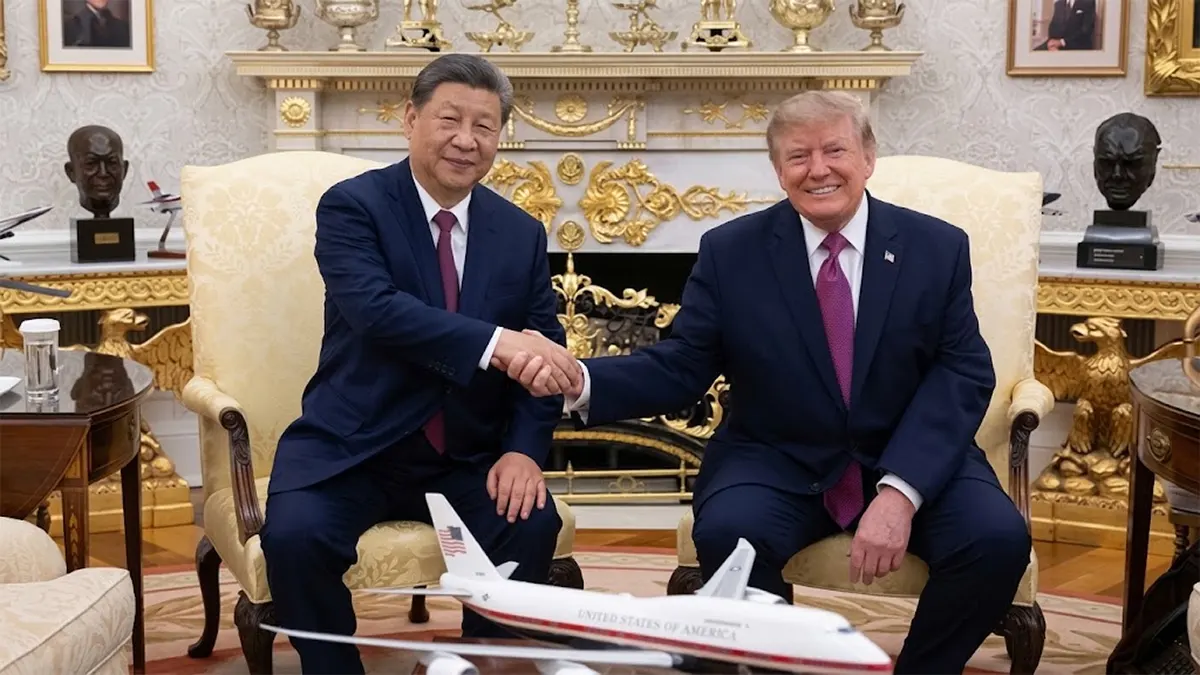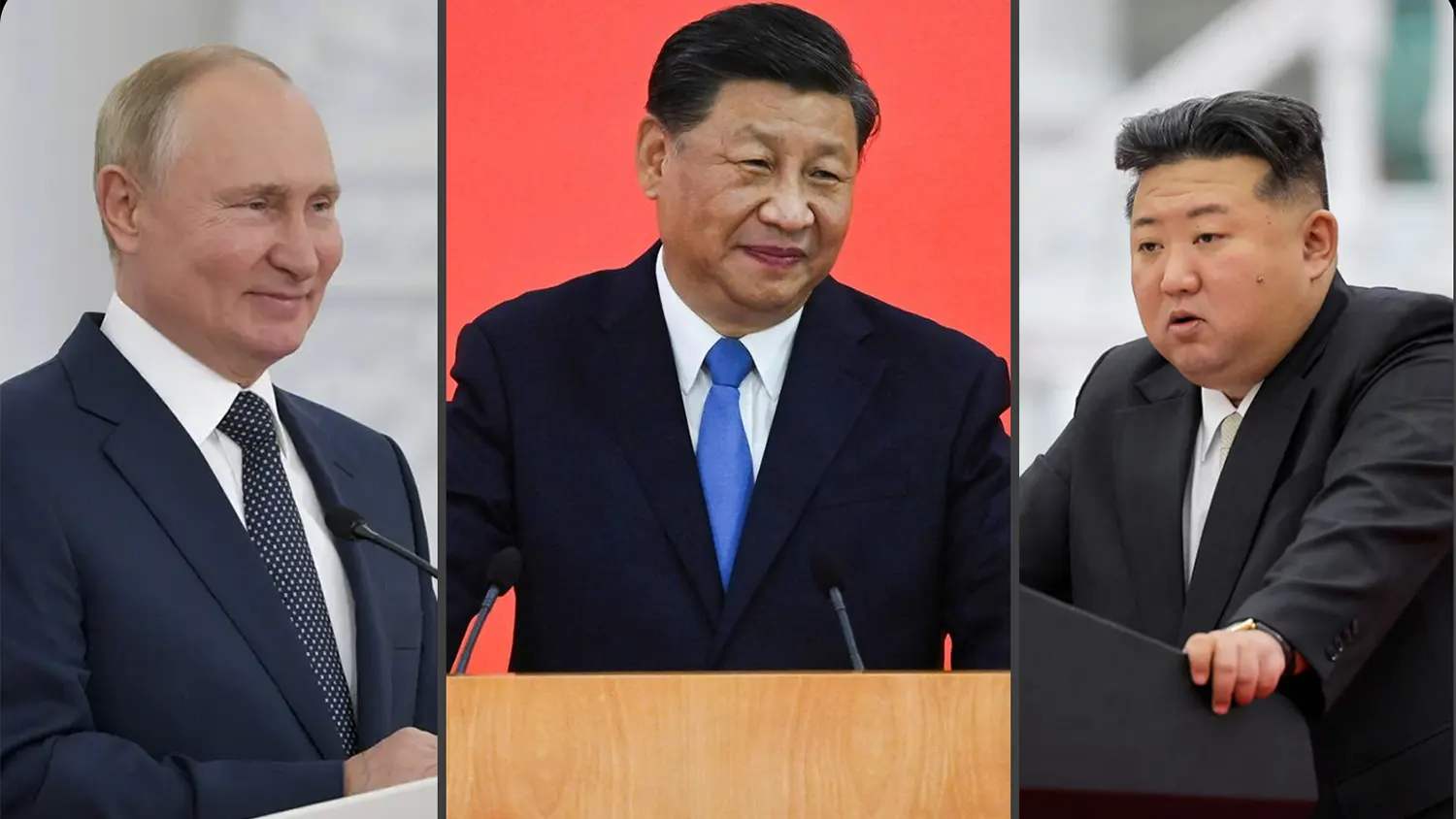
On September 3rd, 2025, three of the most consequential and most scrutinized leaders in the world will stand together in Tiananmen Square.
Chinese President Xi Jinping will host Russian President Vladimir Putin and North Korean leader Kim Jong Un at a massive military parade in Beijing, marking the 80th anniversary of the end of World War II. Chinese state media has confirmed all three will appear on the same stage.
On the surface, it’s a commemoration. In reality, analysts say, it’s something far more deliberate.
This Isn’t Just a Parade, It’s a Statement
The choreography of this event is not accidental.
Bringing Xi, Putin, and Kim together in one of the world’s most symbolically loaded public spaces the same square where China has historically staged its most powerful shows of military strength is a carefully constructed political signal. Each leader is there by choice, and the image they will project together is exactly the one Beijing intends.
“This is not just a parade, it’s a message,” said one Asia Pacific security analyst. “By standing together, these leaders are signaling that they are prepared to counterbalance Western pressure and sanctions with a united front.”
All three nations are currently living under significant Western economic and diplomatic pressure. China faces sweeping U.S. trade and technology restrictions. Russia is operating under the most extensive sanctions regime in modern history over its war in Ukraine. North Korea has been isolated by international sanctions for years. Standing together in Tiananmen Square is their collective answer to that pressure.
The Guest List Tells Its Own Story
Beijing has framed the commemoration as a non Western gathering and the attendance list makes that point without needing a single word of explanation.
Joining Xi, Putin, and Kim will be leaders from Iran, Belarus, Indonesia, and Cuba a lineup that reads like a who’s who of nations operating outside the Western diplomatic orbit. Conspicuously absent are the heads of any major Western democracy.
The lone exception is Slovakia’s Prime Minister, whose attendance will make him the only Western leader present in a room otherwise defined by its distance from Washington and Brussels.
That contrast deliberate or not captures exactly the kind of global polarization that is reshaping international politics in 2025.
Kim Jong Un’s First China Visit in Six Years
For North Korea’s Kim Jong Un, this trip carries particular weight.
He has not set foot in China in six years. Foreign travel of any kind has been rare for Kim since the COVID-19 pandemic effectively sealed North Korea off from the outside world. His decision to make Beijing the destination for this return signals a serious push to deepen ties with his two most critical allies at a moment when Pyongyang needs both more than ever.
North Korea’s survival under international sanctions depends heavily on its relationships with China and Russia economically, diplomatically, and increasingly, militarily. Western intelligence agencies have accused Pyongyang of supplying artillery shells, missiles, and other munitions to Russia for use in the war in Ukraine, a claim that has intensified international scrutiny of the Pyongyang-Moscow relationship.
Kim’s presence in Beijing isn’t just symbolic. It’s a working visit dressed up in parade clothes.
What China Plans to Show the World
The parade itself is expected to be one of China’s largest military showcases in years.
Military analysts anticipate a high-profile display of advanced weapons systems hypersonic missiles, next-generation fighter jets, and new air defense platforms among them. For Beijing, the parade serves a dual purpose: a domestic demonstration of strength for a Chinese audience, and an unmistakable message to rivals and allies alike that China’s military modernization is real, advanced, and accelerating.
Tiananmen Square has long been the stage Beijing chooses when it wants the world to take notice. On September 3rd, it will be performing for a very specific audience.
Three Countries, One Shared Problem
Beneath the pageantry, there is a clear strategic logic binding these three nations together right now.
Each is navigating a world where the United States and its allies are the primary source of economic and political pressure. Each has found that working within the Western-led international system comes at a cost they are no longer willing to pay. And each has calculated that coordinating outside that system on trade, on military supply chains, on diplomatic positioning is more valuable than going it alone.
For Xi, the parade reinforces his broader vision of a multipolar world order where American dominance is no longer a given. For Putin, it underscores a strategic pivot toward Asia as Western isolation over Ukraine deepens with no end in sight. For Kim, it secures recognition, support, and critical lifelines that sanctions were designed to cut off.
The Beijing gathering gives all three a rare opportunity to coordinate those strategies face to face away from Western eyes and outside Western institutions.
A World Splitting Into Two Lanes
What’s unfolding in Beijing on September 3rd is a snapshot of a much larger shift.
While the West is busy reinforcing NATO, the G7, and Indo-Pacific partnerships, Beijing is quietly positioning itself as the gravitational center of a parallel network of nations that have decided those institutions no longer serve their interests or never did.
Whether this emerging bloc hardens into a genuine strategic alliance or remains, as some analysts argue, a coalition of shared grievances rather than shared values, is the defining geopolitical question of the coming decade.
But when Xi, Putin, and Kim stand together in Tiananmen Square before the world’s cameras, the question of intent will feel considerably less abstract. The 21st century’s deepest geopolitical fault line is no longer forming, it has already formed. September 3rd is just the moment it steps into the light