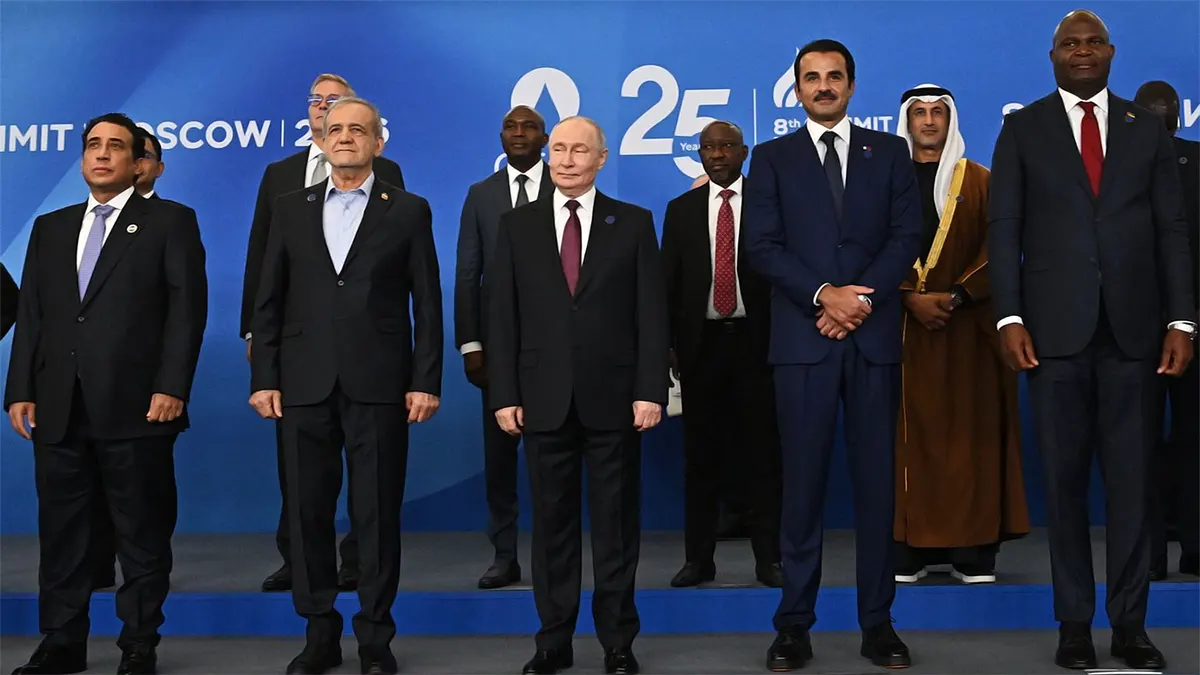
Moscow is the center of the global gas conversation today. Russian President Vladimir Putin is hosting Iranian President Masoud Pezeshkian and leaders from major gas-producing nations for the 8th Gas Exporting Countries Forum (GECF) Summit. The main event is a one-day gathering on October 27, 2026, and the guest list is as political as it is economic.
A room that holds most of the world’s gas
The countries attending represent roughly 70% of the world’s proven natural gas reserves, according to the information provided. Delegation heads from countries including Algeria, Qatar, Venezuela, Mozambique and the UAE have joined the talks. Pezeshkian arrived from Tehran, where he had just held high-level security discussions.
The official agenda covers the geopolitical pressures facing the gas industry, new technology, protecting energy infrastructure and ways to cope with Western sanctions. Leaders of participating states are also discussing global supply and energy security.
Iran and Russia move from promises to action
The most closely watched talks may be the one-on-one meeting between Putin and Pezeshkian on the sidelines. Pezeshkian said the two countries have moved past introductions and into the implementation phase of their Comprehensive Strategic Partnership Treaty. That covers energy projects, trade, transport links and technology exchange.
On gas, technical teams and oil ministers are reportedly close to finalizing a natural gas swap agreement. Officials are also working on a possible three-way deal linking Iran, Russia and Azerbaijan through Caspian Sea routes. Other topics include joint Russian investment in Iranian gas fields and protection of key energy infrastructure.
Trading without the dollar
Money is another big theme. The two leaders are expected to discuss payment systems that avoid the US dollar and direct settlements in local currencies. The stated aim is to soften the impact of Western sanctions. They also plan to review the International North–South Transport Corridor, a freight route meant to connect Russia and Iran.
Why shipping routes are suddenly so important
The summit comes at a tense moment for the Middle East. The talks follow Russian Foreign Minister Sergey Lavrov’s recent trip to Tehran, and both sides are said to be coordinating their diplomacy, especially at the United Nations, to stop the conflict from widening.
Shipping is a major worry. Reports say US naval blockades and tensions around the Strait of Hormuz have cut as much as 80% of Iran’s usual sea trade. About 20% of the world’s oil normally passes through that waterway. With southern routes disrupted, Moscow and Tehran are leaning harder on the Caspian Sea, which would also carry any future gas swaps.
Russia, Iran and China have also continued joint naval drills in the Gulf of Oman and nearby waters, which they present as a way to protect shared energy routes.
What the wider conflict means for energy prices
The standoff reaches well beyond the region. Shipping companies are rerouting or paying higher war-risk insurance, and oil and LNG prices stay jumpy because of the risk of disruption. Fertilizer shipments such as urea have also been squeezed, which could raise farming costs and food security worries in importing countries.
Diplomacy continues in the background. US–Iran talks remain fragile, with disputes over whether sanctions relief or security guarantees should come first. Qatar, Oman and Pakistan are reportedly acting as mediators, while Russia and China push for negotiated regional security deals through the UN.
For Iran, deeper energy ties with neighbors like Russia are a way to work around economic isolation. Whether this summit produces concrete deals or mostly strong statements, the world will be watching the gas swap talks and the Hormuz question closely.