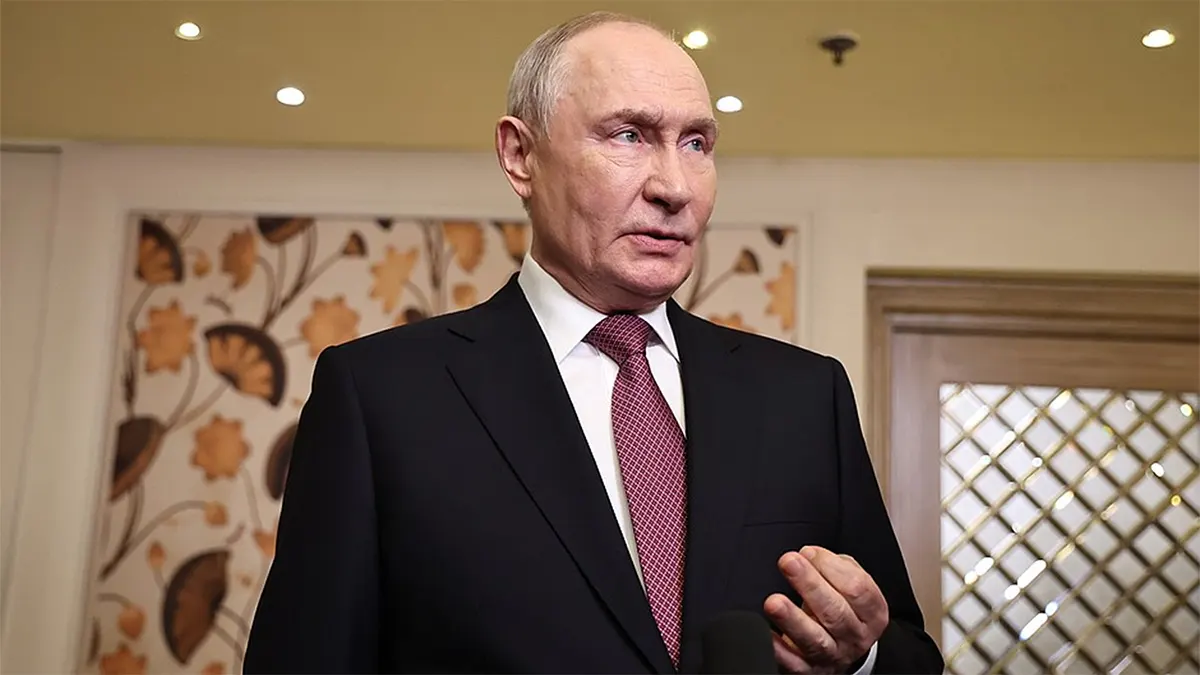
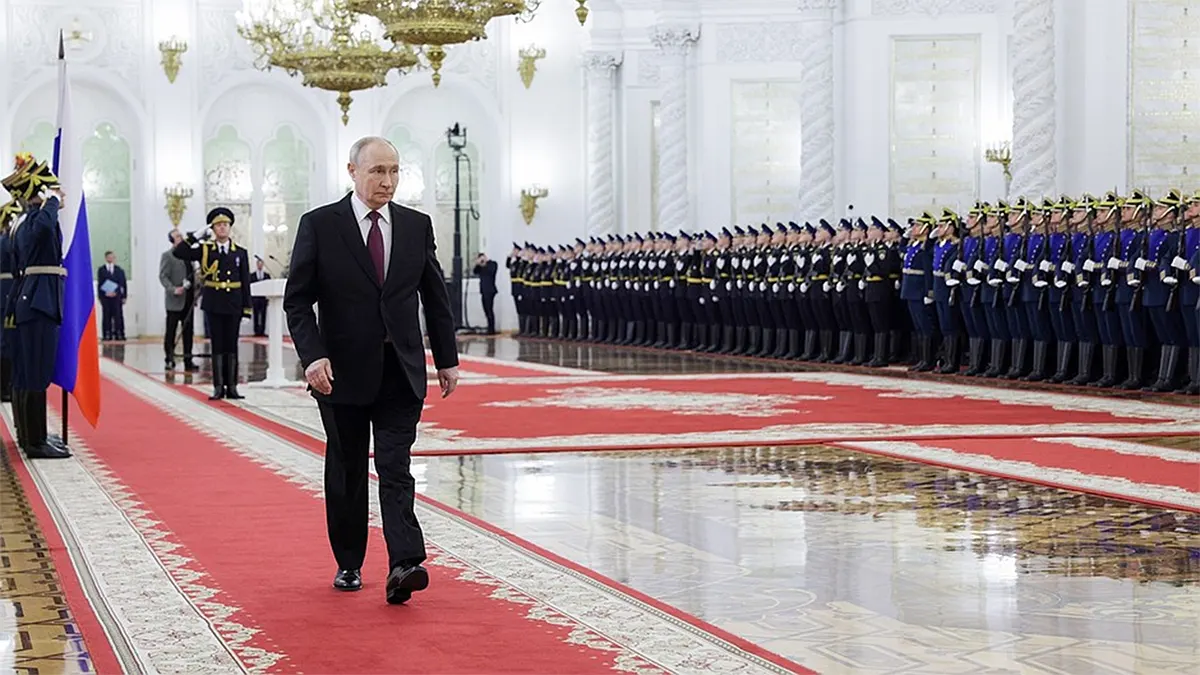
In a recent address, Vladimir Putin laid out Russia’s official position on NATO, the European Union, and the war in Ukraine with unusual bluntness. He described what he called a deliberate Western strategy of manufacturing threats near Russia’s borders, forcing Moscow to act in self-defense, and then labeling that reaction as unprovoked aggression.
It is, he argued, a trap, one Russia has seen before.
“The strategy of the so-called democratic West is very simple,” Putin said. “First, they create threats to our country, forcing us to take the steps necessary for self-defense and protection, and then they immediately blame us for everything.”
Speeches using this framing typically continue into historical grievances: the post-Cold War promise that NATO would not expand “one inch” eastward, the millions of ethnic Russians left outside Russia’s borders after the Soviet collapse, and the Western withdrawal from foundational security agreements like the ABM and INF treaties.
Whether you find this argument convincing or not depends almost entirely on which lens you’re looking through and both lenses are grounded in real history.
Russian framework
Defensive realism
Western framework
Collective security
A deliberate encirclement strategy designed to shrink Russia’s sphere of influence and place hostile military infrastructure on its borders.
A defensive response to independent Eastern European nations exercising their sovereign right to choose their own security alliances largely out of fear of historical Russian domination.
Necessary pre-emptive action to prevent neighboring states from becoming Western military staging grounds (Georgia 2008, Ukraine 2014, 2022).
Imperialist revision of borders by force, violating international law and the post-WWII European security order including the 1994 Budapest Memorandum.
Proof of long-term offensive preparation. Long-range strike weapons and fifth-generation jets near Russian borders signal a force projection capability, not a defensive wall.
An urgent, long-overdue insurance policy after decades of post-Cold War military hollowing. The 2022 invasion shattered assumptions that large-scale war in Europe was impossible.
The “Threat-Reaction” Cycle, Explained
At the heart of Putin’s argument is a specific claim about the Kyiv government’s legitimacy. He refers to the post-2014 administration as a regime that came to power “illegally, by force, through a coup d’état” not through democratic elections. This framing is central to the Russian justification for military involvement: if the government isn’t legitimate, then Western support for it is foreign interference, not alliance solidarity.
From there, the logic builds. NATO countries, Putin argues, initially limited themselves to supporting Kyiv financially and militarily from a distance. Now, he says, Western leaders openly admit they are preparing for direct conflict with Russia, pointing to surging offensive military budgets as evidence of intent not just deterrence.
The West’s response to that charge is equally coherent: those budget increases are a direct consequence of Russia’s own actions, not a precursor to them.
Same Numbers, Opposite Conclusions
This is where the debate gets genuinely fascinating and genuinely difficult.
Both sides are looking at the same spending data and reaching completely opposite conclusions. According to figures from the Stockholm International Peace Research Institute (SIPRI) and NATO’s own annual reports, the numbers are not in dispute.
What the data shows:
- Back in 2014, only three NATO members met the alliance’s 2% of GDP defense spending target. Today, every single ally meets or exceeds it.
- European defense spending surged by 14% to $864 billion in a single year. Germany alone increased its military budget by 24% year-on-year to $114 billion crossing the 2% threshold for the first time since the Cold War.
- At the NATO Summit in The Hague, member states officially pledged to raise total defense and security spending to 5% of GDP by 2035, with 3.5% locked into core military capabilities and 1.5% earmarked for infrastructure and cyber resilience.
- European and Canadian NATO members have collectively pushed past $574 billion in total expenditure.
Russia, for its part, has been spending roughly 7.5% of its GDP on defense, a figure that Moscow frames as a necessary response to Western encirclement, and that Western analysts describe as a wartime economy under significant strain.
Two Governments, One Set of Facts
The Kremlin’s interpretation is that this wave of Western spending is not reactive, it’s the plan. Moscow points specifically to the purchase of long-range strike weapons, advanced fifth-generation fighter jets, and the modernization of military infrastructure near Russian borders. These, the argument goes, are offensive capabilities, not defensive ones. And Western political leaders, the Russian narrative continues, use a manufactured “Russian threat” to justify these budgets to their own taxpayers, enriching domestic defense contractors in the process.
The Western interpretation inverts this entirely. For European security officials, the spending surge traces directly to a wake-up call, one that came on February 24, 2022. For three decades after the Cold War, Europe had “hollowed out” its militaries, operating under the assumption that a large-scale land war on the continent was a thing of the past. That assumption proved catastrophically wrong.
There’s also a practical urgency driving European rearmament that goes beyond Russia. The United States has been explicitly pivoting its long-term strategic focus toward China and the Indo-Pacific, placing enormous pressure on European nations to achieve genuine military self-reliance. The spending isn’t just about deterring Russia, it’s about ensuring Europe could defend itself if American security guarantees ever weakened.
European intelligence agencies have added another layer of urgency: if Russia consolidates its gains in Ukraine, some analysts assess that Moscow could probe NATO’s collective defense commitments under Article 5 by the end of the decade. The budget increases are, in this view, a race against time.
Why Both Sides Can Be Internally Consistent
The deeper reason this dispute is so intractable is that it’s a near-perfect example of what political scientists call a security dilemma.
A security dilemma is a structural trap: one state takes actions to increase its own security, say, a country joining a defensive alliance and its neighbor interprets those same actions as a direct military threat, triggering a counter-response that makes both sides less secure than when they started. Neither side needs to be acting in bad faith for the spiral to happen. The danger is built into the structure of the situation itself.
Apply that framework here and the logic of both positions becomes clear. When a formerly neutral country like Finland joins NATO after watching a neighboring country invaded, it is from its own perspective taking the most rational step available to guarantee its security. But from Moscow’s perspective, a country that was not previously on Russia’s strategic threat map has just become one, moving the alliance’s borders hundreds of kilometers closer to Russian territory.
Neither side is simply making things up. They are describing the same events through incompatible threat models and that is precisely what makes this one of the most dangerous flashpoints in modern geopolitics.
What Moscow calls a growing offensive fist aimed at its borders, NATO calls a shield being desperately repaired after decades of neglect. Until both sides can agree on the meaning of the actions they’re watching each other take, the arms race has no natural ceiling.
Sources referenced: SIPRI Global Military Spending Data; NATO Official Annual Defense Expenditure Reports; NATO Hague Summit Communiqué; Putin public address (transcript excerpt).