For years, Western governments accused China of walking a fine line, selling Russia the tools of war without technically pulling the trigger. That line may have just been crossed.
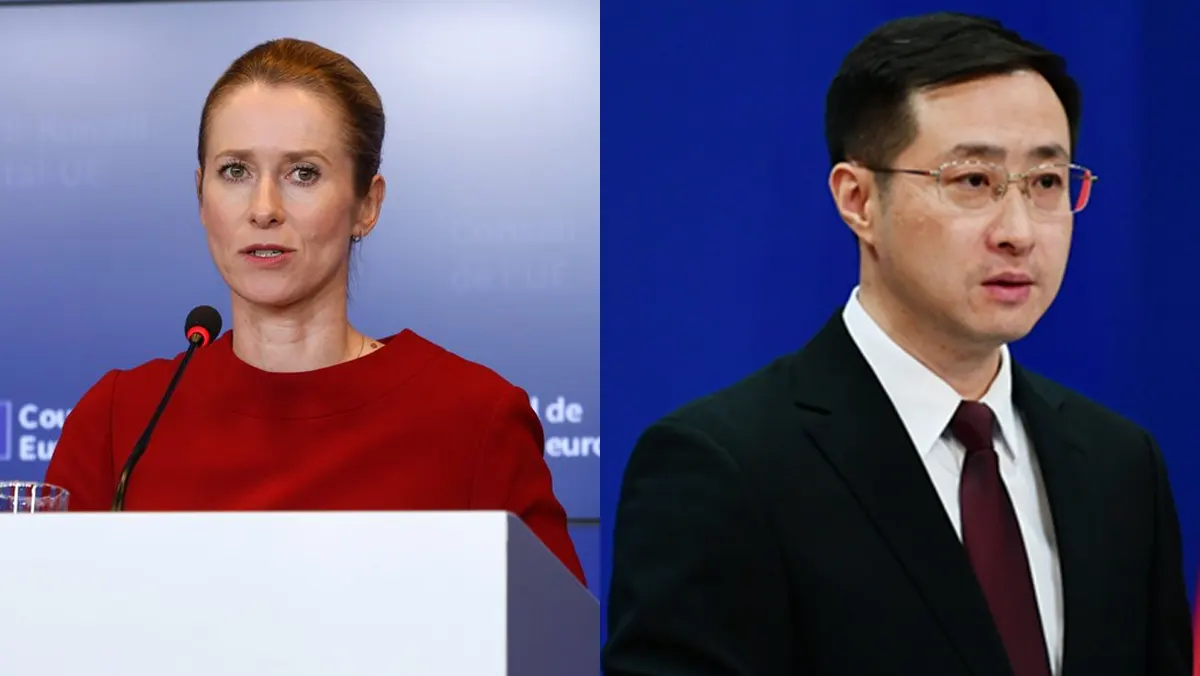
The European Union has officially escalated its position on Beijing’s role in the Ukraine conflict, moving beyond accusations of economic support to something far more serious: direct military complicity. EU Foreign Policy Chief Kaja Kallas confirmed that European intelligence services have verified that hundreds of Russian military personnel were secretly trained at military facilities inside China, a revelation that is reshaping how the West views Beijing’s role in this war.
From “Dual-Use” Goods to Boots on Chinese Soil
Until recently, Western accusations against China focused on the supply of “dual-use” goods microchips, industrial tools, satellite imagery items with legitimate civilian uses that were quietly feeding Russia’s military-industrial machine. It was damaging, but it gave Beijing a layer of deniability.
What’s now been put on the table is different. According to verified European intelligence, the training sessions took place in late 2025, at facilities in Beijing and Nanjing, and were structured under a bilateral agreement signed by senior Russian and Chinese military officers in Beijing in July 2025. The curriculum wasn’t generic either, it specifically covered drone operations, electronic warfare, and armored infantry tactics.
That’s not a chip supplier hedging its bets. That’s a military partner.
Kallas didn’t mince words, labeling China a “decisive enabler” of the war, a phrase that carries enormous diplomatic weight and signals that Brussels is no longer willing to treat Beijing’s economic and military support as separate issues.
What the New EU Sanctions Actually Target
Alongside the intelligence disclosure, the EU formalized a new sanctions package in mid-June 2026, targeting 21 entities and 7 individuals across multiple countries supporting Russia’s war effort. The timing was deliberate pushing the sanctions through at the exact moment the training allegations went public signals that the EU is treating this as a single, unified threat.
Among the sanctioned entities, two categories stand out:
Chinese Drone & Tech Manufacturers
- Shenzhen Minghuaxin was explicitly accused of supplying drone-related components and technology to Russia directly connecting the supply chain to the very combat training now being revealed.
- Xinxiang Richful Lubricant Additive Company, a major producer of chemical additives for industrial machinery, was targeted for supplying materials critical to keeping Russia’s heavy military vehicle fleet operational. Less flashy than drones, but just as consequential on the battlefield.
Hong Kong Shipping Outfits
- Glory Shipping HK and Nord Axis were sanctioned for facilitating the shipment and trading of Russian oil in violation of Western price caps effectively funneling money back into the Kremlin’s war chest through maritime routes designed to dodge sanctions.
The message from Brussels is unmistakable: the gray zone is closing.
Beijing’s Denial and Why It’s So Carefully Worded
China’s response came swiftly. Foreign Ministry Spokesperson Lin Jian called the allegations “pure slander and smearing,” flatly rejecting the intelligence without offering a counter-explanation.
That kind of blanket denial is deliberate, and it serves a very specific purpose.
By framing the accusations as the West trying to “shift responsibility for the war,” Beijing is leaning on its well-worn counter-narrative that NATO’s eastward expansion caused this conflict, and that Western military aid to Ukraine only prolongs it. Calling the intelligence “smearing” lets China maintain its self-styled position as a neutral party without engaging with the specifics.
The problem is, the specifics are hard to wave away. The intelligence Kallas cited isn’t vague. It names locations. It names a timeline. It describes the content of the training. It references a paper trail, a bilateral military agreement. A simple denial holds less weight in diplomatic circles when the other side is citing documents and facilities by name.
But Beijing’s pushback isn’t really aimed at NATO intelligence analysts. It’s aimed at protecting its economic interests in the European market.
The EU is one of China’s largest trading partners. So far, Beijing has been willing to absorb sanctions on smaller logistics firms and niche tech suppliers. But a formal EU consensus that the Chinese military is actively involved in the conflict opens the door to far more sweeping measures potential sanctions on state-owned banks, telecom giants, or entire manufacturing sectors. For a Chinese economy already showing signs of strain, that’s a risk Beijing simply cannot afford to let escalate unchecked.
NATO Is Watching, Closely, and Quietly
NATO Secretary General Mark Rutte offered a carefully measured response when asked about the intelligence. “We are not naive,” he said. “We follow everything exactly… you can be assured that we follow every bit.”
He didn’t elaborate on specific collection methods that’s standard protocol but the public confirmation itself was the message. NATO is telling Beijing, without spelling it out, that Chinese military facilities are under constant Western surveillance, likely via satellite imagery, signals intercepts, and human intelligence networks.
What makes Rutte’s statement particularly significant is the broader framework he placed it in. Russia, he noted, does not operate alone. NATO security analysts have increasingly focused on what’s known in security circles as the “CRINK” alignment China, Russia, Iran, and North Korea, four countries operating under what Rutte described as implicit, transactional mutual arrangements.
The division of labor within that grouping has become increasingly visible:
- North Korea supplies artillery shells and ballistic missiles
- Iran provides Shahed kamikaze drones
- China has historically served as the economic and technological anchor, the one keeping Russia’s industrial base from collapsing under Western sanctions
If the training allegations hold, China is no longer just the anchor. It’s moving into the operational pipeline actively shaping how Russian forces fight on the ground.
Why This Moment Changes Everything
The timing of all this matters. NATO defense ministers are meeting, and the NATO Summit in Ankara is on the horizon. Intelligence confirming Chinese military involvement in a European war doesn’t just complicate diplomatic schedules, it fundamentally reframes how the alliance defines the Indo-Pacific security environment.
For years, NATO officially classified China as a “systemic challenge”, a rival, but not an active threat. Direct participation in training Russian forces for a war in Europe is a different category entirely. It shifts the conversation from geopolitical competition to something closer to active, if indirect, belligerence.
By validating the EU’s intelligence without exposing NATO’s collection methods, Rutte is reinforcing a unified Western front. The message to Beijing is deliberate and clear: the West is no longer separating China’s economic support from its military involvement.
For Beijing, the gray zone that allowed it to be Moscow’s lifeline while maintaining the facade of neutrality has officially become a much smaller, much riskier place to operate.