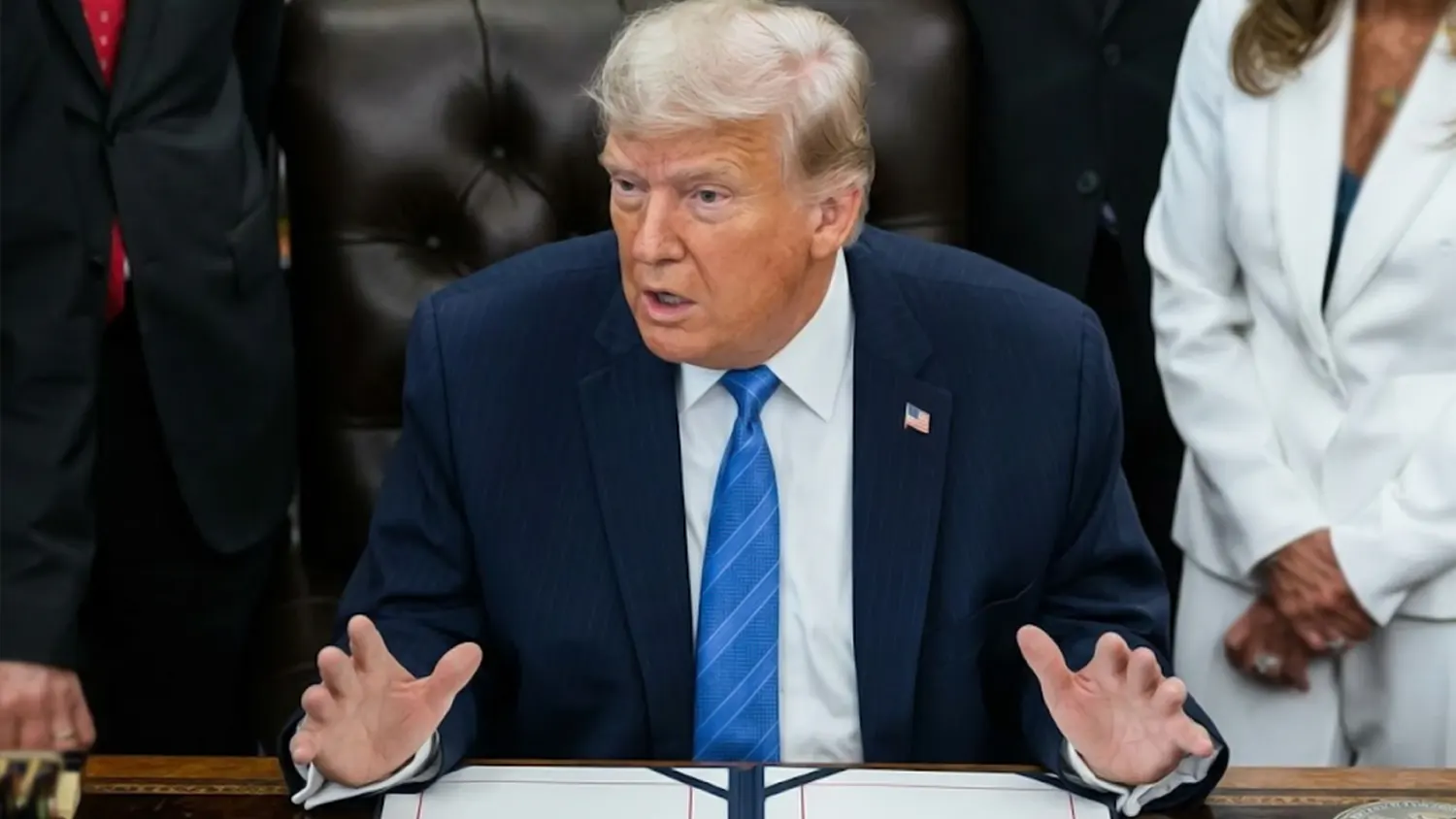
U.S. President Donald Trump has once again raised uncertainty around the future of the United States-Mexico-Canada Agreement (USMCA), suggesting he may not support extending the trade pact when it comes up for review.
The comments have attracted significant attention across North America, particularly in Canada, where policymakers and business leaders are preparing for what could become a difficult round of trade negotiations. While Trump’s remarks generated headlines, trade experts argue that several of his claims conflict with the actual structure of the agreement and the economic realities of North American commerce.
Questions Emerge Over Trump’s Interpretation of USMCA
During recent remarks, Trump praised the USMCA for including what he described as a six-year renewal mechanism, while contrasting it with the North American Free Trade Agreement (NAFTA), which he claimed lacked a termination provision.
However, NAFTA did include a withdrawal clause. Under Article 2205, any member country could leave the agreement after providing six months’ written notice. In fact, Trump himself repeatedly referenced the possibility of withdrawing from NAFTA during his first term as a way to pressure Canada and Mexico into renegotiating the deal.
Trade specialists also note that Trump’s description of the USMCA review process oversimplifies how the agreement actually works.
The USMCA Does Not Automatically Expire After Six Years
A common misconception surrounding the USMCA is that it must be renewed every six years or risk ending altogether.
In reality, the agreement was designed with a 16-year term and a six-year review process.
The review allows the United States, Canada and Mexico to assess the pact and determine whether they wish to extend it for another 16 years. If one or more countries decline to support an extension during the review period, the agreement does not automatically terminate.
Instead, annual reviews are held until the issue is resolved or until the original 16-year term expires.
This distinction is important because it means the upcoming review is more about negotiations and leverage than an immediate threat to the existence of the trade agreement.
North American Supply Chains Remain Deeply Connected
Trump also argued that the United States does not need products from Canada or Mexico, including energy supplies.
Economists and industry groups strongly dispute that assessment.
Canada remains the largest foreign supplier of crude oil to the United States, providing a substantial share of imported crude used by American refineries. Many facilities, particularly in the Midwest and Gulf Coast regions, are specifically configured to process Canadian heavy crude.
Energy is only one part of a much broader economic relationship.
The United States also relies on Canada and Mexico for critical minerals, agricultural products, manufacturing inputs and automotive components. Modern North American supply chains are highly integrated, with products often crossing borders multiple times before reaching consumers.
As a result, major disruptions to the trade relationship could affect industries on all three sides of the border.
Analysts See a Familiar Negotiating Strategy
Despite the tough rhetoric, many trade analysts do not believe Trump intends to dismantle the USMCA entirely.
Instead, they view the comments as part of a familiar negotiating strategy designed to maximize leverage before formal review discussions begin.
By publicly questioning the future of the agreement, Trump creates uncertainty that may encourage Canada and Mexico to approach negotiations from a more defensive position.
This approach aligns closely with Trump’s long-standing dealmaking philosophy, which often involves opening negotiations with aggressive demands and the possibility of walking away from the table.
Why Annual Reviews Could Benefit Washington
One area attracting particular attention is the possibility of turning the review process into a recurring source of leverage.
If the United States declines to support a clean extension of the agreement, the USMCA could move into a period of annual reviews rather than receiving another 16-year extension.
Such a scenario would allow Washington to revisit disputes more frequently, including issues involving Canadian dairy access, digital service taxes, automotive manufacturing rules and other trade concerns.
For the White House, annual reviews could provide an opportunity to maintain consistent pressure on trading partners while extracting concessions over time.
Canada Shifts Strategy Toward “Fortress North America”
Canadian officials have responded carefully to Trump’s comments.
Rather than escalating the dispute publicly, Prime Minister Mark Carney’s government has focused on promoting a vision often described as “Fortress North America.”
The concept emphasizes deeper economic integration among the United States, Canada and Mexico as a way to strengthen regional competitiveness, particularly against China.
Canada has formally supported a clean 16-year extension of the USMCA and has increasingly framed the agreement as a strategic asset for all three countries rather than simply a trade arrangement.
Ottawa Makes Early Moves to Ease Trade Frictions
At the same time, Canada has quietly taken steps to reduce tensions with Washington.
Officials have begun addressing several issues that have frustrated American policymakers and businesses. Among the most notable moves was the reversal of a proposed tax affecting U.S. streaming services, a policy that had drawn criticism south of the border.
Such actions are widely viewed as attempts to create a more favorable environment ahead of formal trade discussions.
U.S. Industries Push Back Against Trade Uncertainty
Canada is not the only stakeholder defending the agreement.
Major American industry groups have also spoken out following Trump’s remarks, warning that uncertainty surrounding the USMCA could create risks for businesses and consumers.
Agricultural organizations note that Canada and Mexico purchase a significant share of U.S. farm exports, while American farmers rely heavily on Canadian potash, a critical fertilizer ingredient used throughout the agricultural sector.
Manufacturers and automakers have expressed similar concerns, arguing that integrated North American supply chains help keep production costs competitive.
A High-Stakes Review, Not an Imminent Breakup
While Trump’s comments have fueled speculation about the future of the USMCA, most experts view the upcoming review as a negotiation rather than a countdown to collapse.
The agreement remains one of Trump’s signature trade achievements from his first term, and powerful business interests across North America continue to support its preservation.
For now, Canada appears focused on navigating the political theater while reinforcing a simple message: North America’s economies remain deeply interconnected, and all three countries stand to benefit from maintaining a stable trade framework.