A Ceasefire That Didn’t Bring Peace
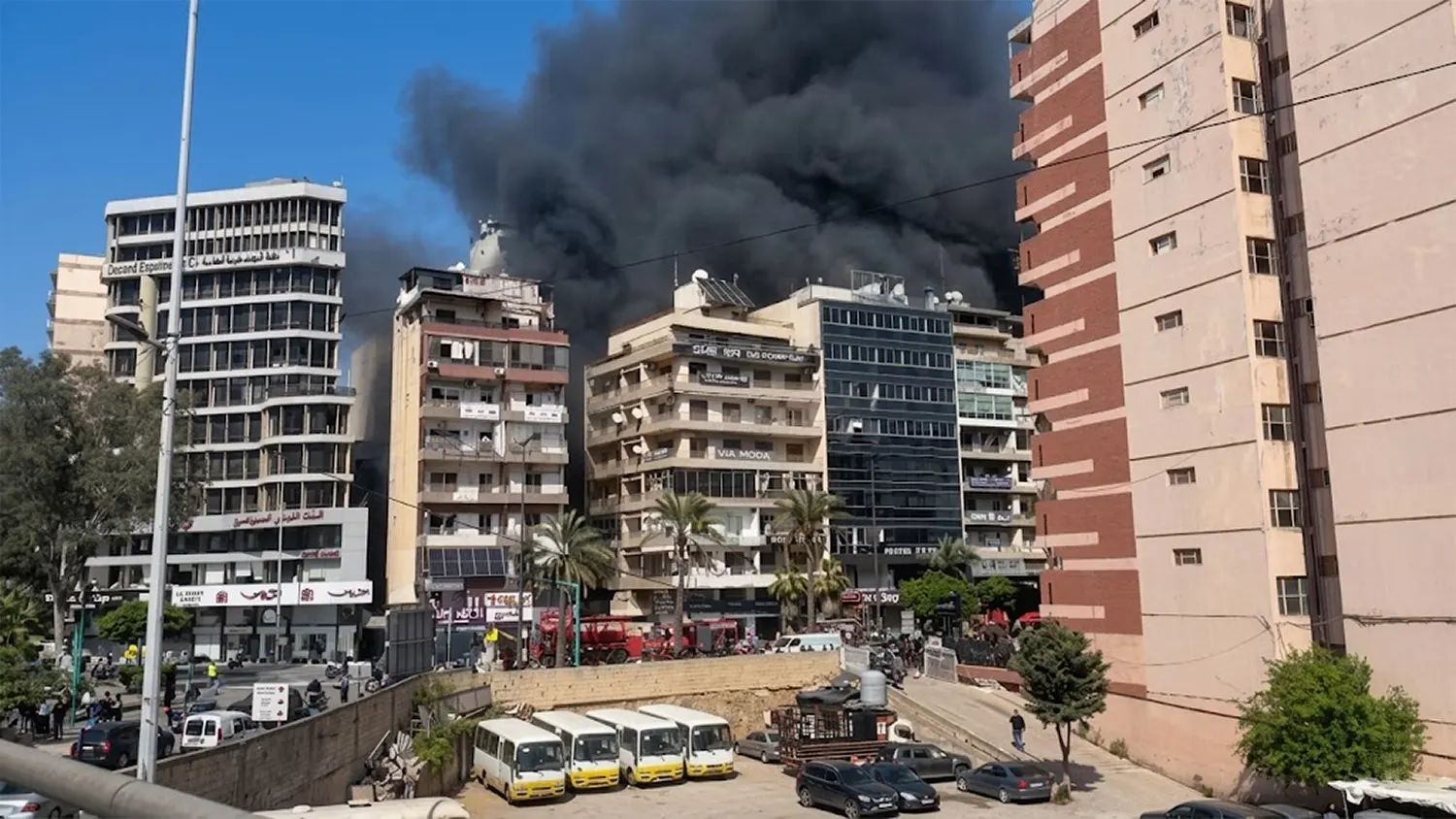
Just hours after a U.S.–Iran ceasefire was announced, one of the deadliest waves of strikes in the Israel–Hezbollah war unfolded in Lebanon.
What was supposed to calm the region instead revealed a deeper truth: modern ceasefires don’t always stop wars, they can redirect them.
As global powers welcomed a pause in tensions with Iran, Lebanon experienced the opposite. The result is a stark contradiction: diplomatic progress at the regional level, and catastrophic escalation on the ground.
A Massive Strike Under the Shadow of Diplomacy
The turning point came on April 8, 2026.
Israel launched what is now considered the largest and most intense air assault of the conflict, reportedly striking more than 100 targets in just 10 minutes in an operation widely referred to as “Operation Eternal Darkness.”
This was not a routine escalation.
- Around 50 fighter jets deployed roughly 160 munitions
- Strikes hit Beirut, the Bekaa Valley, Sidon, and Tyre
- Several attacks occurred without prior evacuation warnings, including in dense urban areas
Crucially, this happened within hours of a ceasefire agreement involving the
United States and Iran, creating immediate confusion and controversy over what the deal actually covered.
That confusion quickly turned into a diplomatic fault line.
The “Ceasefire Gap”: One Agreement, Two Interpretations
At the center of the crisis is a fundamental disagreement.
On one side, mediators like Pakistan and Iran insisted the truce was meant to be comprehensive, covering all regional fronts including Lebanon.
On the other, Benjamin Netanyahu made it explicit: Lebanon was not part of the deal.
The United States reinforced that position.
Donald Trump described the Israel–Hezbollah conflict as a “separate” issue, effectively carving Lebanon out of the ceasefire framework.
This disconnect has created what analysts now call a “ceasefire gap”, a space where diplomacy exists on paper but not in practice.
As a result, military operations were not paused, they were accelerated.
On the Ground: The Deadliest Day of the War
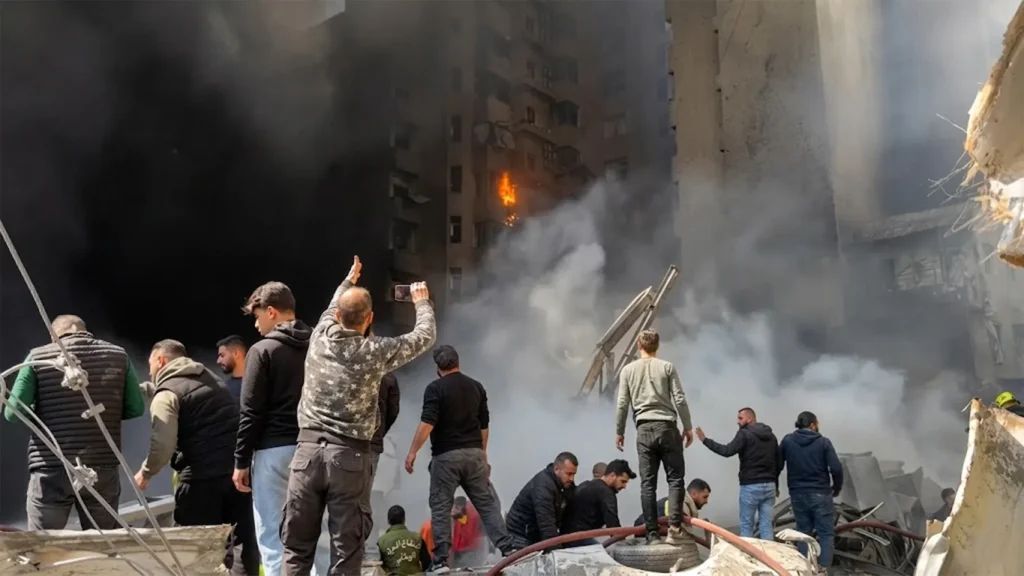
The human toll was immediate and severe.
Lebanon recorded its deadliest 24 hour period since the conflict began:
- At least 254 people killed
- More than 1,100 wounded
- 1.2 million people displaced nearly 20% of the population
Hospitals, already strained, are now overwhelmed.
Facilities in Beirut including the American University of Beirut Medical Center issued
urgent calls for blood donations as casualties surged beyond capacity.
But beyond the numbers, specific incidents underscore the scale of devastation:
- A funeral in Shmestar was struck, killing mourners
- A residential building in Beirut’s al-Mazraa district was partially destroyed during rush hour
- Hiram Hospital in Tyre sustained heavy damage, with aid workers injured
The lack of warning in several strikes has drawn particular outrage, marking a shift from earlier patterns of evacuation alerts.
Hezbollah’s Response: From Restraint to Retaliation
Initially, Hezbollah appeared to respect the broader regional truce.
The group reportedly held fire during the early hours following the ceasefire announcement, signaling an attempt at least temporarily to align with the diplomatic framework.
But that restraint did not last.
By evening, Hezbollah resumed rocket fire into northern Israel, targeting areas in the Galilee.
The group framed Israel’s actions as:
A “barbaric aggression” and a direct violation of ceasefire terms
This sequence matters.
It shows how quickly fragile de escalation efforts can collapse when interpretations differ, turning a pause into a trigger for renewed violence.
Global Reactions: Unity in Concern, Division in Action
The reaction from world capitals was swift but not unified.
The United Nations
António Guterres “unequivocally condemned” the strikes, warning they pose a “grave risk” to the ceasefire itself and reiterating that there is “no military solution.”
Europe
France and Spain strongly criticized the escalation:
- France called the strikes “unacceptable”
- Spain warned of the growing civilian toll
China
China took a firmer legal stance:
- Condemned the attacks as violations of sovereignty
- Warned against undermining regional stability
Lebanon
Joseph Aoun labeled the strikes “barbaric,” accusing Israel of escalating at the very moment the region expected relief.
Meanwhile, Prime Minister Nawaf Salam declared April 9 a national day of mourning.
Despite widespread condemnation, there has been little indication of immediate international leverage capable of halting the fighting.
Why This Matters: The Rise of “Fragmented Warfare”
This crisis reveals a broader shift in how conflicts are managed.
The traditional idea of a ceasefire, a full stop to hostilities is breaking down.
Instead, what is emerging is a model of “fragmented warfare”:
- Conflict is paused in one arena (U.S.–Iran)
- While it intensifies in another (Israel–Hezbollah in Lebanon)
In effect, war is no longer ending, it is being compartmentalized.
This has several consequences:
- Violence is displaced, not resolved
- Civilians in excluded regions bear disproportionate costs
- Diplomatic agreements lose credibility when they appear selective
Lebanon is now the clearest example of this phenomenon.
A Dangerous Path Forward
Looking ahead, several risks are emerging.
First, continued Israeli operations could further degrade Hezbollah but at the cost of deeper humanitarian collapse in Lebanon.
Second, Hezbollah faces pressure to escalate further, particularly if it seeks to restore deterrence.
Third, the “ceasefire gap” could widen, undermining trust in future diplomatic efforts.
And finally, there is a lingering danger:
If miscalculations occur, the conflict could still expand beyond Lebanon pulling Iran
back into direct confrontation.
The Reality Behind the Ceasefire
The April 8 strikes did more than escalate a war, they exposed the limits of modern diplomacy.
A ceasefire that excludes key actors and battlefields does not end conflict, it reshapes it.
For now, the region lives in a paradox:
- Calm in the Persian Gulf
- Crisis in Lebanon
And as long as that imbalance persists, peace will remain partial and fragile.