A War Now Defined by Contradiction
The Iran–Israel war has entered a phase where diplomacy and military escalation are no longer just misaligned, they are actively contradicting each other.
On one hand, Washington is promoting a sweeping peace framework. On the other, Iran has launched one of its most sustained missile campaigns yet. The result is a crisis that is accelerating in two directions at once.
For a global audience, this is no longer just another Middle East flare up. It is a systemic shock threatening energy flows, regional stability, and the credibility of international diplomacy itself.
The Missile Campaign Expands Beyond Symbolism
The latest escalation came in what Iran’s Islamic Revolutionary Guard Corps (IRGC) described as the “tenth wave” of retaliatory strikes, a sign that this is not a one off response, but a sustained campaign.
Across Israel, the attacks were both geographically wide and strategically targeted:
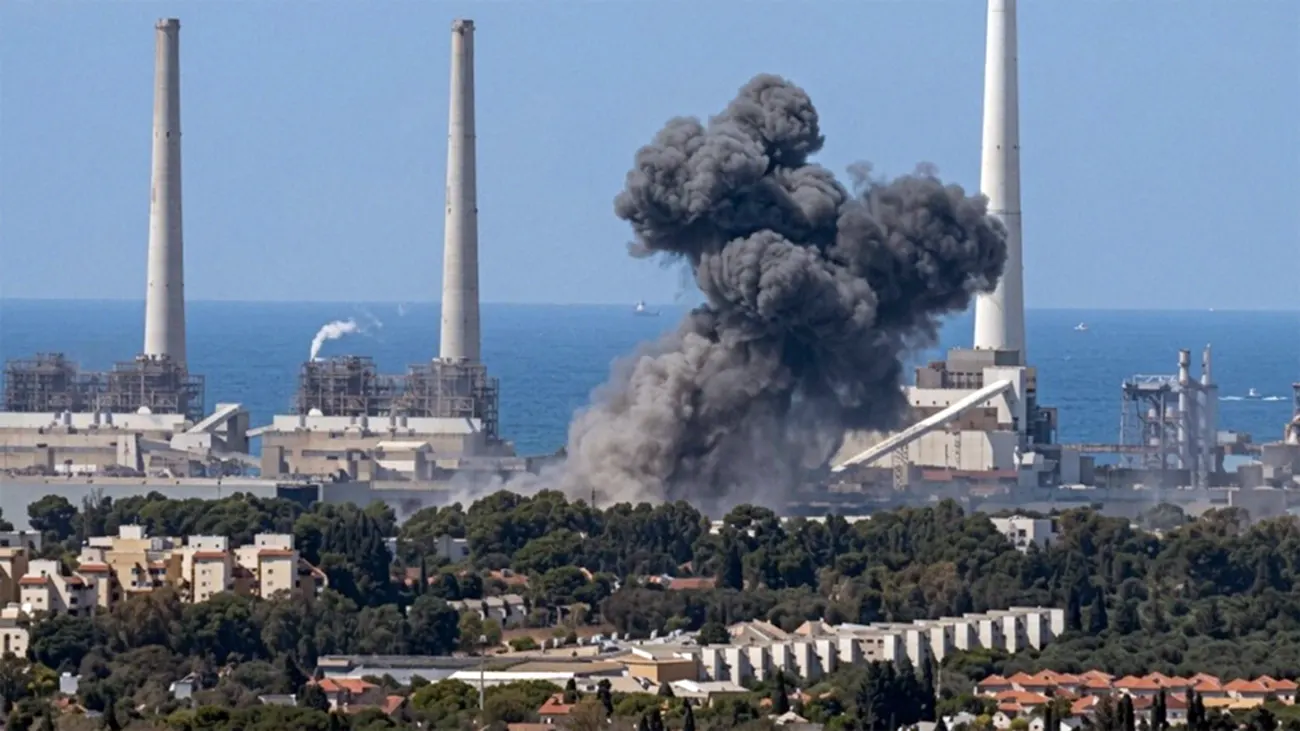
- Near the Hadera power station (Orot Rabin), a ballistic missile strike triggered large fires and thick smoke visible across the coast
- In central Israel, a warehouse fire in Yashresh and blast injuries in Kafr Qassem highlighted the spillover into civilian zones
- In the south, sirens rang as far as Eilat, coinciding with strikes near the Dimona nuclear research area
- In the north, Haifa’s oil refineries and naval infrastructure were targeted, forcing temporary shutdowns earlier in the week
Despite high interception rates, the pattern is clear: Iran is no longer signaling, it is probing Israel’s critical infrastructure at scale.
This shift matters. Earlier exchanges carried symbolic weight. Now, the focus has moved toward energy systems, military logistics, and strategic chokepoints targets that can alter the balance of the conflict if degraded over time.
The 15 Point Plan Becomes the Center of the Storm
As missiles landed, Washington introduced what may be the most ambitious diplomatic effort of the war: a 15 point proposal aimed at fundamentally reshaping Iran’s military and nuclear posture.
At its core, the plan demands:
- Full dismantlement of Iran’s nuclear infrastructure, including Natanz, Fordow, and Isfahan
- Removal of all enriched uranium under international supervision
- A complete halt to support for regional proxy groups like Hezbollah and the Houthis
- Permanent reopening of the Strait of Hormuz
- Strict limitations on Iran’s missile capabilities
In exchange, the United States is offering sweeping incentives: full sanctions relief, economic reintegration, and support for a civilian nuclear program.
But the imbalance is stark. What Washington frames as a diplomatic off ramp, Tehran sees as a blueprint for strategic surrender.
Tehran’s Counteroffer Reveals the Real Divide
Iran’s response has been swift and uncompromising. Foreign Minister Abbas Araghchi dismissed the proposal as “maximalist and unreasonable,” while putting forward a 5 point counter demand that reframes the entire negotiation.
Tehran’s conditions include:
- War reparations for damage caused by U.S. and Israeli strikes
- Recognition of Iran’s right to control and monetize transit through the Strait of Hormuz
- Binding security guarantees against future attacks
- A requirement that any agreement includes an end to Israeli operations in southern Lebanon
This is not just a rejection, it is a reversal. Iran is positioning itself not as a party under pressure, but as one demanding concessions.
The gap between the two sides is now vast. One demands disarmament. The other demands compensation and recognition.
A 48 Hour Window That Could Decide the Next Phase
The urgency is amplified by a ticking clock.
President Donald Trump’s temporary pause on strikes against Iran’s energy infrastructure is set to expire within hours. Behind the scenes, reports suggest Israel has been instructed to accelerate strikes over a 48 hour window, anticipating a possible sudden shift in U.S. policy.
This creates a volatile triangle:
- Washington is signaling diplomacy—but preparing escalation
- Tehran is rejecting talks—while intensifying attacks
- Israel is acting preemptively—assuming diplomacy may fail
As a result, the risk of a large scale strike on Iran’s power grid and oil facilities is now at its highest point since the war began.
The Conflict Spreads Across the Region
What was once a contained confrontation is now visibly regional.
Across the Gulf:
- Saudi Arabia intercepted 18 drones over its Eastern Province
- The UAE intercepted missiles near Abu Dhabi, with casualties reported from falling debris
This widening footprint shows how quickly the conflict is pulling in neighboring states. Even countries not directly involved are being forced into defensive military actions, raising the risk of miscalculation.
The battlefield is no longer defined by borders, it is defined by reach.
Global Shockwaves: Energy and Economic Pressure
Beyond the immediate violence, the war is already reshaping the global economy.
- The Strait of Hormuz remains effectively closed to hostile shipping
- Oil prices are hovering at dangerous levels
- Japan has begun releasing strategic reserves to stabilize supply
At the same time, aviation and trade are being disrupted:
- Ben Gurion Airport remains largely closed to international flights until mid April
These are not isolated disruptions. They signal a deeper breakdown in the systems that underpin global trade and energy security.
A War Moving Faster Than Its Solutions
The defining feature of this moment is not just escalation, it is the collapse of alignment between words and actions.
- Diplomacy is being announced publicly
- Military operations are intensifying simultaneously
- Neither side appears willing to concede ground
In practical terms, this means one thing:
The conflict is no longer waiting for negotiations to catch up. It is setting its own pace militarily, regionally, and economically.
Unless that dynamic changes, the next phase of this war will not be shaped by agreements.
It will be shaped by events on the ground.