A War Crossing New Thresholds
The conflict between Israel, the United States, and Iran has entered a far more dangerous stage, one where even the most heavily defended areas are no longer guaranteed safety.
Just days after devastating air raids in Tehran, Iranian ballistic missiles have struck deep inside southern Israel, hitting civilian neighborhoods near one of the country’s most sensitive strategic sites.
For the first time in this war, Iran has successfully penetrated Israel’s advanced missile defense systems using known weapons raising urgent questions about escalation, deterrence, and vulnerability.
From Contained Strikes to Expanding War
What began in late February 2026 as targeted military exchanges has rapidly escalated into a multi front regional conflict.
Initially, both sides focused on:
- Military installations
- Nuclear related infrastructure
- Proxy engagements across the region
Since then, the conflict has shifted decisively, away from isolated targets and toward population centers, signaling a broader and more dangerous strategy.
A Direct Hit Near a Strategic Nerve Center
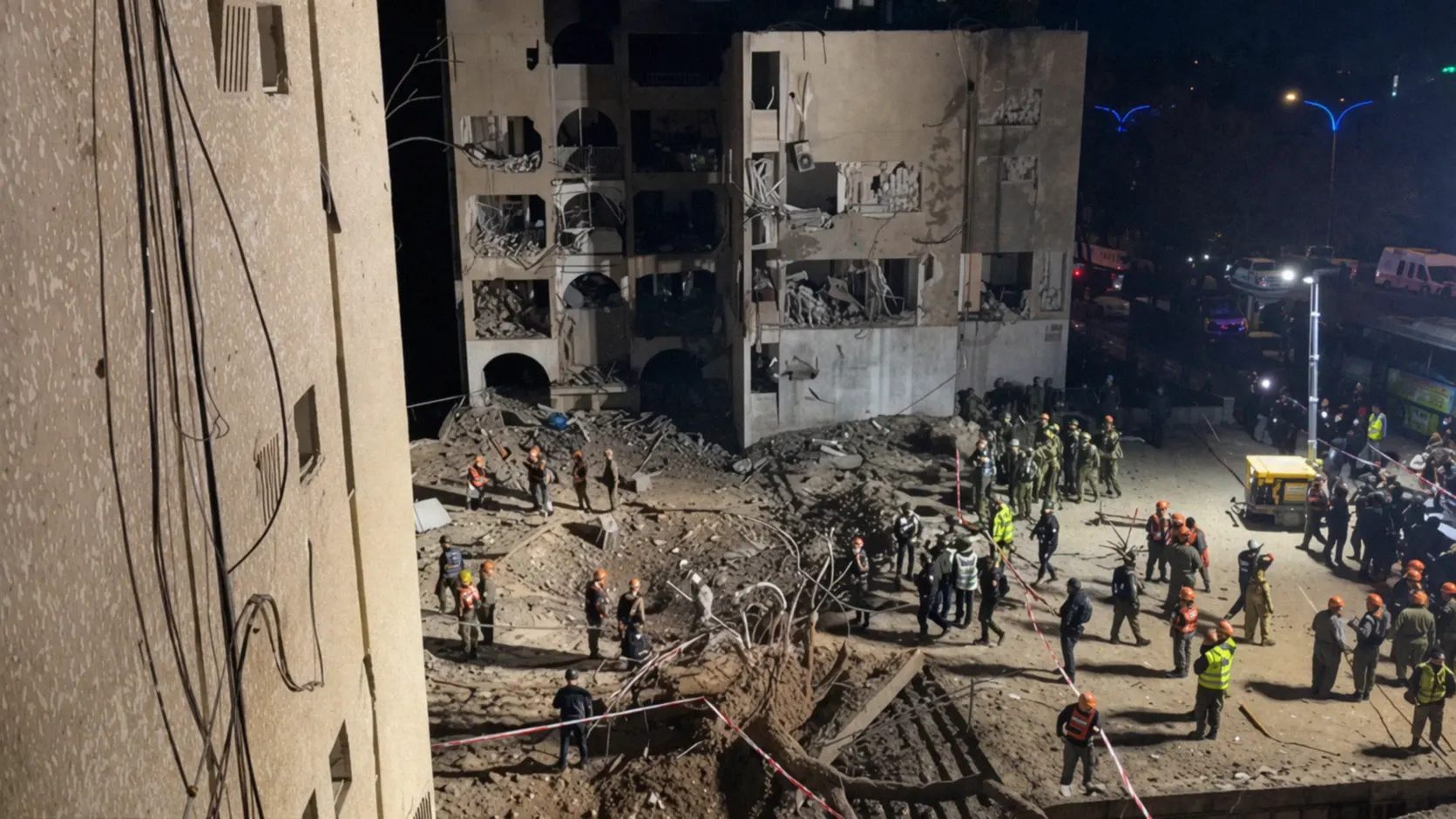
On March 21, 2026, Iranian ballistic missiles struck the southern Israeli cities of Arad and Dimona.
At least two missiles bypassed Israel’s multi layered defense systems and directly hit populated areas, an outcome that is both rare and deeply alarming.
The impact was immediate:
- Arad: A missile carrying a roughly 450 kg warhead struck between residential buildings, causing partial collapses and fires. Around 150 families were displaced.
- Dimona: A direct strike hit a building in the city, which houses Israel’s nuclear research infrastructure.
The International Atomic Energy Agency confirmed:
- No damage to the nuclear facility
- No abnormal radiation levels
But the symbolism of a successful strike near Dimona marks a major psychological and strategic escalation.
Civilian Impact: A Growing Human Toll
The scale of civilian casualties underscores how quickly the conflict is intensifying.
According to updated medical data:
- Approximately 180 people were injured across both cities
- At least 8 individuals are in serious condition
- Children are among the most severely wounded
Breakdown:
- Arad: 116 injured, including 7 in serious condition
- Dimona: 64 injured, including a 12 year old boy in serious condition following surgery for shrapnel wounds
Hospitals, particularly Soroka Medical Center, declared a mass casualty incident, highlighting the strain on emergency services.
For residents, the war is no longer distant, it is unfolding in their homes, streets, and neighborhoods.
Why Did Israel’s Defenses Fail ?
A Failure Against a “Known Threat”
Israel’s missile defense systems, Arrow and David’s Sling are specifically designed to intercept threats like those used in this attack.
Yet they failed.
What makes this failure particularly alarming is that the missiles were not new.
The Israeli Air Force confirmed:
- The projectiles were Emad ballistic missiles
- These are well known systems that Israel has intercepted many times before
- Interceptors were launched but failed during the terminal phase
In short, the system engaged exactly as designed but did not succeed.
Saturation, Complexity, or System Failure
Investigators are now examining several explanations:
- Saturation tactics: Large barrages (referred to as “Wave 73”) may have overwhelmed defenses
- Cluster style warheads: More complex payloads can complicate interception
- Technical malfunction: A rare but serious failure in interception systems
If the issue proves systemic rather than situational, it could alter the strategic balance of the conflict.
Central Israel Comes Under Fire
The attacks did not stop in the south.
By March 22, missile fire had expanded toward central Israel, including the densely populated Tel Aviv region.
Key incidents include:
- Air raid sirens across Gush Dan and Holon
- A direct hit on a building in Holon, causing major fires
- Rishon Lezion: A kindergarten damaged by shrapnel from a cluster style missile
Crucially:
The strike occurred on Shabbat otherwise, the building would likely have been full of children.
Hospitals across central Israel treated:
- Over 200 additional individuals, ranging from trauma to serious injuries
This shift toward high density civilian zones signals a deliberate escalation in targeting strategy.
Iran’s Strategy: Entering a “New Phase”
Iran has made clear that this is not business as usual.
The Islamic Revolutionary Guard Corps (IRGC) described the latest strikes as part of a “new phase” of the war, abandoning proportional retaliation.
This shift includes:
- Targeting major civilian centers
- Increasing missile volume and intensity
- Expanding operational range
One of the most significant developments:
An attempted long range strike toward the U.S.–UK base at Diego Garcia using missiles with an estimated 4,000 km range.
This is a major leap from Iran’s previously stated missile range limits of around 2,000 km.
It signals a dramatic expansion in both capability and intent.
The Natanz Trigger
The timing of the strikes is critical.
Iran stated the attacks were in direct retaliation for:
- A strike on its Natanz nuclear facility earlier on March 21
This creates a rapid escalation loop:
- Strike on Iranian nuclear infrastructure
- Immediate retaliation on Israeli cities
- Expansion into broader regional and civilian targeting
The speed of this cycle leaves little room for diplomatic intervention.
Strategic Implications: A War Entering Uncharted Territory
Several major shifts are now underway:
1. Civilian Centers Are Now Frontline Targets
The war has moved decisively into urban areas on both sides.
2. Defensive Superiority Is Being Challenged
Israel’s ability to intercept known missile threats is no longer guaranteed.
3. Range and Reach Are Expanding
Iran’s demonstrated long range capability changes the geographic scope of the conflict.
4. Psychological Thresholds Are Being Crossed
A strike near Dimona sends a powerful signal even without nuclear damage.
Key Scenarios to Watch
The next phase of the war will depend on several critical factors:
- Israel’s response: A large scale counterstrike could escalate the conflict further
- Air defense recovery: Whether Israel can quickly resolve interception failures
- Iranian follow up attacks: Continued strikes on central Israel or beyond
- U.S. involvement: Especially if long-range threats expand toward Western assets
Each path carries the risk of transforming a regional war into a broader international conflict.
A War Without Clear Limits
The strikes on Arad and Dimona mark a decisive turning point in the war.
For the first time:
- Iranian missiles have penetrated Israeli defenses using familiar systems
- Civilian areas are consistently under direct threat
- The conflict is expanding in both scale and technological scope
What began as a controlled confrontation is now evolving into a high risk, unpredictable war with fewer limits and far greater consequences for the region and beyond.