Canada is preparing a sweeping retaliatory tariff package targeting about C$27.6 billion (US$20 billion) of American imports, escalating a trade dispute that has pushed relations between Ottawa and Washington to their most serious economic confrontation in decades.
The measures will mirror the tariff rates imposed by the United States, with 15%, 25% and 50% tariffs applying to more than 700 American products. Canada’s countermeasures are scheduled to take effect on September 8, 2026.
The decision follows the collapse of more than a year of trade negotiations between the two countries. Canadian Prime Minister Mark Carney said Ottawa walked away after the United States introduced last-minute demands that Canada considered “uneconomic, unfair” and damaging to the overall benefits of any potential agreement.
Canada targets more than 700 American products
Canada’s response is designed to match the value and structure of the latest U.S. measures rather than impose a blanket tariff across all American imports.
The targeted products span a wide range of industries, including steel and aluminum, dairy, agricultural equipment, appliances, electronics, pulp and paper, seafood, machinery and consumer goods.
The highest 50% tariff will apply to several industrial and consumer categories, while a 25% rate will cover products such as dairy, livestock, seafood, electronics, appliances and agricultural machinery.
A smaller group of specialized equipment and components will face a 15% tariff, including certain air-conditioning systems and tool components.
The approach is intended to create economic pressure on the United States while limiting the immediate damage to Canada’s own economy.
Canada’s retaliatory tariff structure
| Tariff | Major targeted products |
|---|---|
| 50% | Steel and aluminum, motorcycles and outdoor power equipment, selected consumer goods, cosmetics, paper and pulp products, plastics |
| 25% | Dairy, livestock, seafood, electronics, appliances, power tools, agricultural equipment and industrial vehicles |
| 15% | Specialized machinery, HVAC equipment and selected tool components |
The measures also increase Canada’s tariffs on some American steel and aluminum products from the previous 25% level to 50%.
Why the U.S.-Canada negotiations collapsed
The breakdown came after months of increasingly difficult negotiations.
Canada had reportedly offered several concessions, including removing existing retaliatory tariffs on certain U.S. steel, aluminum and automotive products. Ottawa also signaled greater flexibility over restrictions affecting American alcohol sales in Canadian provinces.
But Canada wanted the United States to provide meaningful tariff relief in return.
Instead, Washington introduced additional demands while maintaining pressure through a new wave of 50% tariffs on selected Canadian exports.
The latest measures affect products ranging from apparel and cement to beer, hockey equipment and other consumer and specialty goods.
For Canadian negotiators, the combination was a breaking point. Ottawa concluded that accepting an agreement without reliable U.S. tariff reductions would leave Canadian businesses exposed to further unilateral changes.
The failed negotiations therefore gave way to another round of tit-for-tat tariffs, with each country now targeting roughly US$20 billion of bilateral trade in this phase of the dispute.
U.S. tariffs put pressure on Canadian exporters
The American measures target roughly 5% of Canadian exports under the latest round of trade restrictions.
The 50% tariff tier covers a selection of Canadian consumer goods and specialty industries, including dairy products, Canadian whisky, apparel, toys, cement, beer and hockey equipment.
Additional tariffs ranging from 15% to 25% affect metals, industrial products and selected heavy equipment.
The result is a growing cost burden for Canadian exporters trying to maintain access to the U.S. market.
For companies operating on thin margins, tariffs can quickly transform a profitable cross-border shipment into a loss-making transaction.
Energy remains outside the latest tariff escalation
One of the most important limits on the latest measures is what they do not target.
Canadian crude oil, natural gas and electricity remain outside this particular 50% tariff package.
That exemption matters because the two economies are deeply dependent on one another’s energy infrastructure. U.S. refineries, particularly in the Midwest, rely heavily on Canadian crude, while parts of the northern United States depend on Canadian electricity and hydropower.
A future expansion of tariffs into the energy sector could therefore have consequences far beyond the companies directly involved in the trade dispute.
It could raise fuel costs, increase electricity prices and add another layer of inflationary pressure to both economies.
Why integrated supply chains make tariffs especially painful
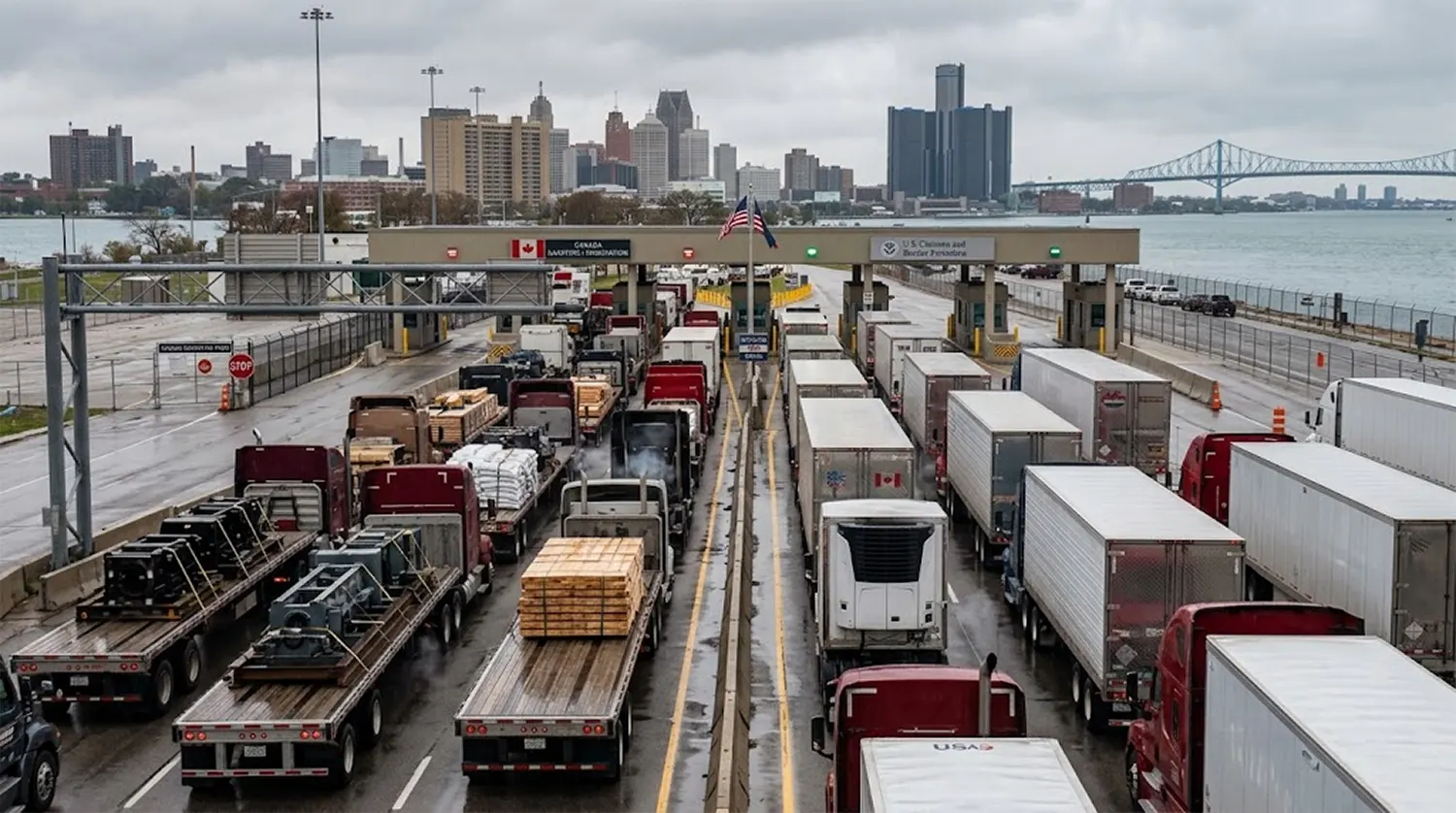
The biggest economic problem is not simply the size of the tariffs. It is the deep integration of U.S. and Canadian supply chains.
Products and components frequently cross the border multiple times before reaching consumers.
That is particularly important for manufacturing.
Automotive and transportation
The North American auto industry depends on tightly coordinated, just-in-time production networks. Components can cross the U.S.-Canada border repeatedly before a vehicle is completed.
Tariffs applied at multiple stages can therefore compound costs throughout the production process.
Canadian suppliers and major U.S. automakers could face higher production expenses, while manufacturers may be forced to reconsider where individual components are sourced.
The longer tariffs remain in place, the stronger the incentive becomes to redesign supply chains around domestic or alternative suppliers.
Metals and heavy manufacturing
Canada is a major supplier of aluminum to the United States, making the metals sector particularly vulnerable to the new tariffs.
Canadian producers face higher barriers to their largest export market, while American manufacturers that depend on Canadian steel and aluminum face higher input costs.
That creates a difficult situation for both sides.
A tariff designed to protect one domestic industry can simultaneously increase costs for another domestic industry that relies on imported materials.
Construction companies, machinery manufacturers, packaging producers and other industrial users could ultimately pass those costs down the supply chain.
Agriculture, food and dairy
Agriculture is another major pressure point.
Canadian tariffs on American dairy, livestock, seafood and other agricultural products threaten U.S. farmers with reduced access to an important export market.
At the same time, American agricultural producers depend heavily on Canadian supplies of key inputs, including potash fertilizer.
Canadian food producers face the opposite problem. Higher U.S. tariffs can make Canadian dairy products, specialty foods and alcoholic beverages significantly less competitive south of the border.
The result could be higher prices, weaker export demand and shifting supply relationships on both sides.
Paper, pulp and consumer products
The dispute also reaches into everyday consumer products.
Paper, pulp and timber products are already facing substantial trade pressure, potentially increasing costs for products such as paper towels and toilet paper.
American manufacturers of appliances, electronics, power tools and cosmetics could face similar problems when their products enter the Canadian market under the new retaliatory tariffs.
For consumers, the effects may eventually appear as higher retail prices and fewer competitive alternatives.
Canada prepares a major domestic support response
Ottawa is not relying on tariffs alone.
The Canadian government has outlined a broader C$7.5 billion emergency assistance package designed to cushion workers and businesses from the effects of the trade dispute.
The package includes several measures.
C$3.5 billion is directed toward workers, including expanded Employment Insurance support, the removal of mandatory waiting periods and a workforce retention and retraining program designed to help companies keep employees during periods of reduced production.
Another C$2 billion is earmarked for economic diversification, helping manufacturers retool and pursue customers outside the United States, including markets in Europe and the Asia-Pacific region.
A further C$2 billion in business liquidity support is intended to provide loans and working capital to small and medium-sized businesses dealing with disrupted trade and declining U.S. sales.
Canada is also establishing a tariff remission framework, allowing companies to seek temporary relief when an imported U.S. component is essential and cannot reasonably be replaced by a Canadian or alternative supplier.
The strategy reflects a broader Canadian goal: reduce the country’s dependence on the U.S. market rather than simply wait for the current dispute to end.
Washington focuses on farmers and domestic production
The U.S. response relies more heavily on targeted assistance and incentives designed to strengthen domestic supply chains.
American farmers and dairy producers facing lost Canadian sales could receive support through agricultural price-support programs, including mechanisms historically administered through the Commodity Credit Corporation.
Washington is also encouraging manufacturers to expand domestic production of steel, aluminum and critical minerals, reducing reliance on Canadian processing and raw materials.
American importers affected by tariffs can also seek exclusions or temporary relief when critical components cannot be sourced domestically without disrupting production.
At the same time, broader incentives are being used to encourage companies to bring manufacturing closer to the U.S. market, including through domestic production and nearshoring in Mexico where goods meet applicable CUSMA origin requirements.
A timeline of the trade confrontation
The current dispute has developed through several stages.
Early 2026 — First wave of tariffs:
The United States introduces broad tariffs affecting steel, aluminum and other Canadian imports. Canada responds with targeted countermeasures and additional provincial restrictions on selected American products.
August 2026 — Negotiations fail:
After more than a year of talks, negotiations collapse following disagreements over tariff relief and last-minute U.S. demands.
August 22, 2026 — U.S. escalation:
The United States activates a new 50% tariff regime covering roughly US$20 billion of Canadian imports.
September 8, 2026 — Canada retaliates:
Canada’s matching 15%, 25% and 50% tariffs covering more than 700 American product categories take effect, alongside its domestic economic support measures.
What happens if the dispute gets worse?
For now, both governments are signaling that they are prepared to withstand considerable economic pressure.
Canadian Industry Minister Mélanie Joly has urged Canadians to support domestic businesses and buy Canadian products as part of a broader effort to reduce reliance on American goods.
But political pressure could become more difficult to manage if businesses begin cutting production, consumers face significantly higher prices or workers lose jobs.
The greatest danger is further escalation.
The United States has signaled that additional sectors, including automobiles, auto parts and potentially broader steel-related products, could face further restrictions if Canada does not make additional concessions.
Energy would be an especially consequential next step.
Because the two countries are so deeply connected through energy, manufacturing, agriculture and transportation networks, expanding the tariff war into those areas could create much larger economic disruptions than the current measures.
The trade war is becoming a supply-chain problem
The latest tariffs are no longer simply a dispute over individual products or individual industries.
They are increasingly forcing companies to reconsider where they manufacture, where they source materials and how they move goods across the border.
For Canada, that means accelerating efforts to diversify exports and reduce dependence on the American market.
For the United States, it means pushing manufacturers toward domestic sources for strategically important materials and components.
Neither strategy can be implemented quickly.
Factories, suppliers, transportation networks and long-term contracts cannot simply be rebuilt overnight. That leaves businesses on both sides facing a difficult period in which tariffs can increase costs before alternative supply chains are ready.
The immediate economic impact may therefore extend well beyond the US$20 billion of goods directly covered by the latest measures.
A costly standoff with no clear off-ramp
The latest exchange of tariffs shows how quickly a targeted trade dispute can spread through two highly integrated economies.
Canada has chosen dollar-for-dollar retaliation combined with domestic financial support and market diversification. The United States is relying on tariffs, targeted assistance and incentives to expand domestic production.
Both approaches are designed to make the other side bear enough economic pain to change its position.
The problem is that the same strategy can also hurt businesses and consumers at home.
Unless Washington and Ottawa return to meaningful negotiations, the dispute risks becoming a long-term restructuring of North American trade, rather than a temporary disagreement over tariffs.