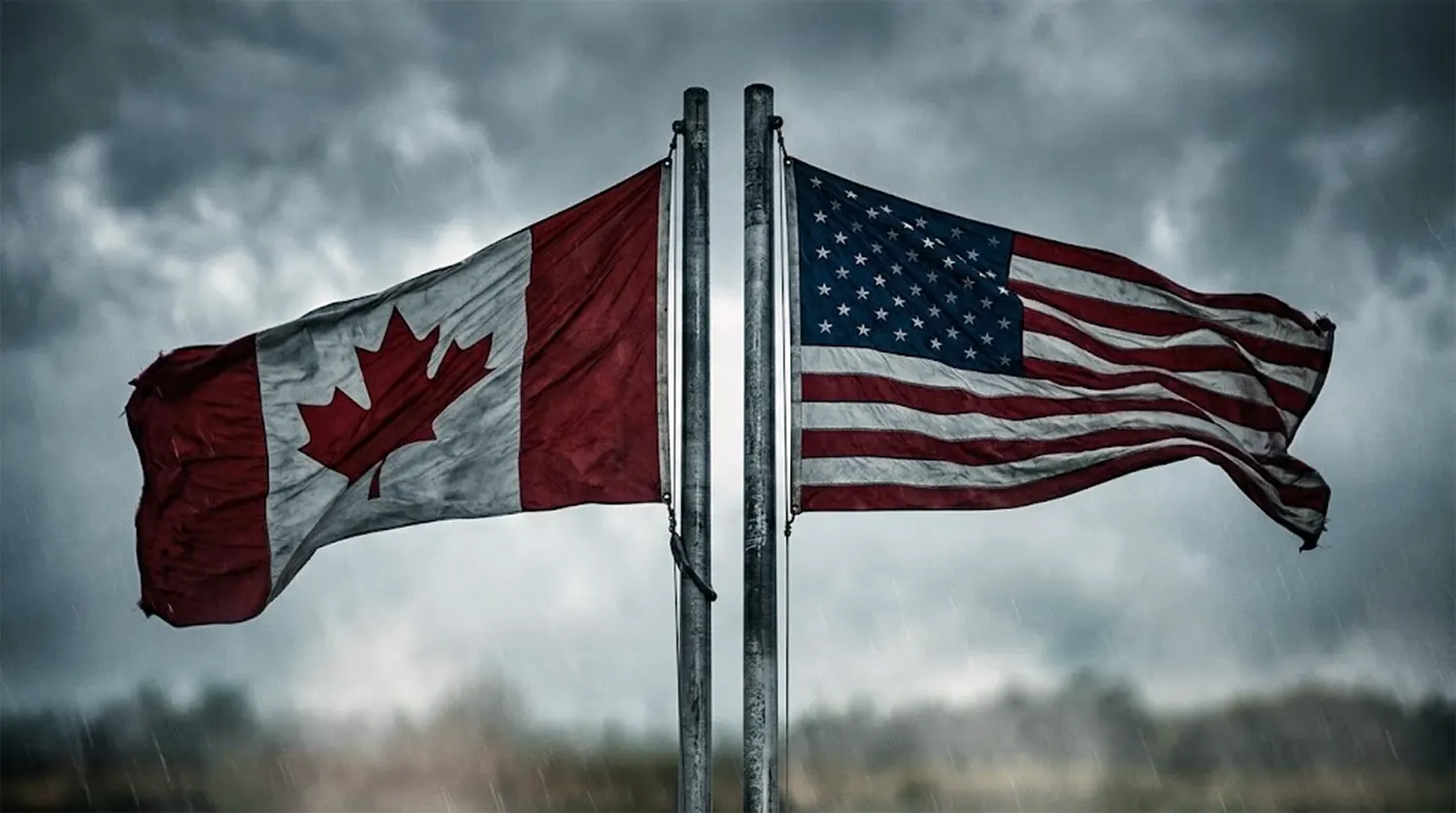
Late Friday, August 21, 2026, months of careful, quiet negotiation between Canada and the United States came apart in a matter of hours. By Saturday morning, new 50% U.S. tariffs on somewhere between $20 billion and $28 billion worth of Canadian goods had kicked in, and Prime Minister Mark Carney had pulled his negotiators out of the room and sent them home to Ottawa.
For a relationship built over decades on deeply intertwined supply chains, it’s a jarring turn and one both sides insist is the other’s fault.
The Deal That Was Almost There
What makes the breakdown sting is how close the two countries appeared to be. Earlier in the week, officials on both sides believed they were closing in on an agreement, one Canadian officials had described as a potential blueprint for the best trade terms of any U.S. partner in the world. Then, in the final days, Washington introduced a batch of new conditions that Carney said were “uneconomic, unfair,” and a threat to Canadian sovereignty.
“We cannot accept what they’ve offered, and we will not give what they’ve asked,” Carney told the country in a national address explaining the decision.
Four Sticking Points That Broke the Talks
According to Canadian officials, the collapse didn’t come down to one disagreement, it came down to four.
Auto tariffs that picked winners and losers. Washington’s last-minute terms would have exempted some American-bound vehicles and pickup trucks from tariffs while taxing others, with new rules also targeting Canadian-made auto parts. Ottawa argued the structure was designed to make vehicle manufacturing in Canada less economically viable over time, a direct hit to Ontario’s auto sector.
A demand that limited Canada’s global trade freedom. The U.S. reportedly pushed for language restricting Canada’s ability to sign independent trade agreements with other countries. Canadian officials viewed this as reaching well past tariffs and into the country’s ability to set its own foreign economic policy.
Pressure on cultural and language protections. American negotiators reportedly pushed back on Canada’s French-language media subsidies, online content rules, and bilingual labeling requirements. For Ottawa, that crossed a line trade talks aren’t supposed to touch.
Tariff relief with strings attached. The U.S. was willing to lower tariffs on Canadian steel, aluminum, and autos but only if Canada dropped its retaliatory tariffs entirely and made deeper changes to its dairy supply-management system and provincial alcohol rules. Canadian officials felt they were being asked to make permanent structural changes in exchange for tariff relief that wasn’t guaranteed to last. Carney put it bluntly: U.S. commitments, he said, were sometimes “written in pencil.”
What Canada Was Actually Willing to Give Up
Ottawa’s offer wasn’t nothing. Canada had proposed dropping its remaining retaliatory tariffs on steel, aluminum, and autos, encouraging provinces to put U.S. alcohol back on store shelves, and adjusting the administrative side of dairy supply management, all without touching the quotas or tariffs underneath the system itself.
What Canada wouldn’t do was compromise its sovereignty or hollow out its key industries. That line held even as the offer on the table got smaller.
Washington Sees It Completely Differently
From the U.S. side, the story reads almost like a mirror image. U.S. Trade Representative Jamieson Greer said Canada turned down what would have been “the best deal in the world” for any major U.S. trading partner, and accused Ottawa of walking back commitments it had already made.
The Trump administration has framed its 50% tariffs not as aggression, but as a response to what it sees as a year of Canadian trade barriers from provincial alcohol restrictions to dairy protectionism to auto trade imbalances. Washington also wants to close what it calls a “backdoor”: the risk that goods from countries like China could reach the American market tariff-free by first passing through Canada. Restricting Canada’s outside trade deals, in this view, isn’t overreach, it’s a safeguard.
Both sides agree on one thing: someone moved the goalposts at the last minute. They just disagree on who.
Two Different Ideas of What “Winning” Looks Like
Strip away the back-and-forth, and the real problem is that Canada and the U.S. were negotiating toward two different outcomes entirely.
Canada wanted an integrated partnership, low tariffs, predictable rules, and shared supply chains, with full freedom to strike its own deals elsewhere. The U.S. wanted direct leverage, reshored manufacturing, a shrinking trade deficit, and enough control over Canada’s external trade policy to keep third countries from slipping through. When one side is optimizing for stability and the other for maximum advantage, a “win-win” is structurally hard to reach, no matter how many concessions get offered.
What Happens Next
For now, there’s no return date. Greer has confirmed no further talks are scheduled. Canada’s countermeasures are set to take effect September 8, 2026, matching U.S. tariffs “dollar for dollar” on American steel, dairy, appliances, agricultural equipment, pulp and paper, and electronics.
In the meantime, businesses on both sides of the border are bracing for higher costs, Canadian exporters facing steep new duties, and U.S. manufacturers facing pricier steel and aluminum. Industry groups on both sides are warning the same thing: this standoff won’t stay contained to trade ministries for long. It’s already headed for supply chains, store shelves, and household budgets.