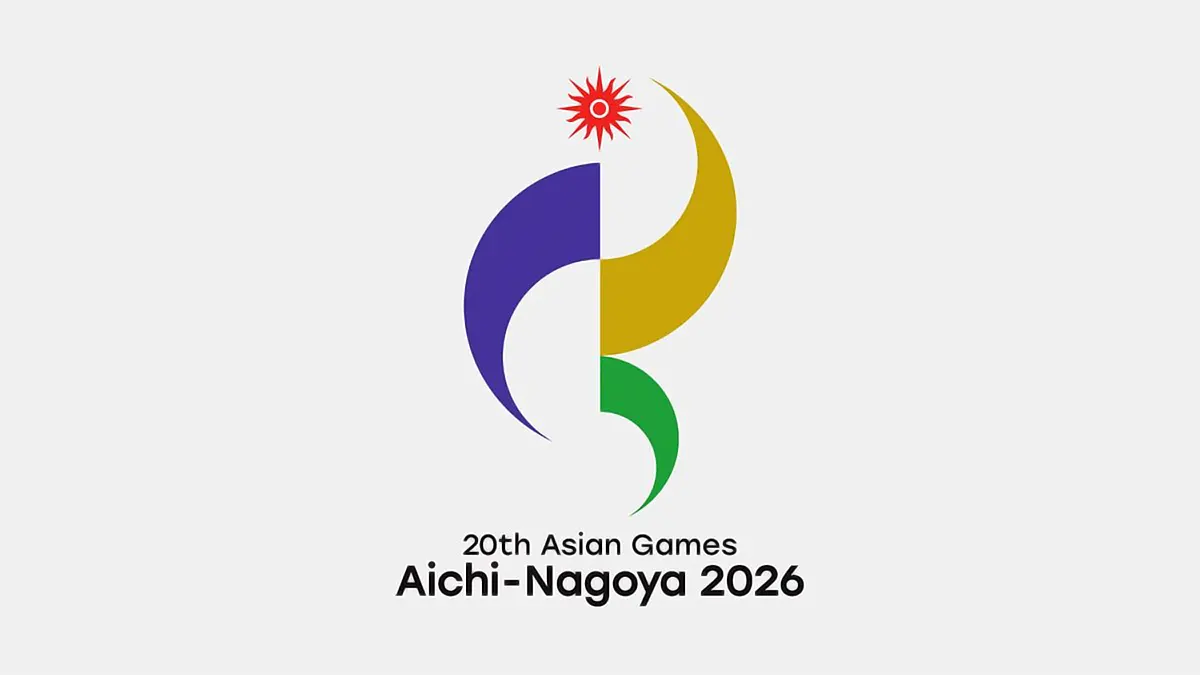
The 20th Asian Games are approaching a major test of Japan’s ability to stage one of the world’s largest multi-sport events.
The Aichi-Nagoya 2026 Asian Games will run from September 19 to October 4, bringing athletes from across Asia to Japan for 16 days of competition. But while the sporting program is taking shape, organizers are facing an unusually difficult logistical challenge: accommodating thousands of athletes and officials without the traditional centralized Athletes’ Village.
The Games are expected to feature around 11,000 athletes and 6,000 team officials, pushing total registrations to roughly 17,000. That is significantly above the original expectation of about 15,000 participants and has prompted organizers to discuss ways of reducing the overall number.
The challenge illustrates what makes Aichi-Nagoya different from many previous Asian Games. Instead of building a massive permanent village, Japan has opted for a distributed accommodation model that uses hotels, temporary housing and even a cruise ship.
A record-sized Asian Games without a traditional Athletes’ Village
One of the most unusual features of Aichi-Nagoya 2026 is the decision not to build a conventional Athletes’ Village.
The original plan was abandoned partly because of concerns over construction costs. Rather than creating a single purpose-built complex, organizers have developed a network of accommodation sites across the region.
A major part of that strategy involves the Costa Serena cruise ship, which will be docked at Nagoya Port and used to house thousands of athletes. Temporary accommodation and local hotels will supplement the ship.
The approach gives organizers flexibility and avoids the expense of constructing a large permanent village that could have limited use after the Games.
But it also creates a different problem.
With participants spread across hotels, temporary facilities and a ship, transportation and daily logistics become considerably more complicated.
The surge in registrations has made that challenge even more urgent. Reuters reported on August 26 that organizers and the Olympic Council of Asia were discussing ways to bring participant numbers down to a more manageable level.
43 sports will bring Olympic and distinctly Asian competition together
The sporting program is one of the defining characteristics of the Asian Games.
The official Aichi-Nagoya program currently includes 43 sports, covering disciplines ranging from athletics and swimming to kabaddi, sepaktakraw, wushu and esports. Competition is scheduled across 53 venues in Aichi and other parts of Japan.
The lineup reflects the Asian Games’ unusual position in international sport.
Many of the events are familiar from the Olympics, including:
- Athletics
- Aquatics
- Gymnastics
- Basketball
- Football
- Cycling
- Volleyball
- Tennis
- Weightlifting
- Wrestling
But the program also gives prominent space to sports with particularly strong followings in Asia.
Kabaddi, sepaktakraw, wushu, cricket, kurash and jiu-jitsu are among the sports that help distinguish the Asian Games from the Olympics.
Esports will also feature, while breaking, sport climbing, skateboarding, surfing, teqball and padel add a more contemporary dimension to the competition. The official program lists esports as one of the 43 sports.
That mixture is deliberate. The Olympic Council of Asia allows the Asian Games program to combine Olympic sports with regional sports that reflect the sporting culture of different parts of the continent.
Nagoya will host the heart of the Games
Although the competition footprint stretches well beyond Nagoya, the host city will remain the center of the event.
One of the major venues is the newly rebuilt Nagoya City Mizuho Park Athletic Stadium, which will host athletics and serve as a key venue for the Games. The stadium is also intended to remain as a sporting legacy after the event.
Another major addition is the Aichi International Arena, which will host basketball and judo.
The Games will make extensive use of existing facilities rather than relying entirely on new construction. That approach is particularly visible in the venue list, which stretches across Aichi and into neighboring prefectures.
Cycling track events, for example, will be held at the Izu Velodrome in Shizuoka, while swimming and other aquatic competitions will use facilities including the Tokyo Aquatics Centre.
Football will also spread across several stadiums, including Toyota Stadium and venues in Nagoya, Gifu and Shizuoka.
The result is effectively a regional Games rather than a single-city event.
Why the venue strategy matters
Using existing facilities has two major advantages.
First, it reduces the need for expensive new construction.
Second, it leaves the region with facilities that already have an established purpose after the Games end.
But the trade-off is transportation.
Athletes, officials, broadcasters, staff and spectators will need to move between a large number of venues. The official competition plan lists 53 venues, making transportation coordination one of the central operational challenges of the event.
For organizers, the goal is to make a geographically dispersed Games feel like one coherent sporting event.
45 Asian delegations and a refugee team
The Asian Games bring together athletes from across the continent under the Olympic Council of Asia.
The traditional participation structure includes 45 National Olympic Committees, covering East, Southeast, South, Central and West Asia.
The participating regions include major sporting powers such as China, Japan, South Korea and India, alongside smaller delegations from countries including Bhutan, Brunei, Timor-Leste, Laos and Yemen.
The Games also have a broader representation through the Asian Refugee Team, which competes independently rather than under a traditional National Olympic Committee.
This gives the event a wider identity than a straightforward competition between national teams.
It is also one reason the logistical numbers are so significant. The challenge is not simply accommodating athletes; every delegation brings coaches, medical staff, administrators and other team officials.
The numbers are becoming an organizing problem
The sheer size of the delegations is now one of the biggest stories surrounding the Games.
Organizers initially planned around 15,000 athletes and officials, but registrations have climbed to approximately 17,000, including about 11,000 athletes and 6,000 officials.
That increase might appear relatively small compared with the total, but at the scale of an international multi-sport event, an additional 2,000 people can have major consequences.
Every additional participant requires:
Accommodation. More hotel rooms, temporary housing and cruise-ship capacity.
Transportation. More buses, drivers, security arrangements and transport schedules.
Food. Thousands of additional meals every day, with different dietary and cultural requirements.
Security. More people moving through venues, hotels, transport hubs and restricted areas.
Medical services. Additional capacity for athletes and officials across dozens of competition sites.
This is why organizers are now discussing how to reduce the participant numbers before the Games begin.
The cruise ship is more than a novelty
The use of a cruise ship as athlete accommodation may be the most visually striking element of the Games, but it serves a practical purpose.
A ship provides a large concentration of rooms, dining facilities and other services in one location without requiring Japan to build a permanent village.
It also fits the broader strategy of using temporary or existing infrastructure instead of constructing expensive new facilities specifically for the Games.
The challenge will be integrating the ship into the wider transportation network.
Athletes staying at Nagoya Port still need reliable access to training and competition venues across the region. That makes scheduling critical, particularly for sports where athletes may compete on consecutive days.
Japan is using lessons from the Tokyo Olympics
Aichi-Nagoya will be Japan’s third time hosting the Asian Games, following Tokyo in 1958 and Hiroshima in 1994.
The country also has recent experience staging the Olympics and Paralympics in Tokyo in 2021.
That experience gives Japanese organizers a significant operational advantage.
But the Aichi-Nagoya Games have their own set of circumstances.
The event is geographically spread out, the accommodation model is unusual and the participant numbers have grown beyond initial expectations.
The organizers therefore face a different question from Tokyo: how can Japan deliver a large international sporting event without repeating the cost-intensive infrastructure model of previous Games?
The cost question remains in the background
Cost has been a recurring issue throughout the preparations.
The decision to avoid a traditional Athletes’ Village was driven in part by concerns over the expense of building dedicated accommodation.
That reflects a broader issue facing international sporting events: cities are increasingly reluctant to spend enormous sums on infrastructure that may have limited use after the closing ceremony.
Aichi-Nagoya’s strategy is therefore an experiment in a more flexible model.
Instead of building everything from scratch, organizers are relying on existing venues, commercial accommodation and temporary facilities.
If the model works, it could provide a useful blueprint for future multi-sport events.
More than just an Olympic-style competition
The Asian Games occupy a unique position in international sport.
They are often described as the continent’s equivalent of the Olympics, but the comparison only goes so far.
The Asian Games are specifically designed to reflect Asia’s sporting diversity.
A swimmer competing for China, an Indian kabaddi player, a Thai sepaktakraw team, a Japanese gymnast and an esports competitor can all share the same event.
That mixture gives the Games an identity that is distinct from the Olympic program.
The Olympic Council of Asia’s framework explicitly allows regional sports alongside Olympic disciplines, which is why sports such as kabaddi and sepaktakraw have become established parts of the Asian Games.
A major test begins September 19
When the opening ceremony arrives on September 19, the attention will shift from preparation to competition.
The medals will dominate the headlines, but the success of Aichi-Nagoya 2026 will also depend on less visible systems working smoothly: buses arriving on time, athletes reaching venues, hotels handling delegations, temporary facilities operating safely and thousands of people receiving food and medical support every day.
That makes the Games a test not only of athletic performance but also of large-scale event management.
Japan has deliberately chosen a different model from the traditional mega-event approach, emphasizing existing infrastructure and distributed accommodation.
Now the challenge is making that model work at unprecedented scale.
With approximately 17,000 participants, 43 sports and 53 venues, Aichi-Nagoya 2026 will be one of Asia’s biggest sporting gatherings.
And before the first medal is awarded, the organizers already have one of their toughest competitions ahead: making the logistics work.