Relentless rains are turning large parts of Peru into disaster zones.
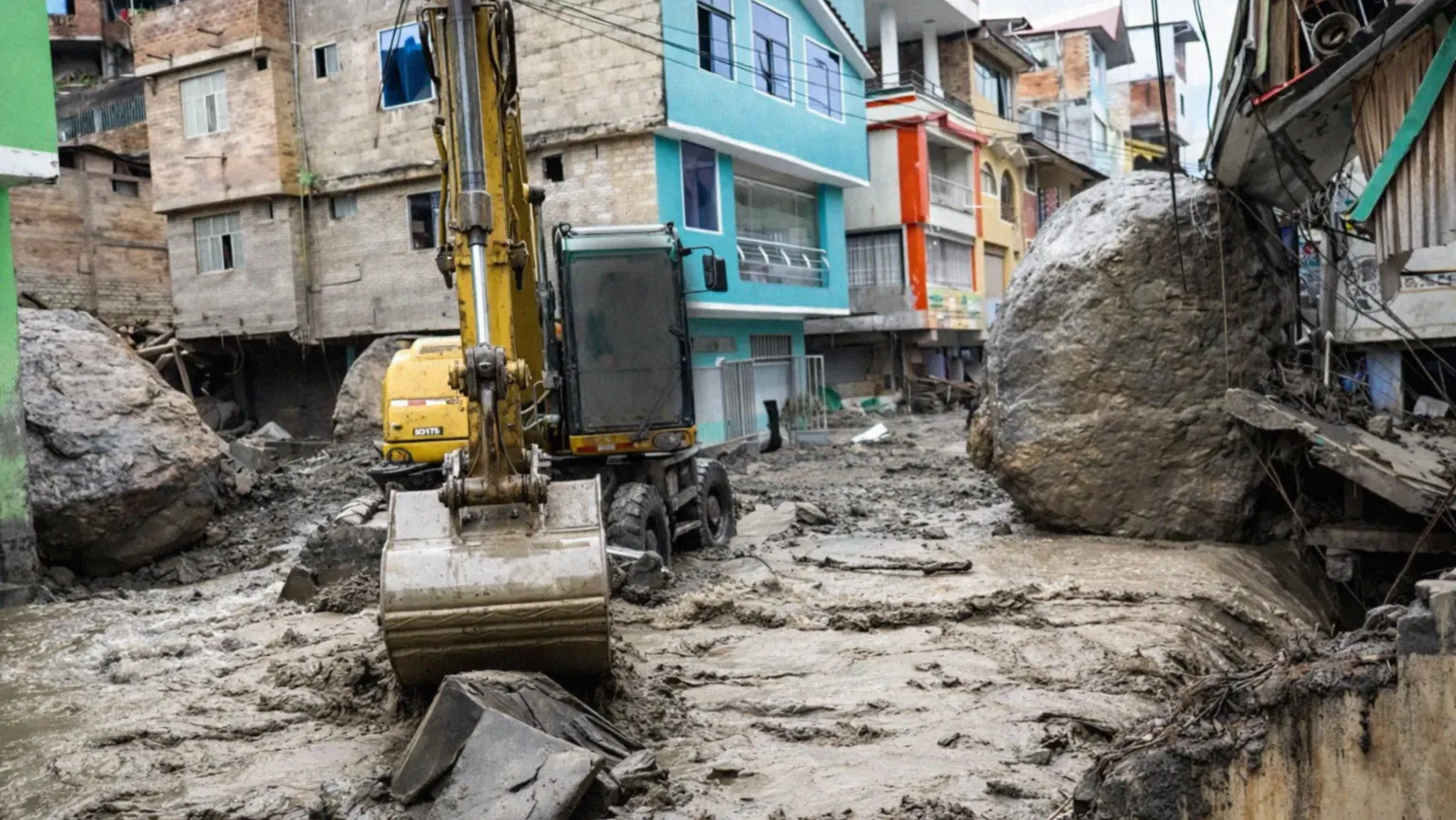
From the bustling streets of Lima to remote villages in the Andes, flash floods and landslides have damaged homes, destroyed bridges, and cut off entire communities from aid. What began as a severe rainy season has rapidly escalated into a nationwide crisis affecting hundreds of districts across the country.
In response, the Peruvian government has declared a 60 day state of emergency across 283 districts in 20 regions, allowing authorities to accelerate relief operations and repair critical infrastructure.
Behind the unfolding disaster lies a powerful climate phenomenon that is reshaping Peru’s weather patterns. Understanding what happened, the scale of the damage, and why this crisis is unfolding helps explain the enormous challenge now facing the country.
What Happened: Peru Expands Emergency Measures Nationwide
The crisis intensified this week as heavy rains continued to batter large parts of the country.
On March 12–13, 2026, the government expanded emergency measures, placing 283 districts across 20 regions including Lima under a 60 day state of emergency. The move was formalized through emergency decrees that allow authorities to bypass bureaucratic delays and rapidly mobilize funding and resources.
The emergency order empowers regional governments, the National Institute of Civil Defence (INDECI), and Peru’s armed forces to coordinate immediate relief and recovery efforts.
The human toll has already been significant.
According to the National Emergency Operations Center (COEN), 58 people have died since the beginning of the year due to rain-related disasters. More than 16,000 people have been directly affected, while over 22,000 Peruvians have seen their livelihoods disrupted by floods, landslides, and infrastructure damage.
The destruction has been widespread:
- 1,017 homes completely destroyed
- 6,269 homes rendered uninhabitable
- 74,087 homes damaged in varying degrees
In many areas, overflowing rivers and collapsing hillsides have forced families to evacuate with little warning. Government ministers have been dispatched to the worst-affected regions to oversee relief operations, deploy health brigades, and coordinate humanitarian assistance.
Beyond the immediate human impact, however, the disaster has also severely damaged the infrastructure that keeps communities connected.
The Impact: Infrastructure Damage Is Cutting Off Communities
The heavy rainfall has caused extensive destruction to Peru’s transportation network and public services, making relief operations far more difficult.
According to COEN data, 163.6 kilometers of local roads have been completely destroyed, while more than 1,691 kilometers have suffered damage. Altogether, over 1,800 kilometers of road infrastructure have been affected.
Bridges have also taken a devastating hit.
Floodwaters have destroyed 106 bridges nationwide, 55 pedestrian bridges and
51 vehicular bridges while more than 230 additional bridges have been damaged.
This destruction has far reaching consequences.
Entire rural communities are now isolated from supply routes, emergency medical services, and humanitarian aid, particularly in mountainous regions where a single bridge may serve as the only access point.
Critical public services have also been disrupted.
Floodwaters and landslides have left 7 health facilities completely uninhabitable,
while 101 more have sustained damage. At the same time, the education system has been affected, with 36 classrooms destroyed and more than 300 damaged.
These disruptions can have long term consequences for vulnerable populations such as children, the elderly, and rural families who rely on local clinics and schools.
While urban areas like Lima and Arequipa have received significant attention, some of the most severe impacts are occurring in remote regions such as Cajamarca, where isolated communities have struggled to access emergency aid.
To understand why these disasters are happening with such intensity, scientists point to a powerful climate phenomenon developing off Peru’s coastline.
The Science: How Niño Costero Is Driving Extreme Weather
Meteorologists say the extreme rainfall is being fueled by “Niño Costero,” also known as Coastal El Niño.
Unlike the global El Niño phenomenon that affects weather patterns across the entire Pacific Ocean, Niño Costero is a localized warming event occurring in the coastal waters near Peru and Ecuador.
The process begins when sea surface temperatures in the Niño 1+2 region, the waters closest to the Peruvian coastline rise far above normal levels. Recent measurements show temperatures reaching 28°C to 29°C, significantly warmer than usual.
This warming triggers several cascading effects.
First, the warmer ocean increases evaporation, pumping large amounts of moisture into the atmosphere. At the same time, the warming weakens the Humboldt Current, a cold ocean current that normally keeps Peru’s coastal regions dry.
The result is what scientists describe as “tropicalization” of the coast, transforming a typically arid climate into one capable of producing intense tropical style rainfall.
When these moisture laden air masses move inland, they release massive bursts of rain sometimes within just a few hours.
This sudden influx of water overwhelms rivers and drainage systems, triggering flash floods and landslides known locally as huaycos, in which mud, rocks, and debris surge down steep Andean slopes.
These cascading hazards are what transform heavy rain into deadly floods capable of destroying homes, infrastructure, and entire communities.
Understanding these causes highlights an important question: how can communities better prepare for disasters like this ?
Response and Preparedness: Mobilizing Aid and Strengthening Resilience
To confront the growing crisis, Peru’s government has activated a nationwide emergency response.
The 60 day state of emergency allows authorities to bypass administrative bottlenecks and accelerate disaster relief and infrastructure repairs, particularly the rebuilding of damaged roads and bridges.
Government actions include:
- Deployment of military units for rescue and logistics
- Health brigades providing emergency medical care
- Psychological support services for displaced families
- Rapid repair of roads, bridges, and essential infrastructure
Emergency operations are being funded through existing government budgets, enabling authorities to act quickly without waiting for additional parliamentary funding.
For residents in high risk areas, disaster preparedness remains critical.
Experts recommend several essential safety measures:
Monitor official weather alerts and evacuation orders.
Avoid crossing flooded roads, rivers, or unstable slopes.
Prepare emergency kits with water, food, and essential medicines.
Know evacuation routes and nearby emergency shelters.
These simple steps can make a crucial difference when floods or landslides occur suddenly.
Looking ahead, however, the risk may not disappear anytime soon.
Meteorologists from Peru’s National Meteorology and Hydrology Service (SENAMHI) and the Multisectoral Commission ENFEN warn that Niño Costero conditions could persist through Peru’s autumn and potentially into November 2026, raising the possibility that emergency measures may need to be extended.
What Comes Next for Peru
Peru’s current flood emergency illustrates how quickly extreme weather can escalate into
a national crisis.
Dozens of lives have already been lost, tens of thousands of people have been affected, and vital infrastructure across the country has been severely damaged. With roads destroyed and bridges collapsed, many communities remain isolated and vulnerable.
At the heart of the disaster lies the Niño Costero phenomenon, a powerful climate pattern capable of transforming Peru’s normally dry coastal climate into a zone of intense rainfall and destructive landslides.
As emergency crews work to restore access and deliver aid, the country faces a long road to recovery.
The lesson from this crisis is clear: preparing for climate driven extreme weather will
be essential to protecting communities and infrastructure in the years ahead.