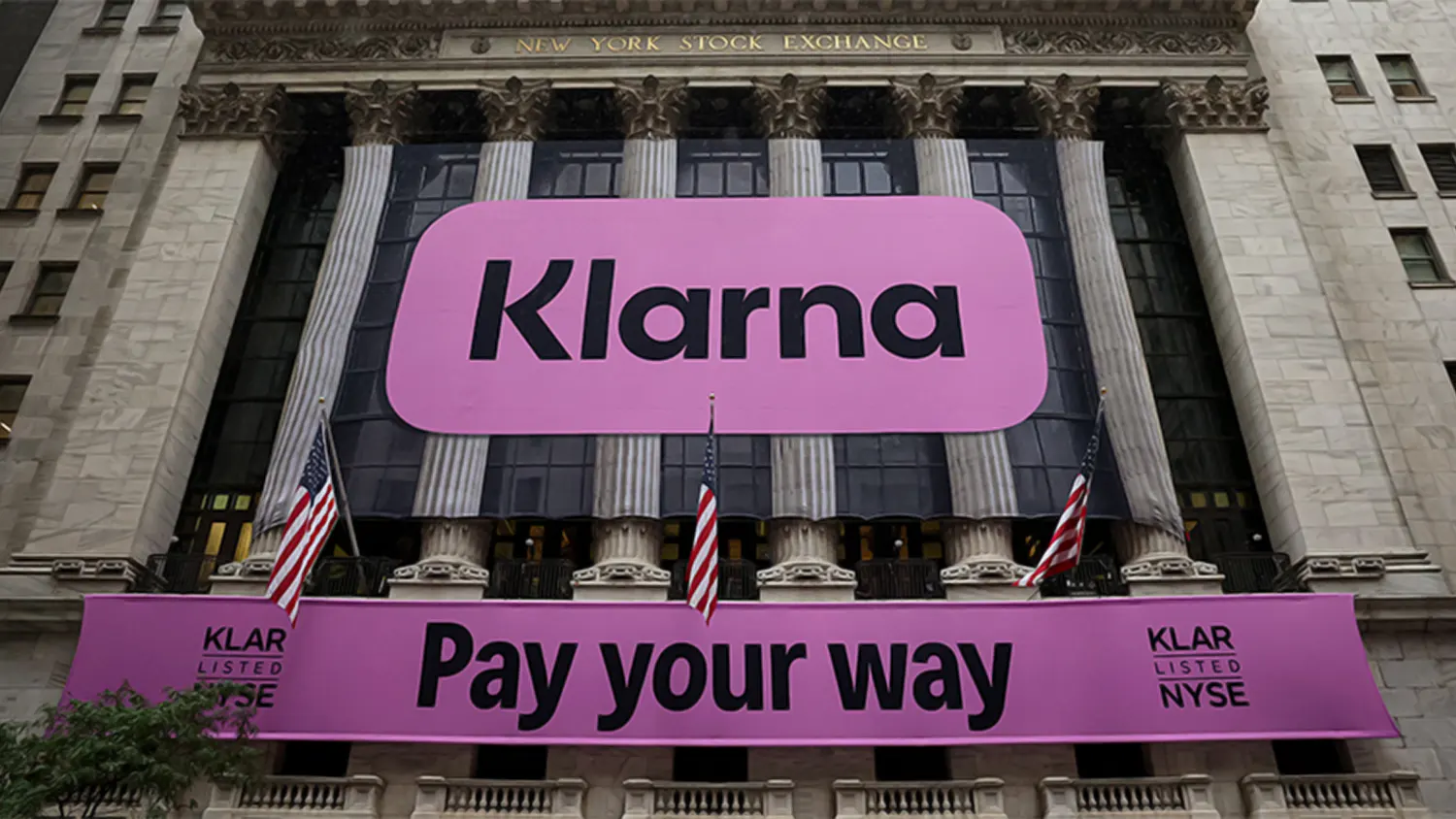
Swedish fintech giant Klarna has officially entered a new era after making its long-awaited debut on the New York Stock Exchange (NYSE).
Trading under the ticker symbol “KLAR,” the company’s public offering instantly became one of the biggest financial stories of 2025. The move is being viewed as a major milestone not only for Klarna itself, but also for the broader fintech industry, which has spent the last two years battling slow investment activity and market uncertainty.
With a valuation exceeding $15 billion, Klarna’s IPO is now considered the largest public listing of the year, giving fresh momentum to both the technology and digital finance sectors.
Investor Demand Pushes Klarna Above Expectations
Klarna originally planned to price its shares between $35 and $37, but strong investor demand pushed the final IPO price to $40 per share.
The company sold around 34.3 million shares, raising approximately $1.37 billion in fresh capital.
Investor excitement became clear immediately after trading opened on the NYSE. Klarna shares surged to $52 per share, nearly 30% above the IPO price, before reaching an intraday high of $57.
Although the stock later settled lower, it still closed the day at $45.82, marking a strong gain from its initial offering price.
Market analysts say the successful debut reflects growing confidence in fintech companies that combine technology, digital payments, and consumer finance under one ecosystem.
Klarna’s Brand Strength Helped Fuel the IPO
Part of Klarna’s success comes from its strong popularity among younger consumers, especially Gen Z and Millennials.
Over the years, the company has built a massive international customer base by offering flexible payment solutions that allow shoppers to split purchases into smaller installments.
However, Klarna is no longer positioning itself as just a buy now pay later (BNPL) company.
The business has gradually expanded into areas like:
- Digital banking services
- Personal finance tools
- Savings products
- Merchant payment systems
- Spending analytics and budgeting features
This broader ecosystem has helped Klarna evolve into what many analysts now describe as a full-service digital finance platform.
Why Klarna Chose New York Instead of Europe
Although Klarna was founded in Stockholm, Sweden, the company deliberately chose the United States for its public listing.
Executives believe the U.S. market represents Klarna’s biggest long-term growth opportunity due to its massive consumer economy and high reliance on traditional credit cards.
CEO Sebastian Siemiatkowski said the company’s expansion into America reflects changing consumer attitudes toward spending and borrowing.
The U.S. market is already highly competitive, with companies like Affirm, PayPal, and Apple pushing deeper into digital payments and installment-based financing.
Still, Klarna appears confident it can compete by combining flexible payments with broader banking and financial management tools.
From Startup to Global Fintech Powerhouse
Klarna’s journey began in 2005 as a small Swedish startup focused on simplifying online checkout systems.
Two decades later, the company now serves more than 150 million users across 17 countries.
Its rapid growth mirrors the rise of fintech itself, especially as consumers increasingly shift away from traditional banking systems toward app-based financial services.
The company’s transformation from a niche payment provider into a diversified financial platform has also helped reduce its dependence on the BNPL sector alone.
That diversification may prove critical as regulators around the world continue increasing scrutiny over installment payment services.
Klarna IPO Could Revive the Tech Market
Financial experts believe Klarna’s successful listing could have ripple effects far beyond one company.
After several difficult years marked by high interest rates, inflation concerns, and weak IPO activity, many investors see Klarna’s debut as a sign that the public market may finally be reopening for tech and fintech firms.
The listing is already being viewed as:
- A confidence boost for the IPO market
- A sign of fintech resilience
- A test case for future digital finance companies seeking public listings
At the same time, Klarna’s new status as a publicly traded company means it will now face greater pressure from regulators, shareholders, and financial watchdogs.
Questions surrounding consumer debt, transparency, and BNPL regulation are expected to remain major topics for the company moving forward.
What Comes Next for Klarna?
Klarna plans to use the billions raised from the IPO to accelerate expansion in several key markets, particularly North America and Asia-Pacific.
The company is also expected to invest heavily in:
- AI-powered financial tools
- Product innovation
- Merchant partnerships
- Compliance and regulatory systems
Some analysts believe Klarna could eventually expand into areas like cryptocurrency services, digital wallets, or even small-business lending through future acquisitions.
For now, however, the company’s focus remains on strengthening its position as one of the world’s leading fintech platforms.
A Defining Moment for the Future of Digital Finance
Klarna’s IPO represents more than just a successful stock market debut.
It highlights how rapidly consumer finance is evolving as digital platforms reshape the way people shop, borrow, save, and manage money.
As competition intensifies across the fintech sector, Klarna’s next challenge will be balancing rapid growth with tighter regulation and changing consumer expectations.
Still, its strong public debut has already sent a clear message to investors: fintech remains one of the most influential industries shaping the future of global finance.