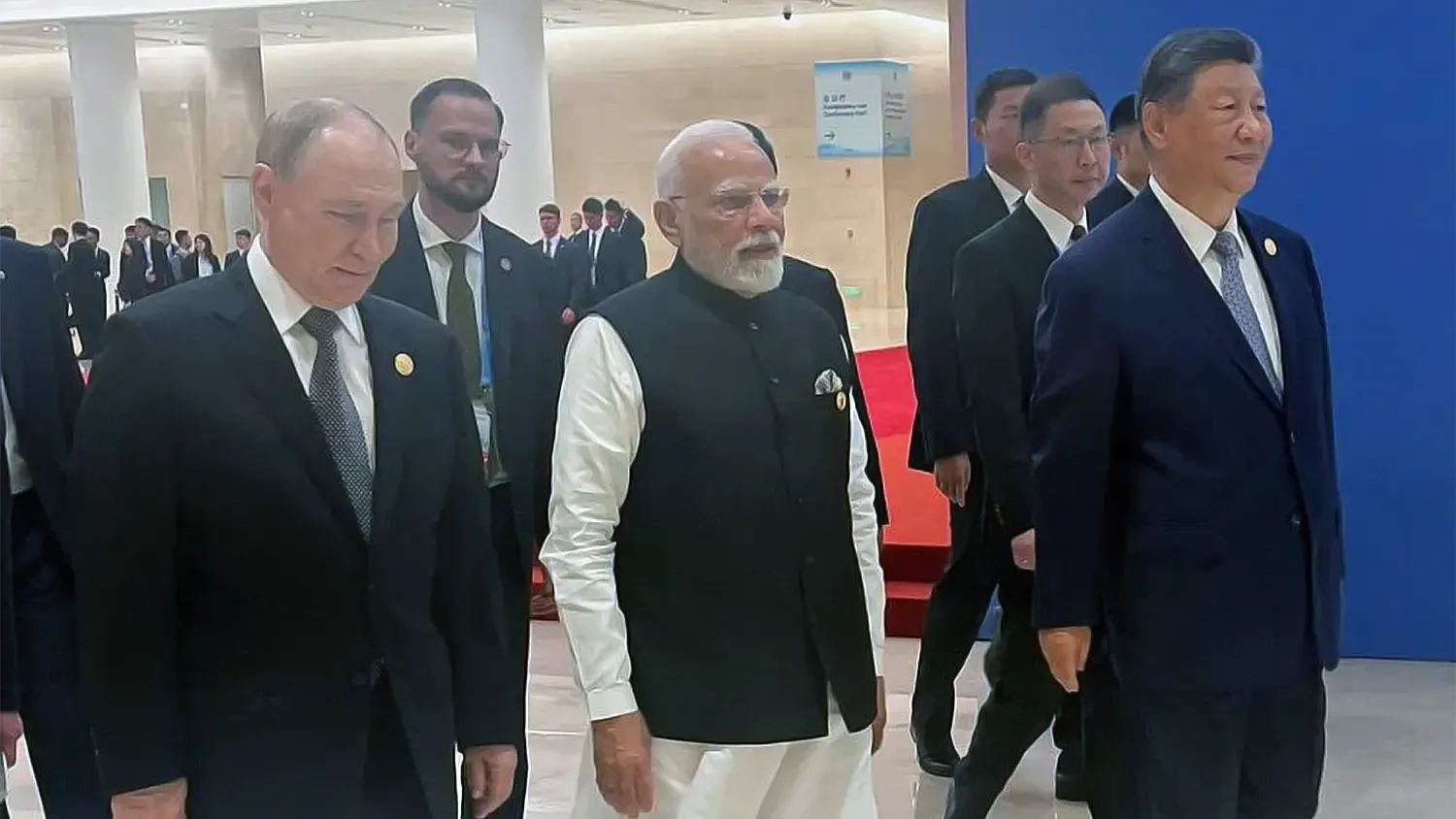
When Xi Jinping welcomed leaders from across Asia and the Middle East to Tianjin for the latest Shanghai Cooperation Organization summit, the optics alone told a story. Vladimir Putin was there. Narendra Modi was there. So were representatives from Iran, Pakistan, and a growing list of member and observer states. It was the largest turnout in the SCO’s history.
But this wasn’t just a photo opportunity. What happened in Tianjin was a coordinated signal from some of the world’s most powerful non-Western nations: the rules of global governance are up for renegotiation and they intend to be at the table when it happens.
Xi Sets the Tone and Takes Aim at Washington
Xi Jinping didn’t waste time on pleasantries. His opening address was pointed, framing the SCO as a direct counterweight to what he called “bullying behavior” and “camp confrontation” language his audience understood immediately as a critique of U.S.-led alliances, sanctions policy, and what Beijing sees as Western efforts to divide the world into opposing blocs.
He called on member states to uphold the “Shanghai Spirit” the bloc’s founding philosophy built on mutual respect, non-interference, and equality among nations regardless of size or system of government. It’s a principle that appeals enormously to countries that have felt sidelined or lectured by Western institutions.
On the economic side, Xi doubled down on China’s role as the financial engine of the bloc, pledging expanded cooperation through the Belt and Road Initiative and emphasizing energy and infrastructure ties as the backbone of SCO partnerships. The message was clear: if you want investment, connectivity, and economic partnership without political conditions attached, Beijing is offering it.
Putin Uses the Stage to Reframe the Ukraine War
For Vladimir Putin, the SCO summit was never just about regional security. It was an opportunity to address a sympathetic audience and advance a narrative that gets far less traction in Western capitals.
He repeated his long-standing position on Ukraine that NATO expansion and Western interference provoked the conflict, and that Russia is responding to encirclement rather than pursuing aggression. Whether or not SCO members fully agree, few have any interest in publicly challenging him on it, and several have actively resisted Western pressure to condemn Moscow.
More strategically significant was Putin’s bilateral meeting with Modi. Despite sustained Western pressure on India to cut its energy ties with Russia, New Delhi has continued buying discounted Russian oil at scale. Putin called their relationship “special and privileged,” and the meeting reinforced that India is not prepared to sacrifice economic pragmatism for geopolitical loyalty to the West.
Modi Walks the Tightest Rope in the Room
No leader at Tianjin had a more complicated position than Narendra Modi and his performance reflected that carefully.
India is a full SCO member with deep historical ties to Russia and a genuine interest in Asian regional stability. It is also a key partner of the United States, deeply integrated into Western defense and technology networks, and a cornerstone of Washington’s Indo-Pacific strategy against Chinese influence. These two identities don’t always sit comfortably together.
Modi’s speech leaned into security specifically terrorism calling for a united global front and rejecting what he described as “double standards” on the issue. The remark landed as a clear message to Pakistan, India’s longtime rival and fellow SCO member, without Modi having to name names.
But the most consequential moment of his trip was bilateral: Modi and Xi Jinping met face to face, marking a tentative thaw in relations that have been frozen since deadly border clashes in the Ladakh region in 2020. The two leaders agreed to pursue de-escalation measures and resume direct flights between their countries. Modi also invited Xi to the 2026 BRICS summit in India, a diplomatic gesture that, if accepted, would mark a significant step toward normalizing ties between Asia’s two largest powers.
What the SCO Actually Is Now and What It’s Becoming
The SCO began as a regional security forum, focused narrowly on counterterrorism and border stability in Central Asia. That organization barely resembles what gathered in Tianjin.
Today the SCO spans a vast stretch of the globe, covering a majority of the world’s population and some of its largest economies. It has expanded its agenda to include economic integration, energy cooperation, and most significantly a shared political project: building a world order where Western institutions no longer set the rules by default.
For China and Russia, “multipolarity” is both a slogan and a genuine strategic goal a future where no single power or bloc can dictate terms to the rest. For India, it’s an opportunity to maintain flexibility and avoid being boxed into a binary choice between East and West. For Iran, Pakistan, and smaller members, the SCO offers a platform and a degree of protection that Western-led bodies have historically denied them.
Why Washington Should Be Paying Close Attention
The United States and its allies have spent years trying to isolate Russia and contain China. The irony, clearly visible in Tianjin, is that those efforts have in some ways accelerated exactly what they were designed to prevent, a deepening partnership between Moscow and Beijing, with a growing number of countries choosing to orbit that axis rather than the Western one.
The SCO is not NATO. It doesn’t have the same military cohesion, shared values framework, or institutional depth. Its members have their own rivalries, border disputes, and conflicting interests that will continue to complicate any unified agenda.
But dismissing it as a loose talk shop would be a mistake. The bloc is growing in both membership and ambition, and the Tianjin summit demonstrated a level of coordination and political will that wasn’t visible even five years ago.
India’s continued participation is perhaps the most complex variable for Western strategists. New Delhi doesn’t fit neatly into the “authoritarian bloc” framing that Washington sometimes applies to the SCO and that inconvenient fact forces a more honest reckoning with what this organization actually represents.
The Center of Gravity Is Moving Ready or Not
The Tianjin summit won’t be remembered as the moment the old world order ended. History rarely works that cleanly. But it may well be remembered as one of the clearest signals yet that a serious, organized alternative to Western-led multilateralism is taking shape backed by major economies, driven by genuine shared interests, and growing more confident with each gathering.
The question for the West is no longer whether this shift is happening. It clearly is. The question is whether the response will be strategic adaptation or continued insistence that the old rules still apply.
From Tianjin, it looks like the rest of the world has already moved on.