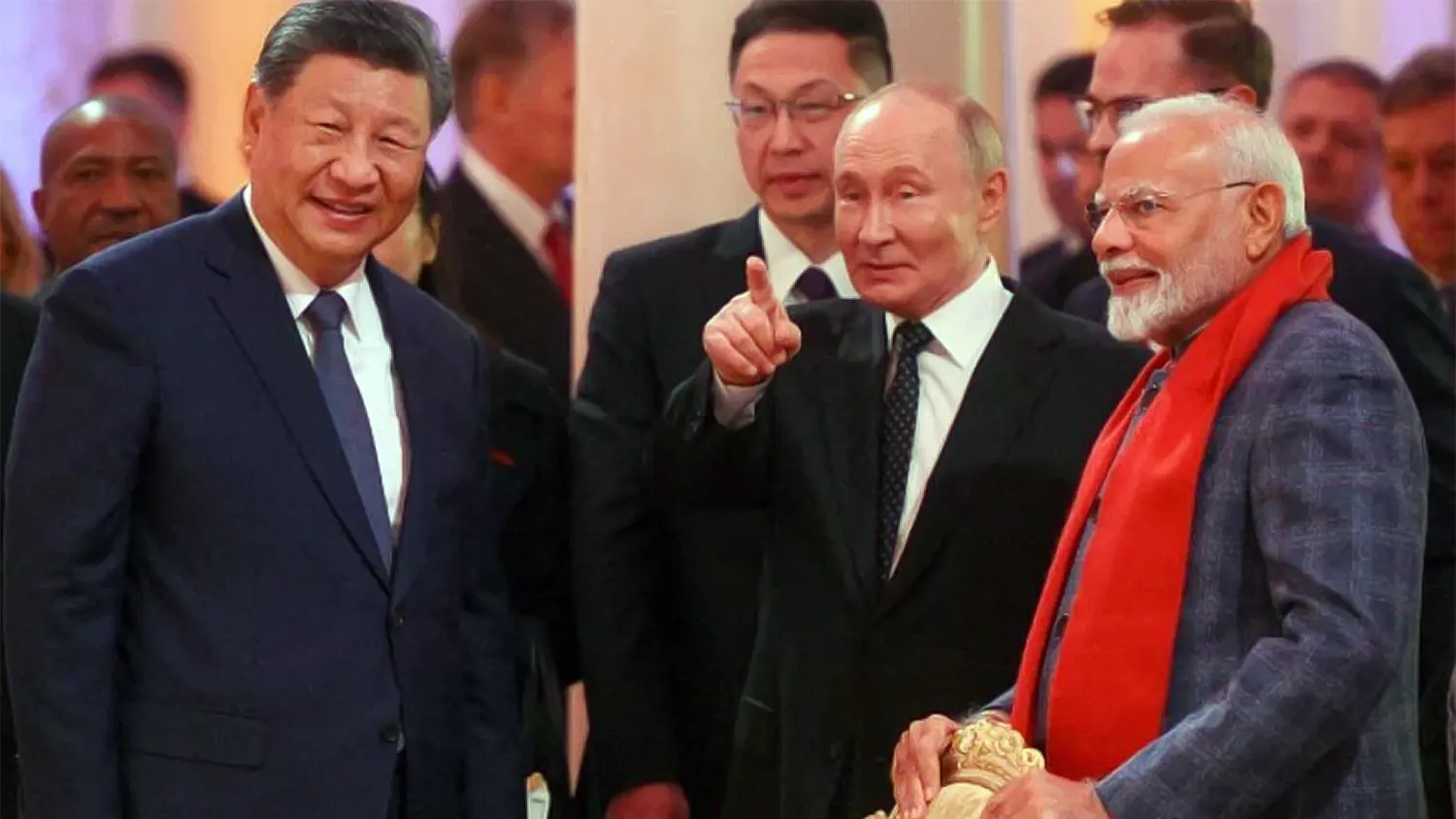
Narendra Modi landed in China this week for the Shanghai Cooperation Organization summit in Tianjin, making his first visit to the country since 2018. That alone would have been noteworthy. But the meetings lined up on the sidelines, a bilateral with Xi Jinping, a sit down with Vladimir Putin, and the quiet revival of a Russia-India-China trilateral have turned this trip into one of the most geopolitically significant moments of Modi’s tenure.
The visit does not signal a reset. It signals something more complicated and, in many ways, more interesting: that India has decided engagement is more useful than distance, even with the neighbour it trusts least.
Seven Years and a Deadly Border Clash in Between
The last time Modi visited China was 2018, a different era in the relationship. Two years later, Indian and Chinese soldiers clashed in the Galwan Valley in Ladakh, leaving 20 Indian troops and an unconfirmed number of Chinese soldiers dead. It was the bloodiest confrontation between the two countries in decades, and it sent relations into a deep freeze that lasted years.
Full normalisation remains a long way off. The border dispute in Ladakh is unresolved, mutual suspicion runs deep, and no amount of diplomatic choreography can paper over the underlying tensions. But both sides appear to have concluded that managed engagement is preferable to sustained estrangement and this summit is where that calculation becomes visible.
Any movement on confidence building measures along the Line of Actual Control will be scrutinised carefully. A breakthrough is unlikely. Even modest progress would matter.
What the SCO Summit Is Really About
The Shanghai Cooperation Organization is not a headline grabbing institution in the West, but Beijing is using this summit to make a statement. Hosted in Tianjin from August 31 to September 1 with leaders from more than 20 countries in attendance, the gathering is being framed by China as a showcase of Global South solidarity, a multilateral forum that operates outside the architecture of Western-led institutions.
For India, showing up is itself a strategic choice. New Delhi has no interest in being isolated from forums that China and Russia increasingly dominate, and the SCO provides a seat at the table without requiring India to formally align with either power. It is participation as pragmatism neither endorsement nor rejection, but presence.
Putin, Xi, and the Troika Nobody Quite Forgot
The most closely watched subplot of this summit is the potential revival of the Russia-India-China trilateral known as the RIC which was once conceived as a loose counterbalance to American unipolarity. The concept never fully took off, partly because India and China’s relationship was too complicated to sustain genuine trilateral coordination.
Russian Foreign Minister Sergei Lavrov has been actively pushing for its revival, and the Tianjin summit provides a natural moment to test whether the idea has legs. A trilateral meeting between Modi, Xi, and Putin would be symbolically significant regardless of what is actually discussed, three major powers signaling that they can sit in the same room and talk.
Whether it amounts to meaningful coordination is another question. India’s interests diverge sharply from China’s on too many fronts for the troika to function as a genuine strategic bloc. But as a signal of India’s refusal to be confined to any single camp, it serves its purpose.
India Is Not Tilting Toward China, It Is Tilting Toward Nobody
The visit has raised eyebrows in Washington, and that is partly the point. US-India relations have cooled in recent years, frayed by trade disputes and tariff tensions that have complicated what was once a smoothly warming partnership. By travelling to Beijing and sitting down with both Xi and Putin, Modi is sending a message to all parties: India will not be taken for granted, and it will not subordinate its foreign policy to anyone else’s preferences.
This is what New Delhi calls multi-alignment, the deliberate maintenance of strategic flexibility across competing power centre. It is a harder position to sustain than outright alignment, requiring constant calibration and a willingness to absorb criticism from every direction. But for a country of India’s size and ambition, it may also be the only approach that preserves genuine autonomy.
Trade, Deficits, and the Economics Underneath the Diplomacy
Beneath the geopolitical optics lies a more grounded conversation that both sides need to have. Despite years of political friction, China remains India’s second-largest trading partner, a fact that sits awkwardly alongside the border tensions and mutual distrust.
India’s trade deficit with China is a persistent irritant in the relationship, and Modi’s team is expected to push for greater market access for Indian goods as part of the bilateral discussions. Whether China is willing to offer meaningful concessions on that front remains to be seen, but the conversation itself is a sign that economic pragmatism is driving both sides toward dialogue even when political sentiment would pull them apart.
Managing Contradictions Is the Whole Job
What this visit ultimately reflects is the complexity of India’s position in the world right now. Modi must assert sovereignty over a disputed border, manage an enormous and lopsided trade relationship, preserve ties with Washington without becoming dependent on them, and maintain a working relationship with Moscow at a time when that too carries diplomatic costs.
None of those goals are fully compatible with each other. The Tianjin summit will not resolve that tension, no single meeting can. But it demonstrates that India’s approach to the great power rivalries of this century is neither naive nor passive. New Delhi is not waiting to see which side wins. It is making sure it has a seat at every table.