Russia launched one of its largest aerial assaults of November against Ukraine on November 19–20, firing more than 500 missiles and drones at cities and critical infrastructure just hours after Russian President Vladimir Putin met U.S. President Donald Trump and Chinese President Xi Jinping in Shenzhen, China.
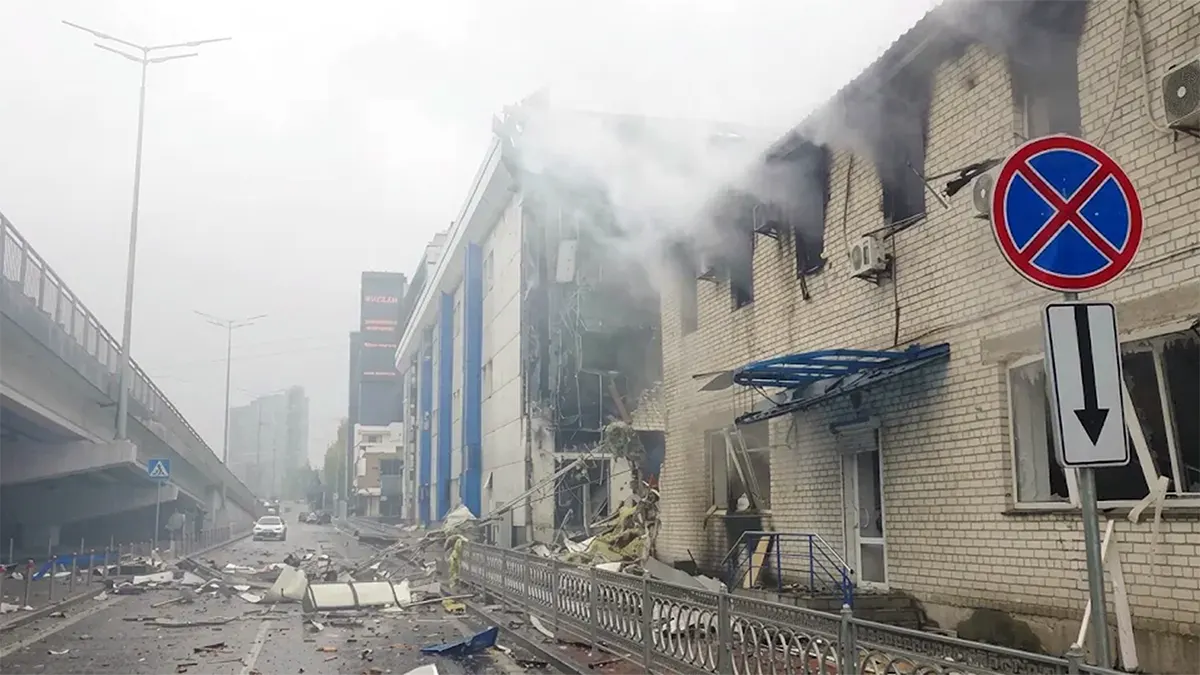
The overnight bombardment killed at least eight people and injured 28 others, according to initial Ukrainian casualty reports. Kyiv suffered particularly heavy damage, with three major bridges over the Dnipro River struck by Russian ballistic missiles. Residential buildings, railway infrastructure, hospitals, and energy facilities were also affected.
The attack was followed by another deadly Russian assault on the central Ukrainian city of Kryvyi Rih on the evening of November 20. Two people, including a seven year old boy and a 20 year old ambulance paramedic, were killed, while dozens more were injured.
The scale of the attacks raised fresh concerns about civilian safety, Ukraine’s already strained energy infrastructure, and the possibility of a wider confrontation after Russian missiles and a drone entered Polish territory during the overnight operation.
Russian Attack Follows Historic Trump-Xi-Putin Summit in China
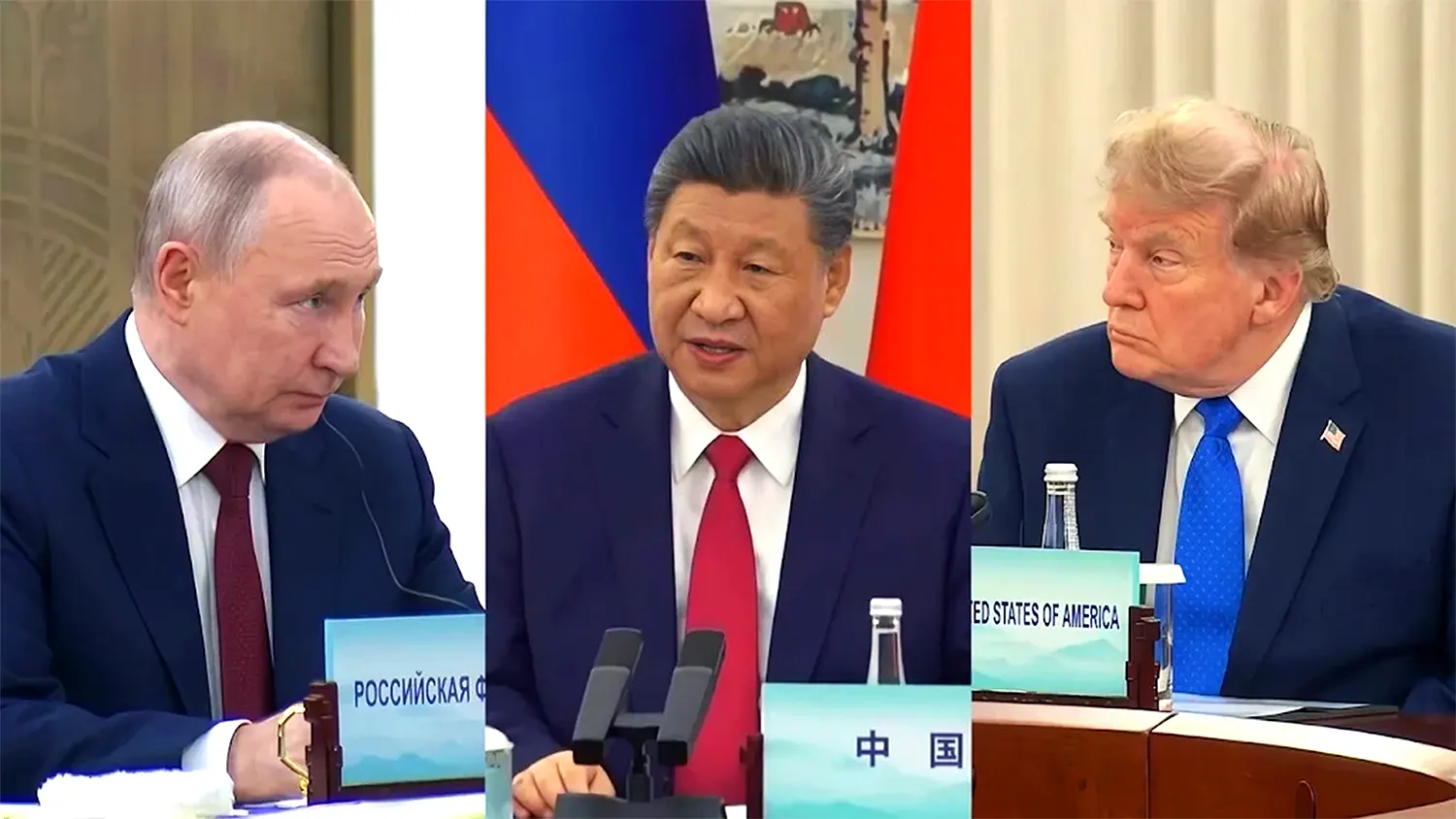
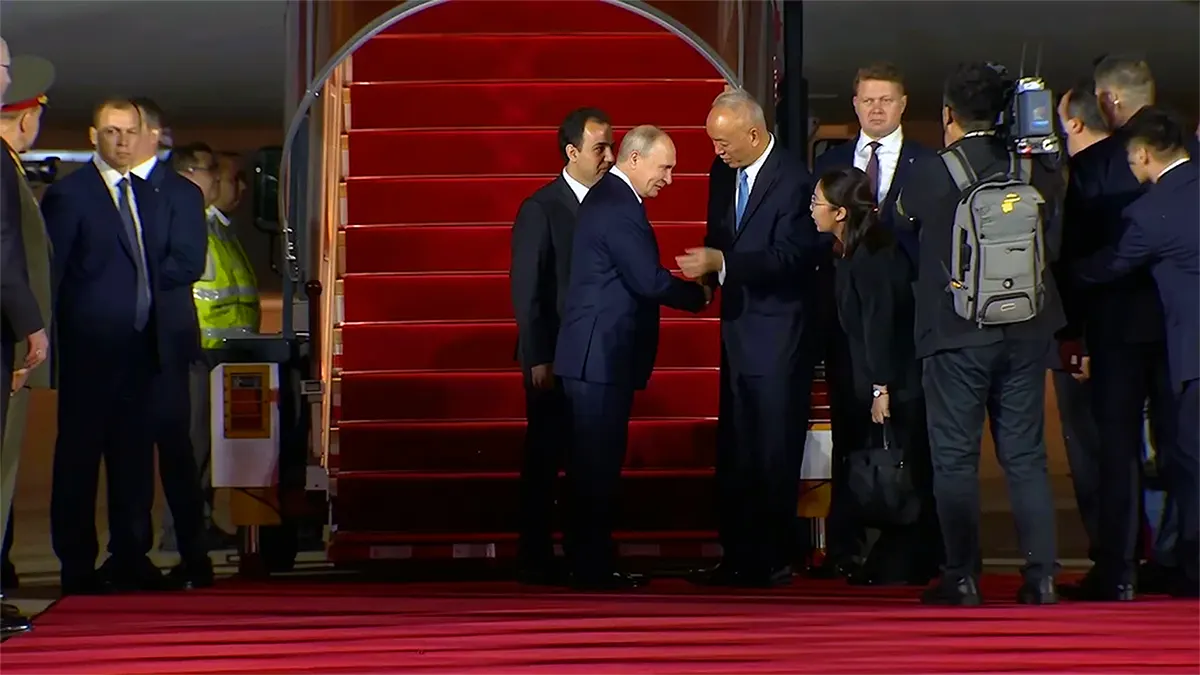
The timing of the bombardment drew particular attention because it came shortly after an unprecedented meeting between Trump, Putin, and Xi in Shenzhen on November 19.
The three leaders held a trilateral summit lasting more than an hour and subsequently issued a joint document titled the Declaration toward Peace. The agreement outlined cooperation on United Nations reform, energy security, international legal issues, and nuclear risk reduction.
However, the declaration made no specific mention of Russia’s war against Ukraine or the ongoing conflict involving Iran.
The omission was significant given Trump’s repeated statements about his intention to help end the war in Ukraine. Despite the summit’s emphasis on international peace and stability, it produced no publicly announced breakthrough toward ending the fighting.
Putin also showed little willingness to compromise with Kyiv. He rejected calls for direct negotiations and proposals for ceasefires covering energy infrastructure and Black Sea shipping.
His remarks came amid heightened tensions following Ukrainian strikes that damaged the Crimean Bridge, a strategic connection between mainland Russia and occupied Crimea. Putin threatened a much harsher response to further Ukrainian attacks.
Hours later, Russian forces launched their massive aerial assault.
More Than 500 Missiles and Drones Target Ukrainian Infrastructure
According to the Institute for the Study of War (ISW), Russian forces deployed 27 ballistic missiles, 84 cruise missiles, and 404 Shahed and Gerbera-type attack drones during the November 19–20 operation.
The combined total of 515 missiles and drones made it Russia’s largest aerial strike package of November at the time.
The attacks targeted infrastructure across at least 15 Ukrainian regions and the capital, Kyiv. Russian weapons struck energy facilities, transportation networks, logistics infrastructure, and industrial sites.
Ukrainian President Volodymyr Zelenskyy said Russian forces launched several waves of missiles at intervals of approximately 20 to 30 minutes, complicating rescue operations and putting additional pressure on Ukrainian air defenses.
Although Ukrainian forces intercepted a large proportion of incoming cruise missiles and drones, ballistic missiles proved more difficult to stop.
The resulting damage disrupted essential services and left communities dealing with power outages, damaged buildings, and transportation problems.
Three Major Kyiv Bridges Damaged by Russian Missiles
One of the most significant consequences of the attack was the damage to three major bridges crossing the Dnipro River in Kyiv.
The crossings are essential to the city’s transportation network, connecting residential communities on the eastern bank with commercial districts and other important destinations on the western bank.
The damaged bridges were the Podilsko-Voskresenskyi, Darnytskyi, and Pivdennyi (Southern) bridges.
Although none of the structures was reported to have collapsed, the damage forced authorities to introduce traffic restrictions and assess the condition of the crossings.
The restrictions created serious transportation problems for residents who depend on the bridges for daily commuting.
Podilsko-Voskresenskyi Bridge
The Podilsko-Voskresenskyi Bridge was initially closed to traffic travelling from the right bank to the left bank following the missile strike.
Emergency crews subsequently cleared debris and restored traffic in that direction during the afternoon of November 20.
Pivdennyi (Southern) Bridge
The Southern Bridge faced particularly strict restrictions following repeated attacks.
Authorities limited traffic to travel from the left bank to the right bank. Regular vehicles weighing up to 10 metric tons and public transportation vehicles weighing up to 18 metric tons were permitted to cross.
Darnytskyi Bridge
The Darnytskyi Bridge also sustained damage from the ballistic missile strikes.
Although it remained open to traffic, specialists were assessing the extent of the damage while repair and recovery operations continued.
Kyiv Mayor Vitali Klitschko urged residents to avoid unnecessary private vehicle journeys and encouraged businesses and institutions to allow employees to work remotely wherever possible.
The disruption highlighted how attacks on a relatively small number of strategic crossings can affect transportation across an entire major city.
Emergency Transport Plans as Kyiv Faces Commuting Disruptions
With several major crossings damaged or operating under restrictions, Kyiv authorities began considering alternative ways to maintain transportation between the two banks of the Dnipro.
Emergency preparations included the possibility of deploying temporary pontoon bridges if the capacity of permanent crossings deteriorated further.
Military engineers and municipal authorities were also examining alternative transportation arrangements, including passenger vessels operating along the river.
However, water transportation would provide only limited relief. Fuel consumption, passenger capacity, and operational challenges would prevent ferries and hydrofoils from replacing the city’s existing bridge network.
Longer-term proposals have also included underwater tunnels that could offer an alternative route less exposed to direct aerial attacks.
Nevertheless, such projects would require years of planning and construction. They would not address Kyiv’s immediate transportation problems during the ongoing war.
Russian Strikes Disrupt Ukraine’s Energy and Electricity Networks
Beyond transportation infrastructure, the November 19–20 bombardment also targeted Ukraine’s electricity system.
According to Zelenskyy and Ukraine’s Energy Ministry, Russian attacks damaged high-voltage power lines and substations supporting nuclear power plants, as well as electricity interconnectors connecting Ukraine to the European grid.
The damage forced Ukrainian nuclear power facilities to temporarily reduce electricity generation.
National grid operator Ukrenergo also introduced emergency power restrictions in several regions, including Lviv, Zakarpattia, and Ivano-Frankivsk.
These disruptions added pressure to an electricity network that has repeatedly been targeted during Russia’s full-scale invasion.
The attacks also affected municipal utilities.
In Kyiv, damage to critical infrastructure disrupted water, heating, and electricity supplies in several districts. Some areas, including Pechersk, experienced service interruptions.
In Kryvyi Rih, electricity disruptions affected district heating facilities and water pumping stations. Hospitals and municipal services were forced to rely on backup generators.
The consequences extended beyond electricity production, demonstrating the wider impact of attacks on infrastructure that supports everyday civilian life.
Civilian Casualties Reported Across Multiple Ukrainian Cities
The overnight assault caused casualties in several parts of Ukraine.
Initial reports from Ukrainian officials on November 20 confirmed eight deaths and 28 injuries nationwide.
Kyiv recorded six fatalities and 15 injuries, while two people were killed in Lviv.
Three employees of Kyiv’s municipal water utility, Kyivvodokanal, were among those killed in the capital, according to initial reports.
In Lviv, Russian strikes hit the Sknyliv railway station, killing two people.
Kharkiv was also affected, with a Russian strike damaging an emergency hospital and injuring four people.
Other injuries were reported in the wider Kyiv region, including a married couple hurt by falling drone debris.
The attacks damaged residential buildings, commercial facilities, and other civilian infrastructure across the country.
Russian Missiles and Drone Violate Polish Airspace
The Russian bombardment also created a serious security incident beyond Ukraine’s borders.
On November 20, three Russian objects, believed to include two missiles and a jet-powered drone, entered Polish airspace and crashed at separate locations in southeastern Poland.
One of the missiles was identified as a Kh-101 cruise missile. Polish authorities reported no casualties or substantial damage from the incidents.
The violations nevertheless prompted a strong response from Warsaw and NATO.
Polish Prime Minister Donald Tusk described the incident as a likely intentional provocation, pointing to its timing alongside military exercises involving European forces in southeastern Poland.
NATO Secretary-General Mark Rutte condemned the incident as a grave violation of Polish airspace and expressed solidarity with Poland.
NATO aircraft were scrambled, while the alliance activated ground-based radar and air-defense systems to monitor the situation.
The incident added another layer of tension to an already dangerous security environment along NATO’s eastern border.
Zelenskyy Condemns Attacks and Calls for More Patriot Missiles
Ukrainian President Volodymyr Zelenskyy strongly condemned the Russian bombardment, describing the attacks as an act of terror against Ukrainian civilians and infrastructure.
Zelenskyy was meeting European leaders in Berlin as the attacks unfolded.
He also criticized the Trump-Xi-Putin summit, calling its outcome a failure to produce meaningful progress toward ending the war.
Ukraine has repeatedly argued that diplomatic declarations and negotiations will have little impact without concrete pressure on Moscow and stronger military support for Kyiv.
Following the latest bombardment, Zelenskyy urged Western allies to accelerate deliveries of Patriot air defense interceptors, which are particularly important for countering Russian ballistic missiles.
The need for additional air defense capabilities has become increasingly urgent as Russia continues to combine ballistic missiles, cruise missiles, and large numbers of attack drones in coordinated operations.
Meanwhile, U.S. envoy Jared Kushner reportedly told European leaders that Russia was open to NATO-like security guarantees for Ukraine after the war.
However, Russian Deputy Foreign Minister Sergei Ryabkov rejected the suggestion on November 20, highlighting the continuing disagreement over the security arrangements that could form part of any future peace settlement.
Second Russian Attack Kills Child and Paramedic in Kryvyi Rih
The violence continued after the overnight bombardment.
On the evening of November 20, Russian forces launched another missile and drone attack against Kryvyi Rih, a major industrial city in central Ukraine and the hometown of Zelenskyy.
The initial attack involved ballistic missiles striking a densely populated area in the city center.
A subsequent wave of drones hit the area as emergency personnel arrived to assist victims and manage the aftermath.
Ukrainian authorities described the incident as a double-tap attack, referring to a second strike against an area where rescuers and medical workers were already operating.
The attack killed two people: a seven year old boy and a 20 year old female ambulance paramedic.
The number of injured people continued to rise as rescue and medical operations progressed. By November 21, local authorities reported 58 injuries, including six children.
Several apartment buildings, a hospital, educational facilities, businesses, and vehicles were damaged.
The attack also affected emergency workers who were responding to the initial strike.
The deaths added to the civilian toll from the previous night’s nationwide bombardment and intensified concerns about the safety of emergency personnel operating in areas hit by Russian attacks.
A Peace Declaration Without a Path to Ending the War
The sequence of events surrounding the November 19–20 attacks exposed the gap between diplomatic statements and conditions on the battlefield.
The Shenzhen summit brought together the leaders of three major global powers and produced a joint declaration emphasizing peace, strategic stability, and nuclear risk reduction.
Yet the document did not address Russia’s war against Ukraine, and the meeting produced no publicly confirmed agreement to stop the fighting.
Within hours, Russian forces launched a massive aerial operation that damaged critical infrastructure, disrupted essential services, and killed civilians.
The subsequent attacks in Kryvyi Rih and the violation of Polish airspace further demonstrated the risks posed by the continuing conflict.
For Ukraine, the immediate priorities remain strengthening air defenses, repairing damaged infrastructure, and maintaining essential services for civilians.
For Western governments, the latest escalation presents another challenge: translating diplomatic efforts into concrete measures that can prevent further attacks and establish credible security arrangements for Ukraine.
The Shenzhen declaration may have called for peace, but the events that followed offered little indication that the war was moving toward an end.