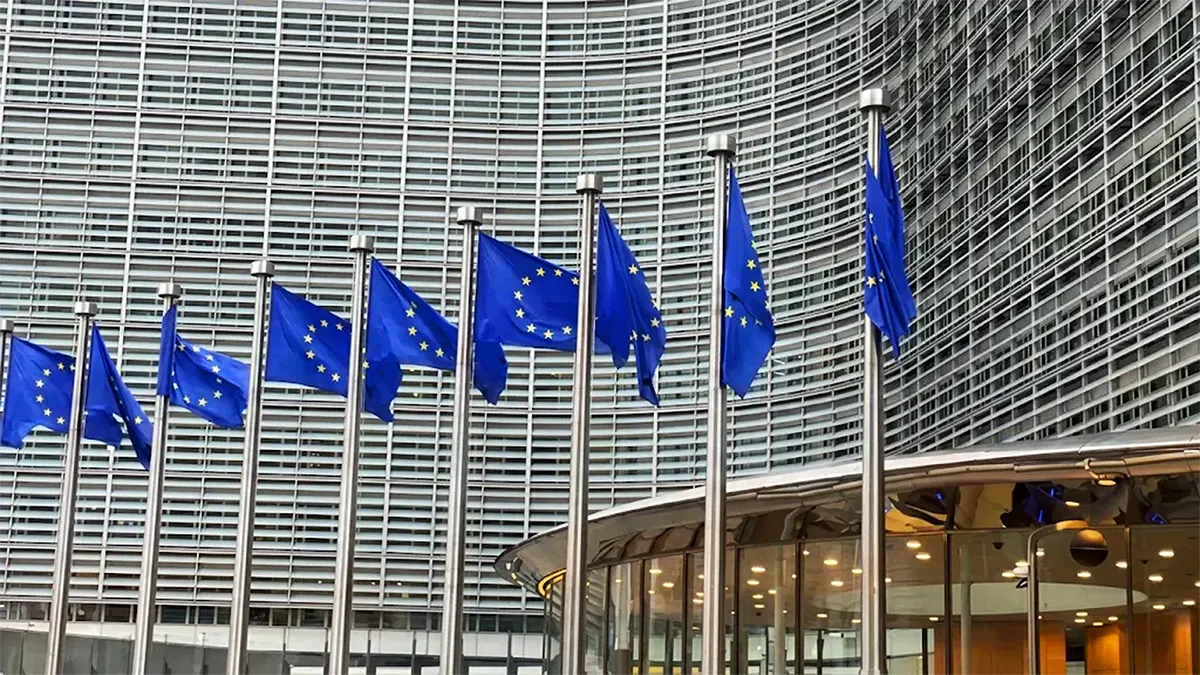
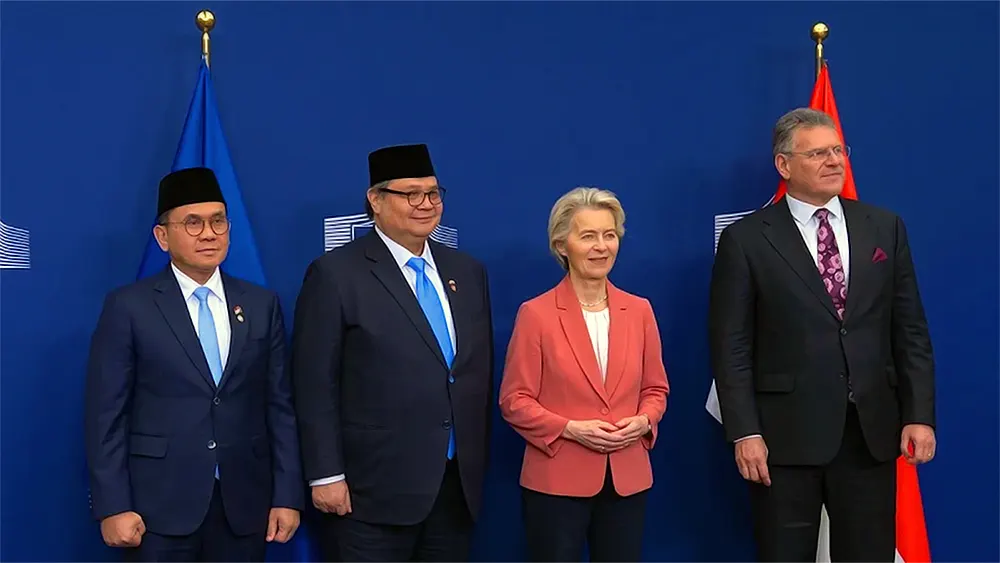
After almost ten years of negotiations, the European Union and Indonesia have officially signed a major trade pact in Brussels on November 20-21, 2026. The Indonesia-EU Comprehensive Economic Partnership Agreement (IEU-CEPA) comes with a companion Investment Protection Agreement (IPA). Talks wrapped up in September 2025, and the signing now sets off a race to get the deal running.
Together, the two sides form a market of around 730 million people. Here is what each side gets, where the risks are, and what happens next.
A Market of 730 Million People Opens Up
For Europe, the prize is Southeast Asia’s largest economy: roughly 280 million consumers and a GDP of about €1.3 trillion. Indonesia will remove duties on 98.5% of EU goods, cutting tariffs that now average 10% and climb as high as 150% on some items. European exporters could save more than €600 million a year in customs duties alone.
That is only the headline. The details show where the money will move.
Why European Carmakers and Farmers Have Reason to Cheer
The biggest cuts hit industry. Tariffs of up to 50% on European cars will disappear, and technical standards for vehicles and parts will be simplified. Chemicals (up to 25%), machinery (up to 15%), and pharmaceuticals and medical devices (up to 15%) also see duties removed, with stronger intellectual property protection for drugmakers.
Farmers benefit too. The EU already sells about €1 billion in food and farm products to Indonesia each year. Under the deal, tariffs fall on dairy, beef, poultry, fruit, vegetables, chocolate and bakery goods. Indonesia must also decide on import licenses within 30 days, without volume caps. And if an animal disease breaks out in one EU region, Indonesia will no longer ban exports from the whole bloc.
Europe’s food heritage gets a shield as well. The deal protects 221 Geographical Indications, so local copycats cannot use names like Comté, Feta, Gouda Holland or Pecorino Romano. Sensitive products such as rice, sugar, eggs, fresh bananas and ethanol are left out, and garlic, mushrooms and sweetcorn are capped by quotas.
What Indonesian Exporters Get on Day One
The benefits flow both ways. Of the 9,754 EU tariff lines, 90.4% drop to zero the moment the deal takes effect. Another 7.92% phase out over 3 to 15 years, bringing duty-free coverage to 98.35%.
This matters because Indonesian exporters have competed at a disadvantage against rivals like Vietnam, which already has an EU trade deal. Zero tariffs on day one should help:
- Palm oil and its derivatives
- Footwear, from leather shoes to sneakers
- Textiles and garments
- Fish, rubber and furniture
European Commission modeling projects that Indonesia’s exports to the EU will grow by more than 14% over 15 years, adding about €27 billion to its GDP.
Palm Oil Gets Its Own Rulebook
Palm oil was one of the thorniest issues in the talks, mainly because of EU deforestation rules. So the agreement includes a dedicated Palm Oil Protocol and regular technical committees. Instead of facing sudden trade blocks, Indonesia can raise sanitary and sustainability problems early and work them out through dialogue.
That does not mean palm oil gets a free pass, though.
Why Fires and Haze Could Still Test the Deal
The agreement ties both sides to the Paris Climate Agreement and International Labour Organization standards. A serious breach could, in theory, lead to the loss of tariff benefits. But the EU calls trade penalties a last resort, used only after long consultations and expert reviews. A spike in fire hotspots will not trigger them automatically.
Meanwhile, the EU Deforestation Regulation (EUDR) still applies in full. Even with a 0% tariff, every palm oil shipment must prove through satellite mapping that it did not come from land cleared or burned after December 31, 2020. A plantation that burns land to expand can still be blocked at the border.
The harder problem lies on the ground. Indonesia has anti-burning laws and reformed its ISPO palm oil certification in 2025, yet critics say field enforcement remains uneven. Independent smallholders grow 35% to 40% of Indonesia’s palm oil, but fewer than 10% hold formal sustainability certification. Many lack land titles, GPS maps or the money for zero-burning equipment, which puts them at risk of being shut out of European supply chains.
Critics also warn of trade diversion. Plantations that fail EU checks can simply sell to domestic biodiesel programs or to markets like India, China and Pakistan, so haze could continue even if EU-bound supply stays clean.
Investors Get Stronger Protection, With Work Still Ahead
For investors, the IPA is a major piece. EU companies already hold about €25 billion in Indonesian investments, and the pact promises fair treatment and protection against uncompensated expropriation. Europe frames it as a permanent Investment Court System. However, the IPA starts with a voluntary mediation mechanism, and both sides have agreed to a three-year work program to negotiate a permanent way to settle investor-state disputes.
Indonesia hopes the added certainty will bring European money and green technology into mineral processing, electric vehicles, electronics and pharmaceuticals. Cheaper European machinery and chemicals should also lower costs for factories upgrading their equipment.
The deal brings trade-offs for Indonesia, too. Local producers will face tougher competition from European cars, dairy, meat and processed foods, and Indonesia must protect the 221 EU food names. In return, it kept room to regulate in the public interest on health, environment and labor, and it shielded sensitive farm staples through exclusions and quotas.
The January 1 Deadline Everyone Is Racing Toward
Timing is tight. On January 1, 2027, Indonesia graduates out of the EU’s Generalized Scheme of Preferences (GSP). If CEPA is not in place by then, Indonesian exports will face higher standard tariffs for a while.
So both sides are moving at once:
- In Europe: The Commission is sending the texts to the European Parliament for a Yes/No consent vote. After that, the Council can approve provisional application.
- In Indonesia: The government is fast-tracking ratification through the DPR while ministries prepare customs rules and Geographical Indication protections.
Because the IPA needs approval from all 27 EU national parliaments, which can take years, the sides agreed on provisional application. Core trade and tariff cuts can start once the European Parliament consents and Indonesia finishes ratification. Exporters will need to set up origin self-certification, and Indonesian palm oil, timber, rubber and cocoa sellers must finalize EUDR traceability.
Once the deal is live, a Joint Committee and technical sub-committees will meet regularly from 2027 to 2029 to track tariff rollouts, fix customs problems, and monitor the Palm Oil Protocol and sustainability benchmarks. Severe haze or weak enforcement could give skeptical European lawmakers a reason to push back or delay.