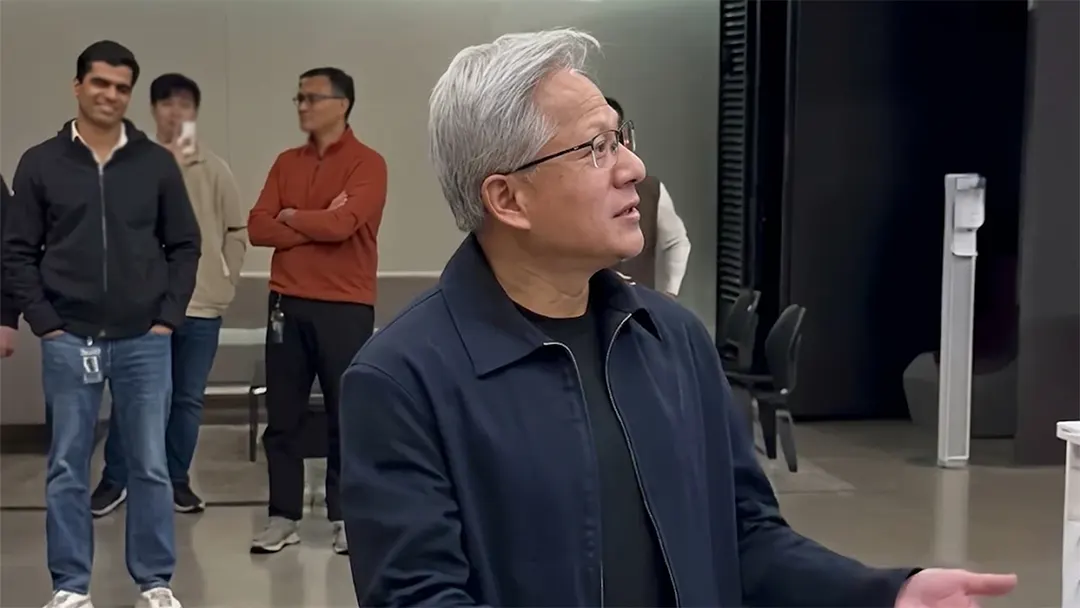
Jensen Huang is back at the helm of Nvidia, ending an extraordinary 11-day leadership crisis that shook investor confidence, sent the company’s shares into a steep decline, and raised questions about its corporate governance and national security responsibilities.
On November 23, 2026, Nvidia’s board unanimously reinstated Huang as chief executive officer, president, and board director, reversing its earlier decision to accept his resignation. The announcement triggered a massive rally in Nvidia shares, which climbed more than 31% in a single trading session.
However, Huang’s return does not mean the controversy is over.
The allegations surrounding his personal conduct, questions about Nvidia’s dealings with a Singapore-based company, and ongoing investigations into potential violations of U.S. semiconductor export restrictions continue to attract attention from lawmakers and federal authorities.
Nvidia has also introduced new oversight measures designed to strengthen corporate accountability and reassure Washington that its national security compliance will not depend entirely on its founder.
For Huang, the immediate challenge is no longer simply restoring investor confidence. He must also convince regulators, lawmakers, employees, and shareholders that Nvidia can maintain its leadership in artificial intelligence while operating under significantly greater scrutiny.
How Jensen Huang’s 11-Day Departure Unfolded
The crisis began on November 12, when Huang abruptly stepped down from his leadership positions following reports alleging multiple extramarital relationships, including alleged relationships involving Nvidia employees and a woman identified in reports as a suspected Chinese intelligence operative.
The allegations prompted questions about potential conflicts of interest, corporate governance, and possible national security implications.
Nvidia CFO Colette Kress subsequently assumed the role of interim CEO while the board began searching for a permanent replacement.
The leadership change immediately unsettled investors. Nvidia shares experienced heavy selling pressure as the market reassessed the company’s dependence on Huang, who had led the semiconductor giant for more than three decades.
The situation became increasingly complicated over the following days.
Reports concerning Nvidia’s business relationships with Singapore-based Megaspeed International raised additional questions about whether restricted artificial intelligence chips had reached Chinese companies through third-party intermediaries.
At the same time, pressure mounted on Nvidia’s board to reconsider Huang’s departure.
According to the supplied account, more than 180,000 people signed a petition supporting his return, including Nvidia employees and prominent technology figures. President Donald Trump also publicly urged the board to reinstate Huang, arguing that his return did not present a national security risk.
On November 23, the board reversed course.
Its unanimous decision restored Huang to his previous positions, with the company citing its confidence in his leadership and candor.
The reversal brought immediate relief to investors, although it did little to settle the broader questions surrounding the controversy.
Nvidia Introduces New Oversight Measures After Huang’s Return
Huang’s reinstatement came with an important condition: Nvidia would strengthen its internal governance and compliance structure.
The board established a National Security and Export Control Oversight Committee and began searching for a new chief compliance officer who would report directly to the board.
These measures are intended to address concerns that Nvidia’s export-control responsibilities and corporate oversight may have been too closely tied to executive management.
A New Board Committee Focused on National Security
The newly established committee is designed to provide independent oversight of Nvidia’s international business operations, particularly those involving advanced AI processors and markets subject to U.S. export restrictions.
Its responsibilities include reviewing the company’s global supply chain, examining high-volume international distributors, and strengthening customer verification procedures.
One of its central priorities is preventing restricted AI processors from reaching sanctioned entities through third-party companies, shell businesses, or other indirect distribution channels.
The committee is also expected to have independent audit and escalation authority, including the ability to flag suspicious transactions and recommend shipment suspensions without relying solely on Nvidia’s sales leadership.
This represents a significant governance change for a company whose international growth depends heavily on complex relationships with distributors, cloud providers, and technology partners.
A Chief Compliance Officer Who Reports Directly to the Board
Nvidia is also preparing to appoint a new chief compliance officer (CCO).
Unlike conventional reporting structures in which compliance teams operate under a company’s legal department or finance leadership, the incoming officer is expected to report directly to the board’s oversight committee.
The arrangement is intended to create a clearer separation between executive decision-making and regulatory supervision.
The CCO’s responsibilities will cover two major areas.
First, the officer will oversee compliance with U.S. export-control regulations, including requirements administered by the Bureau of Industry and Security.
Second, the role will cover corporate ethics, workplace conduct, and governance matters, addressing concerns raised by the allegations surrounding Huang’s departure.
The position is also expected to provide a dedicated point of contact for U.S. government agencies, including the Departments of Commerce, Justice, and Defense.
For Nvidia, these changes serve a broader purpose: demonstrating that its compliance systems can operate independently of its chief executive.
Why Washington Is Still Investigating Nvidia
Despite Huang’s return, the political and regulatory pressure surrounding Nvidia remains substantial.
The main concern involves whether restricted AI processors were diverted to Chinese companies through international intermediaries, potentially violating U.S. export restrictions.
Investigators are also examining whether Nvidia executives knew about or could have reasonably identified suspicious transactions.
One company attracting particular attention is Megaspeed International, a Singapore-based cloud computing firm reportedly involved in more than $4 billion in Nvidia chip and equipment purchases.
According to the allegations outlined in the supplied material, Megaspeed’s controlling shareholder and executive, Alice Huang, was also allegedly involved in a personal relationship with Jensen Huang and suspected of having connections to China’s Ministry of State Security.
These claims remain allegations and should not be treated as established findings of espionage or wrongdoing.
The Commerce Department’s move toward placing Megaspeed on a trade blacklist has added another layer of pressure to the investigation.
Investigators Examine Possible Chip Diversion to China
U.S. authorities are examining whether Nvidia processors purchased through Megaspeed and other intermediaries were subsequently redirected to Chinese AI companies.
Another area of concern involves remote access to computing infrastructure.
Even when physical AI processors remain outside China, cloud-based services can potentially allow customers in restricted markets to access computing capacity without directly importing the hardware.
This creates a difficult enforcement challenge for U.S. regulators.
The investigation is therefore not limited to where Nvidia chips are physically shipped. Authorities are also examining who ultimately controls or accesses the computing resources powered by those processors.
Fifteen national security leaders have reportedly petitioned the Department of Justice to investigate whether Nvidia executives had actionable knowledge of the alleged diversions.
Meanwhile, California Attorney General Rob Bonta’s office is conducting a separate investigation into whether Nvidia misled investors or allowed restricted chips and confidential technology to reach China improperly.
The outcome of these investigations could have significant consequences for Nvidia’s regulatory position and its international business strategy.
Jensen Huang Faces Congressional Hearings in December
Huang’s return has not stopped lawmakers from demanding answers.
Congressional scrutiny is expected to intensify in early December, with Nvidia’s leadership scheduled to participate in interviews and public testimony concerning semiconductor exports and national security.
The hearings are particularly important because both Republican and Democratic lawmakers have expressed concerns about the board’s decision to reinstate Huang.
December 1: Closed-Door House Interviews
Huang is scheduled to participate in joint transcribed interviews with three congressional panels:
- House Foreign Affairs Committee
- House Intelligence Committee
- House Select Committee on China
Nvidia General Counsel Tim Teter is also expected to participate in the inquiry, with his interview scheduled for December 2.
Lawmakers are expected to focus on Nvidia’s relationship with Megaspeed, the company’s export-control procedures, and allegations that restricted AI processors reached Chinese customers through intermediary businesses.
December 3: Public Senate Banking Committee Testimony
The more closely watched appearance is scheduled for December 3.
Huang is expected to testify publicly before the Senate Banking Committee as the sole witness in a hearing titled Protecting America’s AI Advantage: Oversight of U.S. Export Controls.
The hearing, led by committee chairman Senator Tim Scott, is expected to examine whether existing U.S. export restrictions are sufficient to prevent China from obtaining access to advanced American AI technology.
Huang will likely face questions about Nvidia’s international distribution network, its dealings with Megaspeed, and the company’s ability to prevent restricted computing technology from reaching prohibited customers.
Commerce Secretary Howard Lutnick has also been invited to testify before the committee on December 10.
The political pressure is bipartisan. Lawmakers including Senators Elizabeth Warren, John Cornyn, and John Curtis, as well as Representative Don Bacon, have raised concerns about Nvidia’s leadership situation and the government’s handling of the national security questions.
Congress is also considering stricter semiconductor export restrictions that could be attached to the December defense spending package.
Nvidia Stock Rebounds Nearly $1 Trillion After Huang’s Return
The financial consequences of Huang’s departure were immediate.
Investors viewed the leadership change as a major risk for Nvidia, particularly because the company occupies a central position in the global AI infrastructure market.
The uncertainty surrounding its leadership, combined with concerns about China-related investigations, contributed to a sustained sell-off.
Nvidia’s shares eventually fell to $125.53 on November 20, down from $173.73 at the November 11 close.
That represented a decline of approximately 27.7% in just over a week.
The situation changed dramatically when Nvidia announced Huang’s reinstatement.
On November 23, Nvidia shares surged as much as 36% during the trading session before closing at $165.05, up 31.48%.
The rally added approximately $950 billion to Nvidia’s market capitalization, making it one of the largest single-day increases in market value recorded by a publicly traded company.
The stock’s rebound also helped lift broader technology markets, as investors regained confidence in the AI infrastructure sector.
Nvidia’s Share Price From November 11 to November 23
| Date | Closing Price | Daily Change |
|---|---|---|
| November 11 | $173.73 | Baseline |
| November 12 | $166.19 | -4.34% |
| November 13 | $162.85 | -2.01% |
| November 16 | $156.14 | -4.12% |
| November 17 | $155.46 | -0.44% |
| November 18 | $150.96 | -2.89% |
| November 19 | $145.98 | -3.30% |
| November 20 | $125.53 | -14.01% |
| November 23 | $165.05 | +31.48% |
The figures illustrate just how quickly investor sentiment changed during the crisis.
Between November 11 and November 20, Nvidia lost $48.20 per share, equivalent to approximately 27.7% of its value.
The November 23 rally recovered $39.52 per share, representing roughly 82% of the decline.
However, Nvidia had not fully returned to its pre-crisis closing price, despite the extraordinary rebound.
The AI Sector Benefits From Nvidia’s Recovery
Nvidia’s influence extends well beyond its own stock.
As a major supplier of AI accelerators, servers, and computing infrastructure, the company is closely connected to the investment plans of cloud providers, technology companies, and semiconductor manufacturers.
Its leadership uncertainty therefore created concerns about the broader AI spending cycle.
When Huang returned, the relief extended across financial markets.
The Nasdaq Composite climbed approximately 6.5% to nearly 7% intraday, while semiconductor companies and other AI infrastructure suppliers also benefited.
Asian chipmakers in Taiwan and South Korea, along with U.S. companies such as Micron, experienced renewed investor interest.
Cryptocurrency markets also rebounded as broader risk appetite improved.
Nevertheless, analysts still have reasons to remain cautious.
The episode exposed Nvidia’s key-person risk, highlighting how heavily investors associate the company’s future with Huang’s leadership.
It also raised questions about the board’s succession planning and whether its oversight structure is sufficiently independent.
For institutional investors, the unresolved investigations and upcoming congressional hearings remain important risks.
What Jensen Huang Must Navigate After His Return
Huang has regained his position, but the circumstances surrounding his reinstatement have created a more complicated operating environment.
His immediate priorities will involve managing political relationships, protecting Nvidia’s international business, responding to investigations, and maintaining the company’s technology roadmap.
1. Stricter U.S. Export Controls Could Reshape Nvidia’s International Business
One of Nvidia’s biggest challenges is balancing U.S. national security requirements with its global growth ambitions.
Congress is considering additional semiconductor restrictions, including proposals associated with the MATCH Act, or Multilateral Alignment of Technology Controls on Hardware.
Potential restrictions involving cloud computing access, international distributors, and intermediary markets could affect how Nvidia sells and distributes its products.
Singapore and Malaysia are particularly important in this discussion because of their roles in the global technology supply chain.
Nvidia has already suspended shipments of U.S.-approved AI processors to China and excluded China AI computing revenue from its fourth-quarter projections, according to the supplied material.
Further restrictions could make it more difficult for the company to expand in other international markets.
Huang will therefore need to convince lawmakers that Nvidia can enforce export controls without unnecessarily limiting legitimate international business.
2. Internal and Legal Investigations Remain Unresolved
The investigations surrounding Huang and Nvidia are not limited to congressional hearings.
The company’s independent directors are conducting an internal investigation, reportedly assisted by the law firm Wachtell, Lipton, Rosen & Katz.
One of the central questions is whether Huang was targeted through an espionage operation or exposed to potential conflicts of interest that could have affected Nvidia’s business decisions.
Nvidia also faces a shareholder derivative lawsuit filed in November.
The lawsuit reportedly challenges the board’s oversight practices, succession planning, and previous assurances concerning the company’s relationship with Megaspeed.
Separately, California authorities continue examining whether Nvidia misled investors or improperly allowed restricted technology to reach China.
The eventual findings could influence investor confidence, corporate governance requirements, and the company’s relationship with regulators.
3. Huang Must Adapt to Greater Corporate Oversight
For more than three decades, Huang has been the defining figure behind Nvidia’s transformation from a graphics chipmaker into one of the world’s most valuable technology companies.
His leadership has been central to its product strategy, corporate culture, and expansion into artificial intelligence.
However, the new governance structure means he will have to operate alongside additional independent oversight.
The National Security and Export Control Oversight Committee, chaired by board member Suzanne Nora Johnson, is expected to play a more active role in reviewing sensitive business decisions.
The incoming chief compliance officer will also report directly to the board rather than through Huang.
This creates a more independent compliance structure, but it could also introduce additional layers of review into Nvidia’s international operations.
The challenge will be maintaining the company’s speed of execution while ensuring that regulatory and governance responsibilities receive sufficient attention.
4. Maintaining Blackwell and Rubin While Addressing Succession Planning
Beyond the political and legal issues, Nvidia still has a business to run.
The company must continue executing its AI hardware roadmap, including the expansion of its Blackwell platform and preparations for its next-generation Rubin architecture.
Maintaining product development and delivery schedules will be critical to sustaining investor confidence.
Nvidia’s long-term growth expectations depend heavily on continued demand for AI computing infrastructure.
Any disruption to its product roadmap, supply chain, or international distribution could affect those expectations.
At the same time, the crisis has renewed questions about the company’s succession planning.
The board’s rapid reversal demonstrated how difficult it was for Nvidia to navigate even a short period without Huang.
Institutional investors will likely want greater clarity about who could eventually lead the company and how its operations would continue if its founder were no longer available.
Huang’s return may have stabilized the immediate situation, but it has made the need for a credible succession strategy harder to ignore.
Nvidia’s Leadership Crisis Is Over, but Its Bigger Challenges Remain
Jensen Huang’s reinstatement has provided Nvidia with immediate leadership stability and delivered a remarkable boost to investor confidence.
The company’s stock market recovery demonstrated just how important Huang’s presence is to the market’s perception of Nvidia and the wider AI industry.
However, the rally should not be mistaken for a resolution of the controversy.
The allegations surrounding Huang, the investigations into Megaspeed, questions about potential chip diversion to China, and congressional scrutiny remain unresolved.
Nvidia’s newly established oversight committee and independent compliance structure may help address some of those concerns, but their effectiveness will ultimately depend on how independently and consistently they operate.
The December congressional hearings will provide an early indication of how much pressure Huang and Nvidia can expect from Washington.
For now, Huang has regained control of the company he helped build. But his next challenge is proving that Nvidia can remain a global AI powerhouse without allowing its leadership, governance, or national security responsibilities to become dependent on one individual.