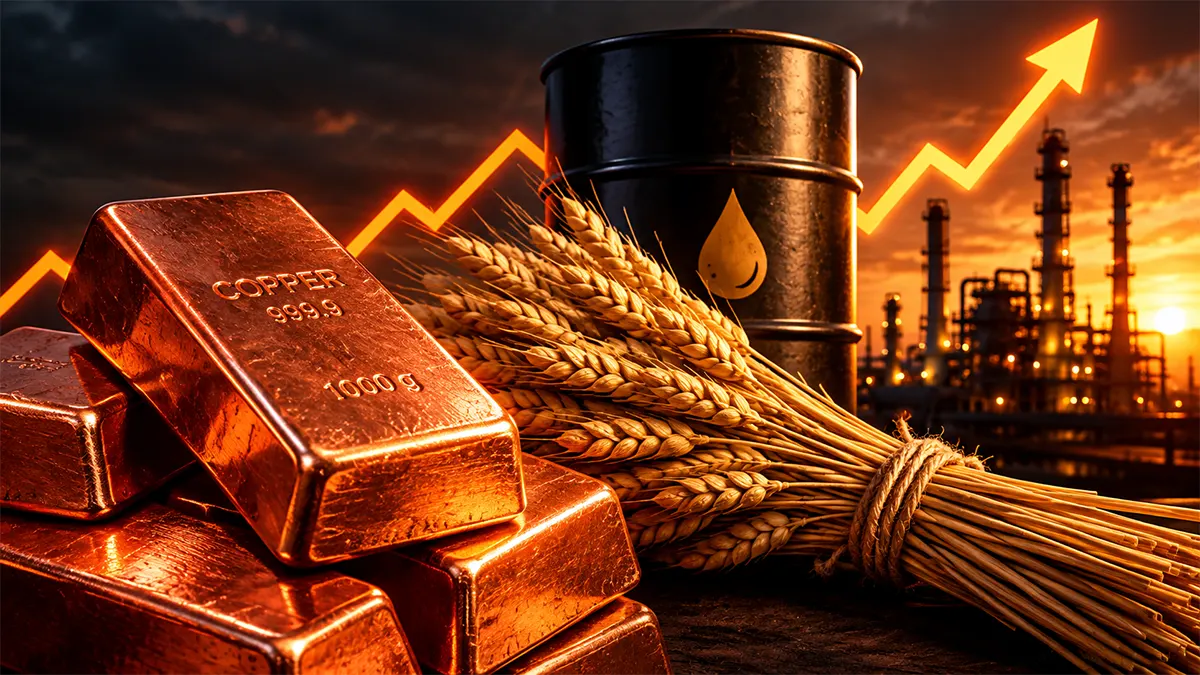
The World Bank’s latest Commodity Markets Outlook, released October 28, warns that global commodity prices will rise 23% in 2026. Oil, metals, food and fertilizer are all climbing at once, and the bank says that combination could reignite inflation and slow growth, especially in poorer countries.
Energy, Metals and Food Are Rising Together
Several shocks are hitting at the same time:
- Energy: Prices are up about 32%, with Brent crude averaging around $91 to $92 a barrel. War in the Middle East has drained global oil stocks, and oil supply is expected to shrink 5.2% this year.
- Industrial metals: Prices are projected to rise about 25% to an all-time high. Aluminum, copper and tin have all hit records. Copper is forecast to average $13,200 per tonne.
- Precious metals: Prices are expected to climb about 40%, as investors rush toward safe-haven assets like gold during uncertain times.
- Food: Prices are forecast to rise about 10% in 2026 and nearly 18% over two years. Grain shipment problems in the Black Sea, high fertilizer costs and weather risks like El Niño are the main causes.
Fertilizer is a hidden link in this chain. Its price is expected to rise 14% this year, which pushes up the cost of growing food.
Why Metals Are Hitting Records
The metals surge is not only about war. Clean energy, electric vehicles and power-hungry data centers are all pulling in large amounts of copper and aluminum. Mine supply is growing slowly, so demand is outrunning what the world can produce.
Why Central Banks Are Stuck
This kind of price jump is hard for central banks to handle. Inflation caused by supply shocks works differently from inflation caused by strong spending.
- It spreads slowly. Higher oil, metal and fertilizer costs work their way through transport, factories and food processing before they reach store shelves.
- It keeps inflation sticky. Even if shoppers spend less, higher input costs can keep prices elevated.
That leaves policymakers with a hard choice. They can keep interest rates high to fight prices, but that risks choking growth. Or they can cut rates to help growth, which could make prices worse.
Emerging markets have it hardest. Food and fuel take up a bigger share of household spending there. Cutting rates can also weaken a country’s currency and push money out of the country, which makes imports even more expensive.
Who Gets Hit Hardest
The World Bank describes the impact as uneven. Economists point to three groups of countries that face the greatest risk:
- Low-income countries with heavy debt. They pay more for fuel and food, and they still have to repay loans in strong U.S. dollars. Many have to choose between food subsidies and debt payments.
- Countries that import most of their energy. Those with little oil or gas of their own, including many in South Asia, East Asia and Africa, must spend more foreign currency to keep power and transport running. That drains reserves and feeds inflation.
- Countries that import much of their food. High staple and fertilizer costs raise the risk of food crises. Food insecurity already affected 779 million people worldwide in 2025.
A Few Countries Come Out Ahead, for Now
Commodity exporters can see a short-term boost in revenue. Copper producers in Latin America and Africa, such as Chile, Peru and the Democratic Republic of Congo, and oil and gas exporters outside the conflict zone typically gain the most from high prices.
The gains come with risks. A sudden flood of foreign currency can push up exchange rates and hurt other industries, a problem known as Dutch disease. And if high energy costs drag the whole world economy down, demand for exports will eventually fall too.
The Outlook: Relief Later, but Not Soon
The World Bank expects overall commodity prices to ease by 7% in 2027 and 8.8% in 2028 as supply constraints fade. That depends on shipping disruptions improving. The bank also warns that further escalation in the Middle East could push prices higher.