Just when things seemed to be cooling down, the Persian Gulf lit up again. A month-long pause in direct fighting between the United States and Iran came to an abrupt end over the weekend, after American forces struck Iranian rocket launchers on Larak Island and Tehran fired back at U.S. bases in Jordan. The exchange has reignited fears that the Strait of Hormuz, one of the world’s most critical oil chokepoints could become the epicenter of a much wider war.
What Happened on Larak Island
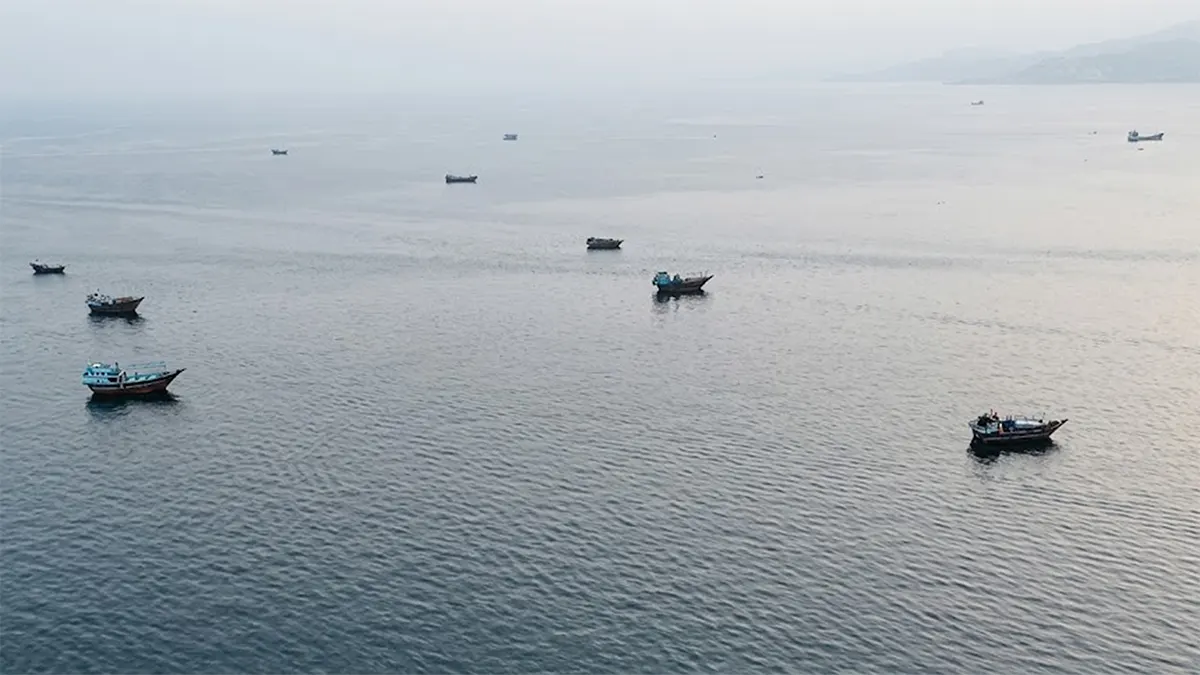
U.S. Central Command confirmed it carried out precision strikes against two Islamic Revolutionary Guard Corps (IRGC) launcher sites on Larak Island, a small but strategically vital piece of land near Bandar Abbas in the Strait of Hormuz. According to CENTCOM, American forces had spotted IRGC personnel preparing to fire rockets carrying sea mines into international shipping lanes, a move that could have shut down one of the planet’s busiest oil transit routes almost overnight.
This wasn’t a random flashpoint. It marked the first direct U.S. strike inside Iran in more than a month, following a stretch where Washington had leaned more heavily on economic sanctions than military force. CENTCOM framed the operation as purely defensive, saying it was protecting “civilian mariners” and the “free flow of global commerce” after U.S. forces had only recently finished clearing sea mines from the strait.
Iranian state media told a different story, reporting casualties from the strike and quickly labeling the U.S. action an “act of aggression”, a characterization CENTCOM publicly rejected.
Iran’s Response: Missiles Aimed at Jordan
Tehran didn’t wait long to retaliate. The IRGC launched what it called “Punishment of the Aggressor,” a combined barrage of ballistic missiles and suicide drones aimed at two U.S.-linked installations in Jordan: Muwaffaq Salti Air Base in Al-Azraq and King Hussein Air Base. Both sites serve as key hubs for American tactical aircraft, including F-15s and F-16s, along with drone operations.
Jordanian and regional air defenses intercepted the vast majority of incoming projectiles. No U.S. or Jordanian personnel were killed, and the damage was largely limited to shrapnel scattered across rural, unpopulated areas near Azraq. Iranian officials, however, claimed the strikes had damaged maintenance infrastructure and jet deployment sites, and defended the operation as a legitimate act of self-defense under Article 51 of the UN Charter.
Notably, Iran chose to strike bases in Jordan rather than facilities in Saudi Arabia or Qatar, a calculated move that let Tehran flex its missile reach at Washington without dragging other Gulf Arab states directly into the fight.
Trump Draws a Hard Line
The White House wasted no time responding. President Trump laid out a “zero tolerance policy” on any Iranian attempt to place mines in the Strait of Hormuz, warning that the U.S. Navy and Space Force are watching the waterway closely and that any vessel caught deploying explosives would be “immediately and systematically destroyed.”
Speaking to reporters after the missile exchange, Trump was blunt: “We’re going to hit them hard. There will be a response.” He also suggested that continued Iranian aggression could trigger further strikes against remaining IRGC launcher sites, radar installations, and coastal defenses.
Behind the scenes, the Treasury Department is doubling down too, expanding sanctions aimed at choking off what remains of Iran’s trade channels, part of a broader strategy to pair military pressure with economic punishment until Tehran complies with maritime safety demands.
Diplomacy Hasn’t Died, But It’s Stuck
It would be easy to assume talks have completely collapsed, but that’s not quite accurate. Back in June, the U.S. and Iran signed the Islamabad Memorandum, a Pakistan- and Qatar-brokered framework that set a 60-day window to hash out a permanent settlement covering shipping security, nuclear limits, and sanctions relief. That window quietly expired in mid-August without a finalized deal, leaving negotiations effectively frozen.
Mediators haven’t given up, though. Pakistan, Qatar, and Oman are still working back channels to prevent things from spiraling further, with current discussions reportedly focused on setting up humanitarian transit corridors through the strait.
The core disagreement remains the same one that’s blocked progress for months: Washington wants verifiable Iranian withdrawal from the Strait of Hormuz, fully open shipping lanes, and hard caps on Iran’s missile program. Iran’s Foreign Minister, Abbas Araghchi, has said Tehran is still open to a diplomatic path but only if the U.S. stops its military pressure campaign and naval blockade first.
For now, missiles are moving faster than diplomats. Neither side has slammed the door on talks entirely, but with strikes and retaliations dominating the headlines, a return to the negotiating table doesn’t look imminent.