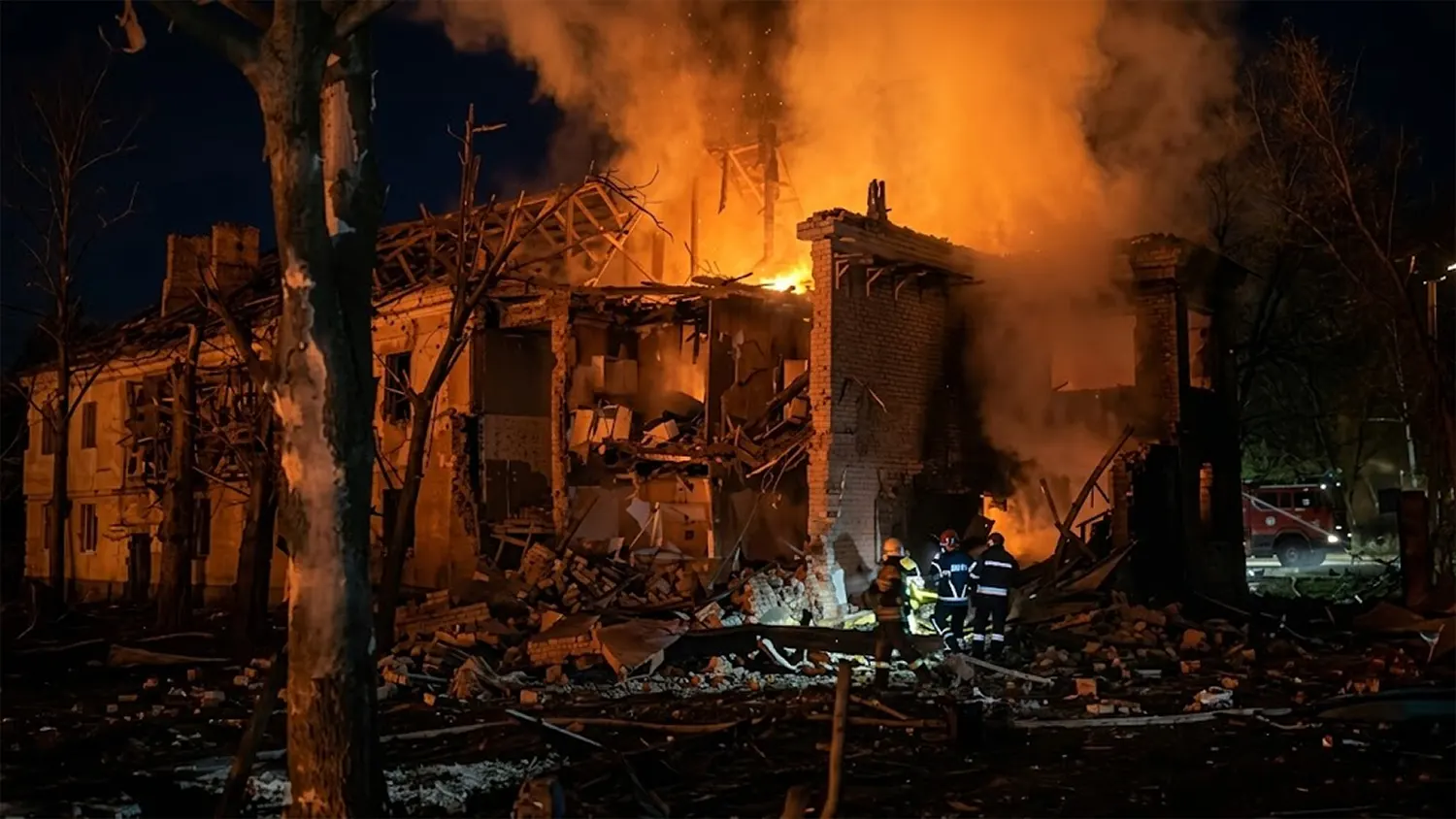
More than four years after Russia launched its full-scale invasion, the war in Ukraine has settled into something neither side expected: a brutal, grinding stalemate with no decisive breakthrough in sight. The frontlines have barely shifted. The missiles keep falling. And the financial, human, and economic toll on both countries has grown into something that historians will be studying for generations.
This isn’t a story with a clean ending yet. But the numbers in dollars spent, lives lost, and economies strained to the breaking point tell a story of their own.
A War Frozen in Three Dimensions
On the ground, Russia launched a major spring-summer offensive that Ukrainian forces have largely stalled, limiting Russian territorial gains to fractions of what Moscow seized in earlier years. Ukraine has even clawed back small pockets of land through localized counterattacks. Neither side is winning. Neither side is losing. And that stalemate is costing everyone.
Because Russia hasn’t been able to break through on the ground, it has pivoted hard to the air unleashing unprecedented waves of long-range drones and ballistic missiles against Ukrainian energy infrastructure and cities like Kyiv, Dnipro, and Kharkiv. Civilian casualties have risen sharply as a result.
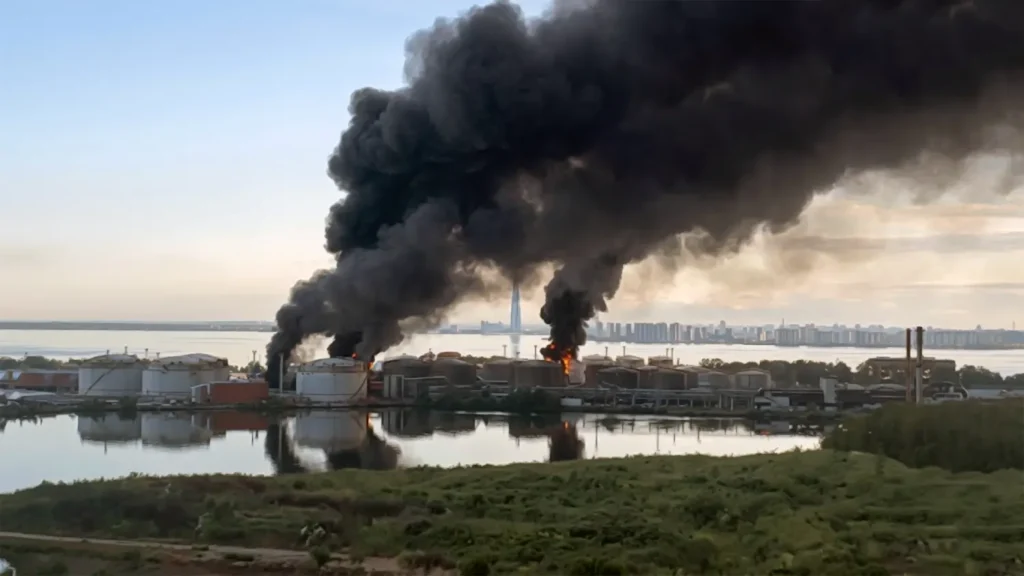
Ukraine, meanwhile, has responded with a campaign of its own. Using homegrown long-range attack drones, Ukrainian forces are now routinely striking oil refineries, ammunition depots, and supply lines more than a thousand miles inside Russian territory. Most significantly, Ukraine has disrupted the critical land corridor connecting Russia through the Donbas to occupied Crimea severely choking Russian military logistics in the south.
What This War Has Actually Cost Russia
Over $1 Trillion and Counting
The direct financial cost of keeping Russia’s war machine running has escalated every single year. EU intelligence estimates now put Russia’s annual war spending at approximately €250 billion or over $270 billion. Stretched across four years, that pushes direct military expenditures past the $1 trillion mark.
To put that in federal budget terms: in 2026, Russia allocated 16.84 trillion rubles roughly $238 billion to defense and security alone. That’s 40% of all government spending, in a single year, on a single war.
The strain is showing. By April 2026, Russia’s budget deficit had ballooned to nearly 6 trillion rubles blowing past the Kremlin’s planned deficit for the entire year. To cover the gap, the Finance Ministry has been forced to freeze funding for education, healthcare, and infrastructure. Guns are being chosen over butter, officially and visibly.
The $300 Billion Frozen and Now Being Weaponized
When Russia invaded in 2022, Western nations executed the largest financial freeze in modern history: roughly $300 billion in Russian central bank reserves, mostly held in European accounts, were locked overnight.
Seizing the core principal has remained legally and politically complicated. But Europe found another way to use it. The EU is now confiscating the interest and windfall profits generated by those frozen assets and routing the money directly to Ukraine. In early 2026 alone, a €1.4 billion tranche was transferred to fund Ukrainian defense and state services.
Russia is also now the most heavily sanctioned country in human history, facing over 31,500 individual sanctions. The economic collapse the West predicted never fully materialized but the sanctions have systematically starved Russia of the advanced technology it needs to build precision weapons and modern military hardware.
The Military Production Picture Is More Complicated Than It Looks
Russia’s defenders often point to its massive, Soviet-inherited industrial base and they’re not wrong that it gives Moscow an advantage in sheer volume. Russia genuinely outproduces Ukraine in heavy armor and artillery shells. But the picture has critical holes.
Because Western microchips are sanctioned, Russia cannot legally source the components needed for precision-guided missiles and modern fighter jets. The workaround? Cannibalizing consumer electronics and running black-market smuggling networks. Beyond that, Russia has been forced to import thousands of Shahed drones from Iran and millions of artillery shells from North Korea just to keep frontline logistics from drying up. It funds all of this primarily by selling discounted crude oil to China and India.
Ukraine, by contrast, entered the full-scale war almost entirely dependent on Western arms and aid. That dependency was a genuine vulnerability — political delays in Washington and European capitals directly affected Ukrainian battlefield capacity. But over the past two years, Ukraine has been quietly building one of the most impressive domestic drone industries in the world, manufacturing hundreds of thousands of long-range strike drones annually. Critically, it’s Ukraine’s own homegrown technology not Western weapons that is now reaching targets more than 1,000 miles inside Russia.
The real bottom line: Russia is trading its long-term economic future to sustain short-term military output. The financial math only works as long as global oil prices stay high.
What the War Has Cost Ukraine
Russia’s cost is measured in burned capital and blocked technology. Ukraine’s cost is existential because the war is being fought entirely on Ukrainian soil.
$588 Billion to Rebuild Nearly Three Times Its GDP
The World Bank’s Rapid Damage and Needs Assessment puts the direct physical destruction of Ukrainian infrastructure at over $195 billion. But the reconstruction bill is far larger. The World Bank estimates the total 10 year recovery cost at $588 billion nearly three times Ukraine’s entire annual GDP.
The hardest-hit sectors tell the story: transport infrastructure (blown bridges, warped rail lines, destroyed ports) accounts for over $96 billion in damage. Energy infrastructure Russia’s deliberate, systematic targeting of Ukraine’s power grid amounts to $91 billion, creating a chronic electricity deficit that regularly bottlenecks the entire economy. Housing destruction has reached $90 billion, with roughly 14% of Ukraine’s entire housing stock damaged or destroyed, leaving over 3 million households partially or fully displaced.
An Economy Running on Foreign Aid
When the invasion began in 2022, Ukraine’s GDP collapsed by 28.8%, one of the sharpest single-year economic contractions ever recorded for a country not experiencing hyperinflation. Subsequent Russian strikes on the energy grid dragged growth negative again, with GDP contracting another 0.5%.
The country’s fiscal reality is stark: Ukraine uses 100% of its domestic tax revenue to fund the military. Every non-military government expense doctors, teachers, pensions, emergency services is paid for entirely by foreign aid. In 2026 alone, Ukraine needs $50 billion in external Western financing just to keep the government solvent.
The Human Toll No Dollar Figure Can Capture
Over 6.5 million Ukrainians remain refugees scattered across Europe. Millions more are internally displaced or serving on the front lines. This has created a severe labor shortage and brain drain that is quietly hollowing out Ukraine’s ability to function as a normal economy.
Perhaps most overlooked: Ukraine is now the most heavily mined country on Earth. Nearly $28 billion is needed just for explosive hazard clearance. Vast tracts of the country’s famous agricultural land, the “breadbasket of Europe” are completely unusable until cleared of unexploded ordnance. That’s not just a safety problem. It’s a long-term economic one.
1.5 Million Casualties and the Number Is Accelerating
Both governments treat their casualty figures as state secrets, for obvious reasons. But independent investigative journalists, the UN, and Western intelligence agencies have tracked the data closely enough to piece together a picture that is, by any historical measure, catastrophic.
Total casualties across both sides killed, severely wounded, or missing have passed 1.5 million people. That makes this conflict the deadliest in Europe since World War II.
Russia’s Military Losses
Russia’s strategy of using waves of convicts, mercenaries, and mobilized troops to assault fortified Ukrainian positions has come at an enormous human cost. Independent Russian outlets Mediazona and Meduza, cross-referencing public death records and obituaries, confirm at least 352,000 Russian soldiers killed in action. Western intelligence estimates put the true number closer to 400,000.
When including the severely wounded, amputees, and missing, Russia’s total military casualties are estimated between 1 million and 1.2 million more losses than any major power has suffered in a single conflict since 1945.
Ukraine’s Military and Civilian Losses
Ukraine’s military deaths estimated between 100,000 and 140,000 by organizations including CSIS are numerically lower, but proportionally devastating for a country with a far smaller population. Total Ukrainian military casualties (killed, wounded, missing) are estimated between 500,000 and 600,000.
The civilian toll is where the moral weight of this conflict becomes undeniable. The UN Human Rights Monitoring Mission has verified over 15,000 civilian deaths but explicitly notes the real number is significantly higher. The official count excludes heavily destroyed, Russian-occupied cities like Mariupol, Severodonetsk, and Lysychansk, where thousands of civilians were buried in mass graves or crushed under collapsed apartment buildings during the invasion’s early months.
Worst of all: the pace is speeding up. UN data shows that civilian casualties from long-range Russian missile and drone strikes on cities far from the front lines Dnipro, Odesa, Kyiv have surged more than 20% compared to previous years.
How Russia’s Economy Is Still Standing And Why It Might Not Be for Long
On paper, a country under 31,500 sanctions, spending 40% of its budget on a grinding war, should have economically collapsed. The fact that it hasn’t is one of the more unsettling stories in modern economics and understanding why matters.
The short answer is Military Keynesianism: the Kremlin has pumped so much money into weapons factories that it created an artificial domestic boom. Factories are running 24/7. Blue-collar wages are up. The government is paying massive cash bonuses and death benefits to soldiers’ families. For ordinary Russians, the immediate economic pain of the war has been deliberately masked.
Russia also built a “shadow fleet” of aging, uninsured oil tankers that bypass Western price caps entirely, continuing to sell crude to India, China, and buyers across the Middle East. As long as oil prices remain elevated, the Kremlin has a steady stream of hard currency.
And in a sign of just how desperate the revenue picture has become, the Kremlin has been pressuring Russian oligarchs and major corporations into routing “voluntary” contributions over $3 billion so far directly into the state treasury through shell companies.
The Cracks Are Widening
But senior Russian economic officials are no longer hiding their alarm. The Finance Ministry has sent urgent internal warnings to Putin that the current trajectory is unsustainable. The data backs them up:
Russia’s GDP growth forecast for 2026 has been slashed to near-zero (0.4%). The budget deficit has blown past its annual target by April. Official inflation is running at 5.2% with independent analysts saying the real consumer figure is substantially higher. And with hundreds of thousands of men dead or deployed, and over a million educated young Russians having fled the country to avoid conscription, Russian factories literally cannot find enough workers.
Why Putin Keeps Going Anyway
If the economics are this dire, why hasn’t Russia stopped? Three reasons stand out.
First, elevated oil prices periodically pushed past $100 a barrel by Middle East instability give the Kremlin just enough hard currency to buy time month-to-month, masking the structural rot beneath.
Second, Russia has built an economic trap it can’t easily escape. If Putin stops the war and cuts military production tomorrow, the factories running around the clock shut down. Unemployment spikes. The artificial consumer boom collapses. The result would be an immediate, severe recession potentially more politically destabilizing than the war itself.
Third, and perhaps most dangerously: Putin may not fully understand how bad things are. Intelligence analysts note that the Russian military high command has been feeding him heavily exaggerated battlefield reports, leading him to genuinely believe Ukraine will collapse before Russia’s finances do.
That gamble, that a Ukrainian breakdown comes before a Russian economic seizure is what’s keeping this war going. Whether the bet pays off, or whether Russia’s stalling offensive, shrinking recruitment numbers, and imploding budget force a reckoning first, is the question on which the next chapter of this war turns.
The math, at least, is finally starting to work against Moscow.