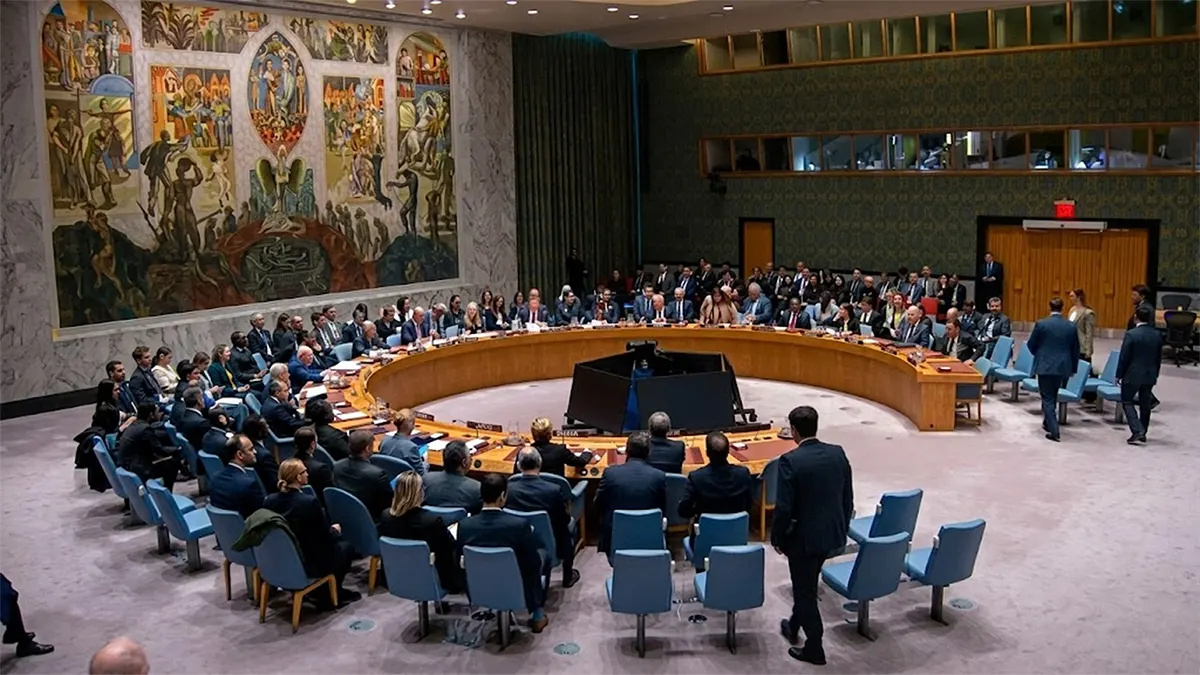
For the first time in the report’s 15-year history, the United Nations has placed both Israeli and Russian state forces on its official blacklist of parties credibly suspected of committing conflict-related sexual violence. The move, part of the UN Secretary-General’s annual report to the Security Council, sent immediate shockwaves through international diplomacy triggering furious denials, severed ties, and a pointed debate about accountability, politics, and the limits of international law.
A Report That Names 77 Parties Across 12 Countries
The 35-page report identifies 77 parties across 12 conflict zones worldwide, but it is the debut appearance of Israeli and Russian state forces that is drawing the most intense scrutiny. Hamas, already listed following its October 7, 2023 attacks, remains on the blacklist.
Being placed on this list does not automatically trigger economic sanctions. But it carries serious diplomatic weight stripping repeat offenders of the right to participate in UN peacekeeping operations and creating a formal, verified evidentiary record that international courts and individual nations can act on.
What the UN Found: Israel
UN investigators documented verified patterns of sexual violence used primarily as a form of torture and interrogation against Palestinian detainees men, women, boys, and girls from Gaza and the West Bank. The verified cases involved 14 men, seven women, nine boys, and one girl.
The documented violations are explicit and severe:
- Rape and gang rape, including with objects, affecting at least nine victims, some repeatedly
- Targeted physical violence to the genitals, including shooting
- Forced nudity and invasive strip and body cavity searches conducted without any stated security justification
- Threats of rape used as psychological coercion
Responsibility was attributed across multiple branches of Israel’s security apparatus: the Israel Defense Forces (IDF), the Israel Prison Service (IPS), and specialized police and tactical units. Specific facilities named include the Sde Teiman military camp, the Etzion detention center, and a string of prisons including Megiddo, Ofer, Ramla, Nafha, and Damon. Abuses were also documented during military incursions and at checkpoints, with journalists and human rights workers among those targeted.
Because Israel denies UN investigators access to its detention centers, the UN acknowledged the verified cases represent indicative patterns, not a comprehensive count.
The Accountability Gap the UN Flagged
A central reason for Israel’s blacklisting, the report states, is a “systemic lack of accountability” that has enabled a culture of impunity.
The UN pointed specifically to a July 2024 case involving five Israeli reserve soldiers from Unit 100, accused of severely sexually assaulting a Gaza detainee at Sde Teiman, an incident captured on security cameras. When the soldiers were indicted in February 2025, prosecutors excluded sexual violence and rape charges from the formal indictment. By March 2026, all remaining charges were dropped entirely.
The UN warned clearly: when documented, high-profile cases are dismissed without consequence, it directly enables further violations.
Israel’s Foreign Ministry and UN Mission maintain that they submitted extensive documentation refuting every allegation, documentation they say the UN ignored due to institutional political bias.
What the UN Found: Russia
Despite Russian authorities blocking UN monitors from entering detention centers, investigators compiled survivor testimonies from Ukrainian prisoners of war and civilian detainees interviewed after release. The result: 310 verified cases of conflict-related sexual violence committed by Russian forces.
The demographic breakdown was striking. Unlike most global conflict-related sexual violence data which predominantly documents female victims, 280 of the 310 documented victims were men.
The methods documented were systematic and deliberate:
- Rape and gang rape used to break psychological and physical resistance
- Genital mutilation and targeted physical violence to the genitals
- Electric shocks to the genitals during interrogation
- Forced nudity and witnessing of sexual violence against other detainees
The UN concluded these practices were prevalent in “almost all” Russian-controlled detention facilities pointing to top-down tolerance, if not active encouragement, as standard operating procedure.
Why Ukraine Was Not Listed
UN monitors also verified 31 incidents of conflict-related sexual violence committed by Ukrainian security forces, primarily against Russian prisoners of war including beatings to the genitals, electric shocks, and forced nudity.
Yet Ukraine was not blacklisted. The UN outlined three clear distinctions:
- Access: Ukraine consistently granted independent monitors full access to its detention facilities. Russia did not.
- Timeline: The vast majority of verified Ukrainian violations occurred during the chaotic early stages of the full-scale invasion, before 2025.
- Accountability: Kyiv has taken active legislative and institutional steps to investigate allegations and hold its own personnel accountable.
The contrast was deliberate and explicit. The UN’s blacklisting framework is not simply about whether violations occurred, it is also about whether a state is taking verifiable steps to stop them.
Hamas: Still Listed, Documentation Still Constrained
Hamas, along with the military arms of Palestinian Islamic Jihad and allied groups, remains on the blacklist originally added following the UN’s investigation into the October 7 attacks.
The UN concluded there are “reasonable grounds to believe” that widespread sexual violence, including rape and gang rape, occurred across multiple sites during the assault on Israeli communities and the Nova music festival. Investigators found:
- Victims mostly women discovered undressed from the waist down
- Bodies found bound before being shot, frequently in the head
- Evidence of sexual mutilation and torture
The UN further documented that the violence did not end on October 7. Released hostages have provided testimonies of sexual assault, forced nudity, invasive searches, and threats of rape during captivity. The UN states it has gathered “clear and convincing information” that hostages including children were subjected to ongoing sexual abuse.
Documentation efforts remain hampered. Israel has denied independent UN investigators full access to survivors and raw forensic evidence, and active conflict degraded much of the physical evidence from the attack sites. Hamas continues to deny all allegations, calling them politically motivated. However, the International Criminal Court which has sought arrest warrants for senior Hamas leaders maintains the evidence of systematic sexual violence is substantial.
Diplomatic Fallout: Israel Severs Ties With Guterres
The political blowback was swift. Israel’s UN Ambassador Danny Danon announced that Israel is officially severing all ties with the office of UN Secretary-General António Guterres, refusing any engagement until his term ends on December 31, 2026. Israeli officials called the decision “absurd,” “factually disconnected,” and evidence of “institutionalized hostility” within the UN system.
Russia’s UN Ambassador Vassily Nebenzia dismissed the findings as entirely political, announcing a formal letter of protest to Guterres and calling the allegations “unsubstantiated lies” designed to cast Russia as a global villain.
UN spokesperson Stéphane Dujarric responded to Israel’s announcement with measured diplomacy, stating that Guterres’ door “remains open to Israeli representatives, as to the other 192 member states.”
So What Does the Blacklist Actually Do?
Being named on the UN’s list of shame is not a symbolic gesture but it is also not, on its own, a sanctions trigger. Here is how it works in practice:
What it automatically does:
- Bars listed state military forces from participating in UN peacekeeping operations
- Requires listed parties to formally engage with UN-monitored action plans to halt violations and deliver accountability
- Inflicts significant reputational damage by grouping sovereign states alongside designated terrorist organizations and warlord militias
How it can lead to harder consequences:
- The annual report is formally submitted to the UN Security Council, which has the authority to impose asset freezes, travel bans, and arms embargoes though both Russia and the United States hold permanent vetoes that block action against themselves or their allies
- Individual nations and blocs like the European Union frequently use UN-verified findings as a legal trigger for their own unilateral sanctions, including weapons bans targeting specific military units
- The report serves as admissible evidence before the International Criminal Court and the International Court of Justice, supporting war crimes prosecutions and international arrest warrants
The mechanism is designed as a stepping stone, a formal, verified record that builds pressure over time, even when direct Security Council action is politically blocked.