North Korea launched a series of missile tests in April 2026 while the United States shifted military resources toward the Middle East, raising concerns in Seoul that regional defenses are being stretched at a critical moment.
This matters because timing and capability are converging. North Korea is accelerating weapons development, while U.S. attention is divided by tensions with Iran, increasing the risk of miscalculation in East Asia.
But the real shift becomes clear when examining how U.S. military priorities are changing.
As U.S. resources shift, allies worry about gaps in deterrence
Recent reports point to a strategic adjustment. The United States is reallocating missile defense resources toward the Middle East, particularly as tensions with Iran intensify.
That includes the THAAD (Terminal High Altitude Area Defense) system, a key shield against ballistic missiles. While the system itself remains in South Korea, interceptor munitions are being redirected, according to U.S. Forces Korea commander Gen. Xavier Brunson.
For South Korea, the distinction matters less than the risk. Even a partial drawdown creates what officials call a “strategic opportunity” for North Korea, raising fears that deterrence could weaken at a sensitive time.
And those concerns are not theoretical, they are unfolding alongside a surge in North Korean activity.
In April alone, North Korea conducted four missile tests, marking one of the highest tempos in recent years.
Analysts say the timing is deliberate. Pyongyang appears to be exploiting what it sees as “global distraction,” using the U.S. focus on the Middle East to advance its weapons programs with less immediate pressure.
This pattern points to a broader strategy. North Korea is no longer signaling, it is operationalizing, shifting from symbolic launches to systems designed for battlefield use.
That evolution becomes clearer when looking at the specific tests conducted in recent days.
A new focus on saturation and precision reshapes the threat
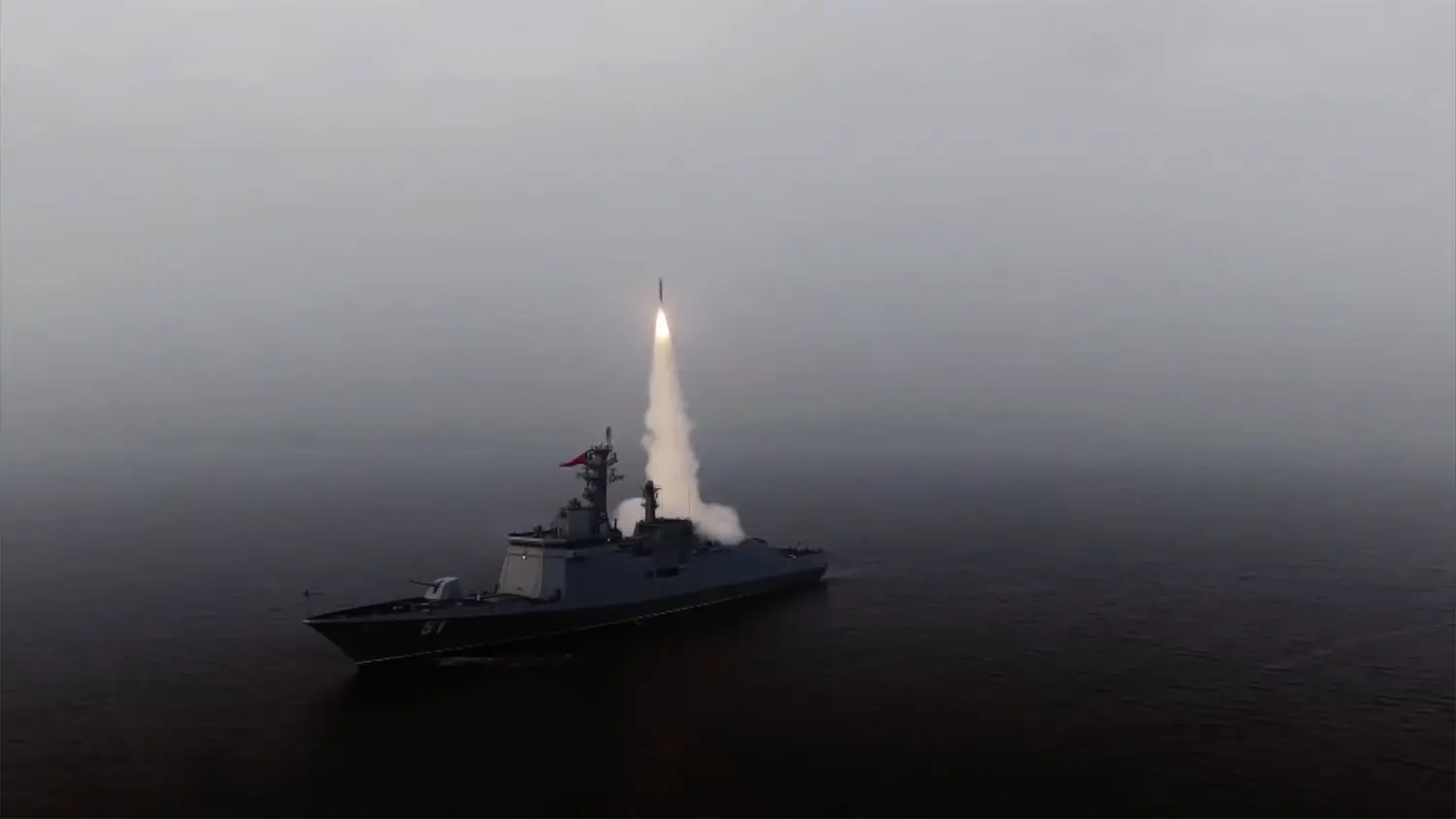
On April 19, North Korea carried out what analysts call a “precision cluster” missile test, overseen by leader Kim Jong Un.
The test involved Hwasongpho-11 tactical ballistic missiles, designed to deliver cluster-bomb warheads that disperse submunitions over wide areas.
According to state media, five missiles struck a target zone about 136 kilometers away, saturating an area of roughly 13 hectares.
The message was direct. North Korea is demonstrating it can overwhelm targets through volume, not just accuracy, a shift that complicates missile defense planning.
But that was only the first step in a broader demonstration.
Days later, Pyongyang escalated further. It tested a “super large” warhead for the
Hwasal-1 Ra-3 cruise missile, alongside a new Pyoljji-1-2 surface to air system.
These systems serve different roles but share a common goal. The cruise missile is designed for low altitude evasion, making it harder to detect, while the air defense system aims to challenge advanced aircraft like the F-35.
Together, they signal a layered approach. North Korea is building both offensive reach and defensive denial, complicating any potential military response.
And that combination reflects a deeper change in military doctrine.
North Korea’s recent tests show a clear pattern. It is moving from long range threats aimed at the U.S. to short range, high impact systems targeting South Korea and Japan.
This includes precision strikes, saturation tactics, and radar evading cruise missiles, all designed to operate in coordination.
The implication is significant. Future conflict scenarios would involve simultaneous attacks from multiple angles, increasing the strain on missile defense systems like THAAD and Aegis.
That shift raises a second question: how are international watchdogs responding?
Nuclear expansion signals a parallel and more dangerous track
Concerns are not limited to missiles. The International Atomic Energy Agency (IAEA) has warned of “very serious” advances in North Korea’s nuclear program.
Satellite imagery suggests a new uranium enrichment facility at Yongbyon is nearing completion, potentially giving Pyongyang a second pathway to produce weapons-grade material.
At the same time, existing reactors appear to remain active, with increased activity at reprocessing and light-water reactor sites.
The challenge is verification. IAEA inspectors remain barred from North Korea, forcing reliance on satellite monitoring and limiting transparency.
This raises the stakes significantly. Missile advances paired with nuclear expansion create a more credible and immediate threat.
And that pressure is being felt most acutely in Seoul.
South Korea has responded with urgency. President Lee Jae-myung’s administration convened emergency security meetings, condemning the tests as violations of UN resolutions.
Military posture has also shifted. Surveillance has intensified around key sites like Sinpo, amid concerns that North Korea could test submarine launched ballistic missiles (SLBMs).
At the same time, trilateral coordination with the United States and Japan has increased, including real time intelligence sharing to track low flying cruise missiles.
This reflects a dual strategy. Seoul is maintaining diplomatic channels while strengthening military readiness, preparing for both negotiation and escalation.
But the broader context extends beyond the Korean Peninsula.
A “global distraction” moment reshapes regional risk calculations
The convergence of events is striking. U.S. military focus is heavily weighted toward the Middle East, while North Korea is accelerating tests at an unusual pace.
Analysts describe this as a “window.” Pyongyang appears to believe the United States is stretched thin, reducing the likelihood of a strong immediate response.
At the same time, logistical shifts such as reallocating missile defense munitions reinforce that perception, even if alliance commitments remain unchanged.
This creates a feedback loop. Perceived weakness invites testing, and testing increases instability, raising the risk of escalation through miscalculation.
And that brings the situation back to its central tension.
North Korea’s latest actions are not isolated tests. They represent a coordinated effort to expand capability while global attention is divided, reshaping the strategic balance in East Asia.
For now, the systems are being demonstrated, not deployed in conflict. But the trajectory is clear. As defenses are stretched and capabilities grow, the margin for error is shrinking, and the next move may not be as controlled as the last.