The war between Pakistan and Afghanistan has entered a dangerous new phase. What began as cross border tension is now a full scale crisis with mass casualties, competing narratives, and rising international pressure.
At the center of this escalation is a single incident that has shocked the region and raised urgent questions about how far this conflict could go.
The Strike That Changed Everything
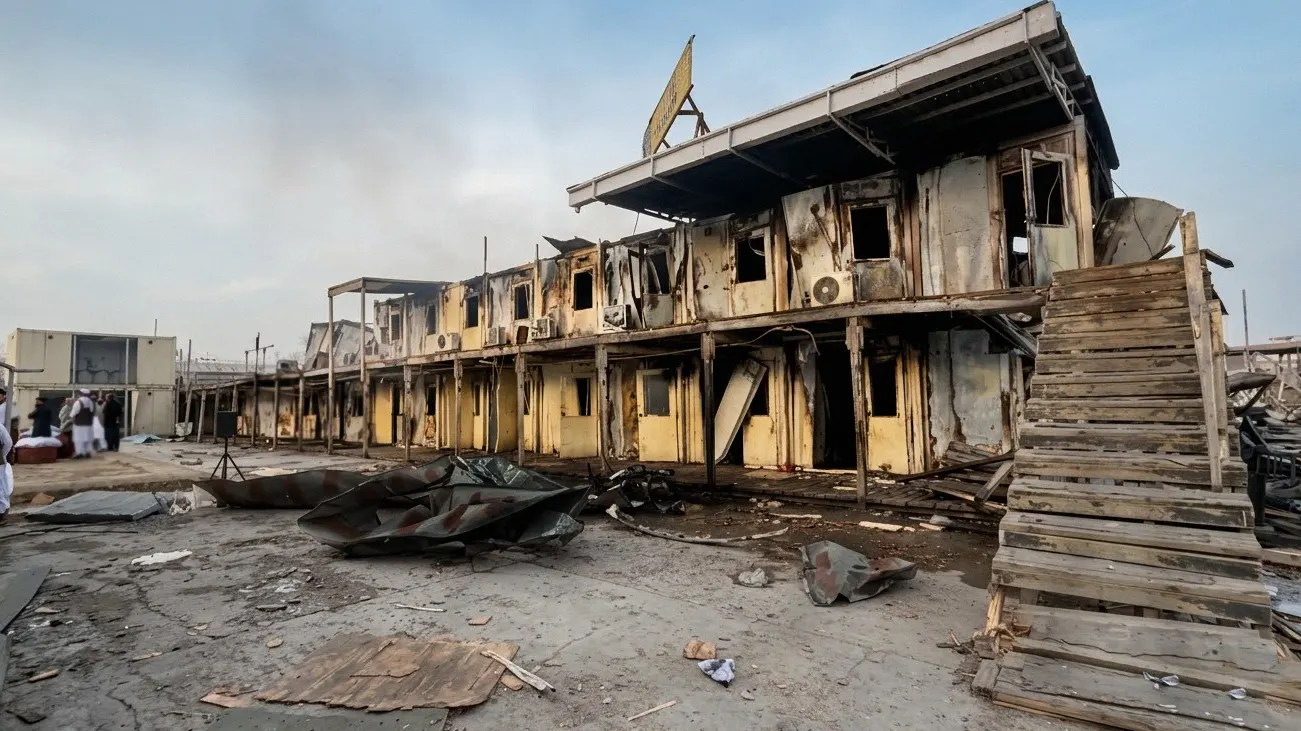
On March 16, a Pakistani airstrike hit the Omid Addiction Treatment Hospital, formerly known as Ibn Sina Hospital, in Kabul. The scale of destruction has made it the deadliest and most controversial moment of the conflict so far.
Afghan officials say more than 400 people were killed, while the United Nations has confirmed at least 143 deaths highlighting a stark gap in reported casualties.
Most victims were patients undergoing treatment for drug addiction, many trapped inside as parts of the 2,000 bed facility collapsed. Witnesses described fires, thick smoke, and desperate rescue efforts that continued for days.
The hospital is located near Kabul’s international airport, adjacent to Camp Phoenix, a former NATO base now used by Taliban forces. That proximity has fueled debate over whether the strike was a targeting error or something more deliberate.
As the dust settled, two sharply conflicting narratives began to take shape.
Two Narratives, One Battlefield
Pakistan and Afghanistan are presenting fundamentally different accounts of the strike.
Pakistan insists the operation was a precision strike targeting militant infrastructure linked to Tehrik-e-Taliban Pakistan, not civilians.
Officials say high precision munitions were used against ammunition depots and technical facilities. Information Minister Attaullah Tarar pointed to what he described as “secondary explosions” in footage as evidence of hidden weapons caches.
Afghanistan rejects this claim outright.
The Taliban government has labeled the strike a “crime against humanity,” insisting the hospital itself was the intended target and contained no military assets.
They have invited international observers to verify the site and argue that the victims were overwhelmingly civilians.
This stark divide has turned the incident into more than a military dispute. It is now a battle over credibility and truth.
International Evidence Complicates the Picture
Independent reporting has added new layers to the controversy.
The UN Assistance Mission in Afghanistan confirmed that the strike impacted the medical facility, though with a lower verified death toll.
Meanwhile, journalists and analysts on the ground documented widespread destruction within the hospital compound. Some investigations suggest multiple guided bombs struck buildings inside the facility.
At the same time, analysts have challenged Pakistan’s claim about “secondary explosions,” suggesting they may have been caused by oxygen tanks and medical supplies rather than ammunition.
This leaves a critical unresolved question.
If the intended target was elsewhere, how did a large hospital sustain such direct damage?
From Counter Terrorism to “Open War”
To understand the significance of this moment, it is important to look at how the conflict evolved.
The current escalation began in late February, when Pakistan launched Operation Ghazab lil-Haq in response to a surge in militant attacks inside its territory.
What began as a counter terrorism campaign has rapidly transformed into what both sides now describe as an “open war.”
Pakistan has since carried out airstrikes and drone operations across multiple Afghan provinces. In response, the Taliban has launched Operation Rad al-Zulm, using artillery, drones, and cross border attacks against Pakistani positions.
This shift marks a turning point.
The conflict is no longer limited to militants. It is now a direct confrontation between two states.
A Humanitarian Crisis Unfolds
As the fighting intensifies, civilians are bearing the brunt of the conflict.
More than 115,000 people have been displaced, and food prices in affected areas have risen by up to 40 percent.
Communities near the border are fleeing toward safer areas, often with limited access to shelter, food, or medical care. At the same time, healthcare infrastructure is under strain, with facilities damaged or forced to shut down.
The Kabul hospital strike has become a symbol of this crisis.
It underscores how quickly a conflict framed as “targeted” can spill into civilian life with devastating consequences.
Regional Powers Step In For Now
Amid growing international concern, regional actors have moved to contain the escalation.
Saudi Arabia, Qatar, and Turkey brokered a temporary pause in Pakistani air operations from midnight March 18 to midnight March 23.
This “Eid pause” is not a ceasefire. It is a short term measure intended to allow for mourning and humanitarian relief.
But the pause is fragile.
Pakistan has warned that any cross border provocation will trigger an immediate resumption of strikes. At the same time, Taliban forces have reinforced positions along the Durand Line while maintaining their pledge of a “calculated response.”
This creates a tense and uncertain balance.
A High Stakes Waiting Game
The current situation is best described as a pause under pressure.
Both sides are holding fire, but preparing for renewed conflict the moment the pause ends.
Public anger in Afghanistan remains high following mass funerals for the hospital victims. This increases pressure on Taliban leadership to respond.
Meanwhile, Pakistan has set a broad red line. Any militant activity or border incident could justify restarting air operations.
The United Nations is also pushing for an independent investigation, adding further international scrutiny.
All signs point to a volatile standoff rather than a lasting de escalation.
A Conflict at the Edge of Wider War
The Pakistan–Afghanistan conflict has crossed a critical threshold.
What began as a security operation has evolved into a sustained interstate war with serious regional implications.
The Kabul hospital strike has intensified global attention, exposed deep narrative divides, and increased the risk of further escalation.
For now, the fighting has paused. But the underlying tensions remain unresolved.
If diplomacy fails or if even a minor incident breaks the fragile calm, this conflict could escalate rapidly, with consequences far beyond the border.
The coming days, especially after March 23, may determine whether this pause leads to restraint… or a far wider war.