Lebanon is once again at the center of a rapidly expanding Middle East conflict. What began as cross border hostilities has escalated into
a nationwide military campaign and a growing humanitarian disaster.
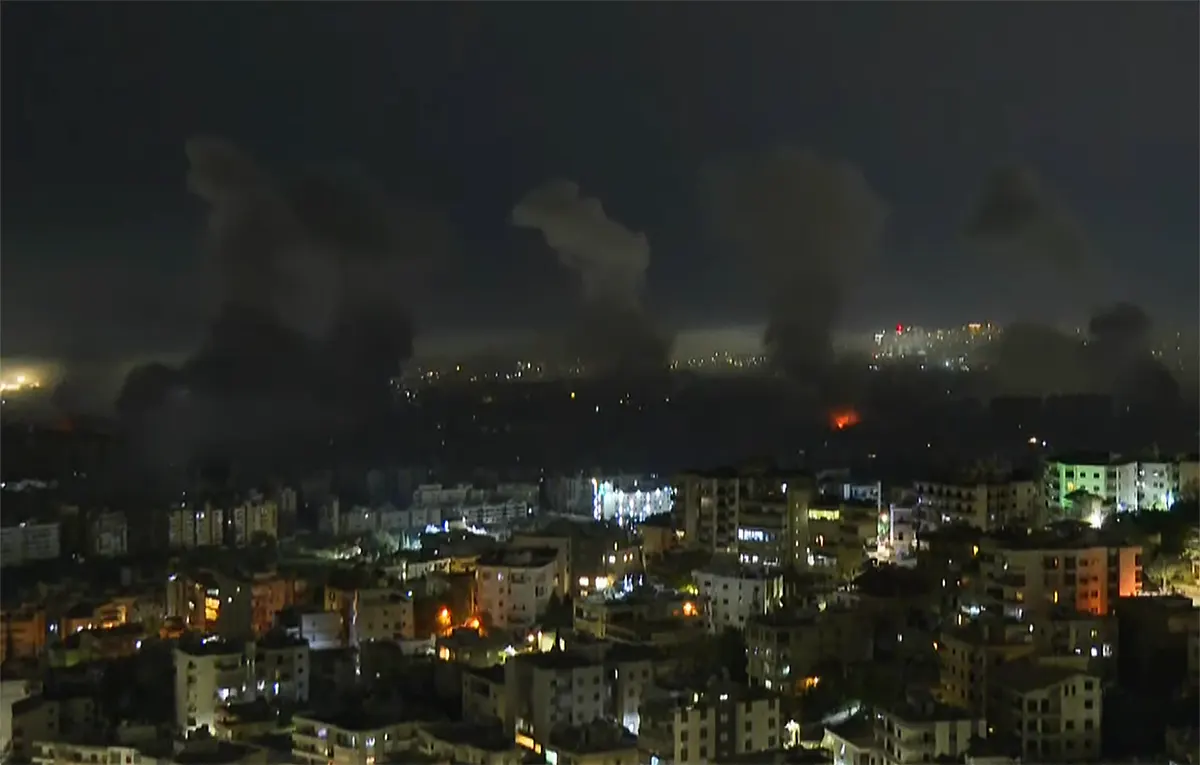
As of March 12, 2026, Israeli airstrikes are hitting targets across the country from southern villages to neighborhoods in central Beirut while ground operations push deeper into Lebanese territory. At the same time, hundreds of thousands of civilians are fleeing their homes.
The war is not technically between Israel and the Lebanese state. Instead, it is a direct confrontation between Israel and Hezbollah,
the powerful Iran backed militant group operating within Lebanon.
Yet the consequences are being felt across the entire country.
With regional tensions already high following the broader conflict involving Iran, Lebanon now finds itself trapped in the middle of a much larger geopolitical struggle.
The Conflict Reignites
The current round of fighting began on March 2, when Hezbollah launched rockets and drones into northern Israel. The group described the strikes as retaliation for the assassination of Iran’s Supreme Leader,
Ali Khamenei, during the early phase of the wider regional war.
Israel responded quickly.
Israeli military leaders say their objective is to eliminate Hezbollah’s military capabilities, including missile stockpiles, command networks,
and underground infrastructure used to launch attacks.
In recent days, the Israeli military has intensified its campaign with
what it calls “wide scale waves of strikes” targeting Iranian linked infrastructure and Hezbollah command centers across Lebanon.
As a result, what initially looked like another border flare up has evolved into one of the most intense conflicts Lebanon has faced in years.
Strikes Spread Across the Country
At the start of the conflict, most attacks were concentrated near the southern border. But the scope of the campaign has expanded dramatically.
Israeli airstrikes are now hitting targets across multiple regions, including:
- Southern Lebanon near the Israeli border
- The eastern Bekaa Valley
- Suburbs and central districts of Beirut
One of the most notable developments was a second major strike in central Beirut, specifically in the Aisha Bakkar neighborhood.
For many Lebanese residents, this represents a disturbing escalation. Beirut once somewhat shielded from the heaviest attacks in past confrontations is now directly in the crosshairs.
Ground Operations Expand
Airstrikes are only one part of the military campaign.
Reports indicate that Israel’s 36th Division has advanced deeper into southern Lebanese territory, searching for Hezbollah tunnels,
weapons depots, and command facilities.
Israeli officials say Hezbollah has built extensive underground infrastructure throughout southern Lebanon, including rocket storage sites and launch positions.
As a result, the conflict is evolving into a combined air and ground campaign, raising fears that the fighting could become longer and more destructive.
Lebanon’s Government Caught in the Middle
The official Lebanese government now finds itself in an extremely
difficult position.
On paper, the state has condemned Hezbollah’s decision to enter the war, warning that the group has dragged the country into a conflict it never wanted.
Lebanese authorities have even formally banned Hezbollah’s military activities and called for the group to surrender its weapons.
But enforcing those decisions is another matter entirely.
Hezbollah is not only a militant organization, it is also a powerful
political force deeply embedded within Lebanese society, operating largely outside the control of the state.
This creates what analysts describe as a “statehood paradox.”
Lebanon’s internationally recognized government is attempting to stop the war, but it lacks the military power to disarm Hezbollah or prevent the Israeli response.
A Humanitarian Crisis Unfolds
While military operations dominate headlines, the humanitarian impact inside Lebanon is rapidly worsening.
Hundreds of thousands of civilians have been forced to flee their homes, creating one of the largest displacement crises in the country’s recent history.
Estimates suggest that between 700,000 and 760,000 people have
been displaced in just over ten days.
Many families are now living in:
- Schools converted into emergency shelters
- Public buildings
- Cars parked along roadsides
- Temporary camps and open spaces
Lebanon’s infrastructure already weakened by years of economic
collapse is struggling to cope.
Compounding the crisis is another reality: Lebanon already hosts the largest number of refugees per capita in the world, including large communities of Syrian and Palestinian refugees. Many of these vulnerable populations are now among those newly displaced by the fighting.
As a result, a country that was already under enormous economic and social pressure is now facing an even deeper humanitarian emergency.
Civilians Paying the Highest Price
The casualty figures released by Lebanese health authorities reveal the devastating impact on ordinary people.
However, the Ministry of Public Health does not categorize casualties as combatants or civilians, focusing instead on documenting total deaths and providing emergency response. This limitation makes precise distinctions difficult during active conflict.
Still, demographic data paints a clear picture.
Recent reports indicate:
- At least 86 children killed
- Numerous women and elderly victims
- 14 healthcare workers killed while responding to attacks
These numbers strongly suggest that a large share of the victims are
non combatants.
Because Hezbollah infrastructure is often located in residential neighborhoods, strikes targeting militant sites frequently occur in densely populated urban areas, making civilian casualties difficult to avoid.
A War Within a Wider Regional Conflict
The escalation in Lebanon cannot be separated from the broader regional war that erupted on February 28.
That conflict began when the United States and Israel launched operations against Iranian military assets across the region.
Hezbollah one of Iran’s most powerful allies entered the conflict shortly afterward, opening what analysts describe as a “second front” against Israel.
This means the fighting in Lebanon is not simply a border dispute.
It is part of a wider geopolitical confrontation involving Israel, Iran, and multiple regional actors.
A Dangerous Diplomatic Vacuum
In previous Israel–Hezbollah conflicts, international mediation often helped bring fighting to a halt relatively quickly.
This time, however, there is currently no active diplomatic process capable of stopping the war.
Countries such as France and organizations like the United Nations have warned that Lebanon is approaching a critical breaking point.
One humanitarian official described the country’s situation bluntly: Lebanon is “not asking for help, but for oxygen.”
The remark reflects growing fears that the war could push the already fragile country into complete state collapse.
The Stakes for Lebanon
Lebanon today stands at the intersection of a local war and a broader regional confrontation.
Israel and Hezbollah are locked in an escalating military conflict, with airstrikes and ground operations expanding across Lebanese territory.
At the same time, the Lebanese government remains too weak to control the powerful militant group operating within its borders, leaving the country trapped between competing forces.
For ordinary Lebanese citizens, the consequences are immediate and devastating: homes destroyed, families displaced, and a fragile nation pushed closer to collapse.
Unless diplomatic efforts begin soon, the conflict risks becoming
another prolonged chapter in the Middle East’s cycle of war one
that Lebanon can scarcely afford to endure.