A major anti-immigration protest in The Hague turned violent on Saturday, September 21, 2025, raising tensions in the Netherlands just weeks before a crucial national election.
The demonstration began as a peaceful rally at the city’s Malieveld park, where right-wing activists gathered to demand stricter asylum and immigration policies. However, the situation later spiraled into chaos when a smaller group broke away from the main protest and clashed with police near the A12 highway.
The unrest has intensified concerns about political polarization and rising extremism in Dutch society as immigration becomes the central issue ahead of the October 29 snap elections.
Violence Erupts During Protest
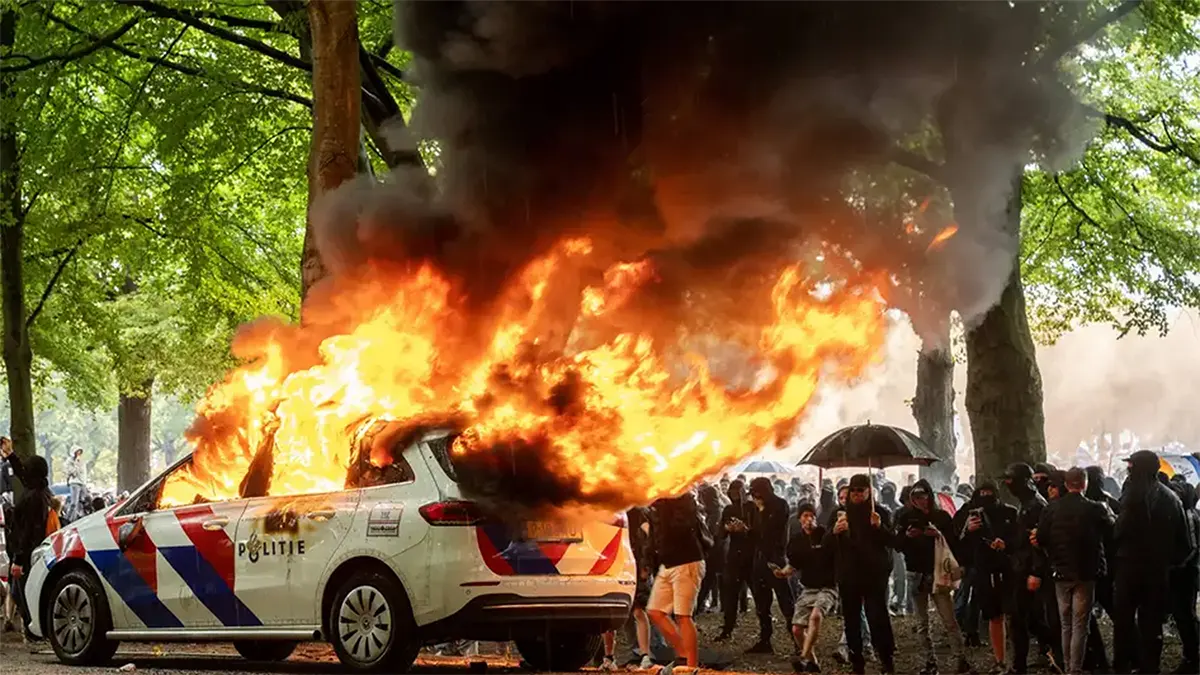
According to authorities, rioters threw stones, bottles, and metal objects at police officers during the confrontation. A police patrol car was set on fire, while the headquarters of the centrist D66 political party was vandalized.
Windows were smashed, and parts of the building were covered in graffiti during the unrest.
Police responded by deploying water cannons and tear gas to disperse the crowd and regain control of the area. At least 30 people were arrested, with investigators continuing to review surveillance footage for possible additional arrests.
Two police officers were reportedly injured during the clashes, while several journalists covering the protest said they were harassed or attacked by demonstrators.
Dutch Leaders Condemn the Chaos
The violence triggered immediate condemnation from political leaders across the Netherlands.
D66 leader Rob Jetten strongly criticized the rioters, saying extremist violence would not intimidate the country. Caretaker Prime Minister Dick Schoof described the scenes as “shocking” and called the attacks completely unacceptable.
Even far-right politician Geert Wilders, known for his tough anti-immigration stance, condemned the violence and distanced himself from those involved in the riots.
The rare unity among political rivals reflected growing concern over how quickly political tensions in the Netherlands are escalating.
Immigration Debate Dominates Election Campaign
The unrest comes during a highly sensitive political moment for the country.
The Netherlands is preparing for snap general elections on October 29 after the previous coalition government collapsed earlier this year. The government fell apart following disagreements over asylum and immigration policy, particularly after Geert Wilders withdrew his Freedom Party from the coalition.
Since then, immigration has become the defining issue of the election campaign.
Polls continue to show strong support for Wilders and other hardline political voices, reflecting widespread public frustration over migration policies and housing pressures.
Fears Over Rising Extremism
Observers were also alarmed by the appearance of far-right symbols during the demonstration, including the controversial “Prinsen vlag,” a flag sometimes associated with nationalist movements.
Political analysts warn that extremist groups may increasingly use public protests to spread radical messages and deepen social divisions.
The violence in The Hague has added to concerns that political debates in the Netherlands are moving beyond parliament and into street confrontations.
A Defining Moment Before Election Day
Authorities have promised to prosecute those responsible for the violence, while security measures around future demonstrations are expected to tighten.
The incident could have a major impact on the final weeks of the election campaign. Some analysts believe the unrest may strengthen support for tougher immigration policies, while others argue it could push voters away from extremist rhetoric.
What is certain is that immigration will remain at the center of Dutch politics as the country heads toward one of its most closely watched elections in recent years.