A major disruption deep beneath the Red Sea has once again revealed how fragile the modern internet really is.
Several critical undersea communication cables connecting Asia, the Middle East, and Europe were damaged this week, triggering internet slowdowns and connectivity problems across multiple countries. While authorities are still investigating the exact cause, the location of the incident combined with rising geopolitical tensions in the region has fueled growing fears of possible sabotage.
For millions of users, the disruption has meant slower internet speeds and unstable connections. But for governments, tech companies, and global businesses, the incident carries a much larger warning: a single disruption in the wrong location can ripple across the world’s digital economy within hours.
The Red Sea Has Become One of the Internet’s Most Vulnerable Chokepoints
The damaged systems include three major submarine cable networks:
- SMW4 (South East Asia–Middle East–Western Europe 4)
- IMEWE (India-Middle East-Western Europe)
- FALCON GCX
The cables were reportedly severed near Jeddah, one of the most important transit points for internet traffic moving between Europe, Asia, and the Middle East.
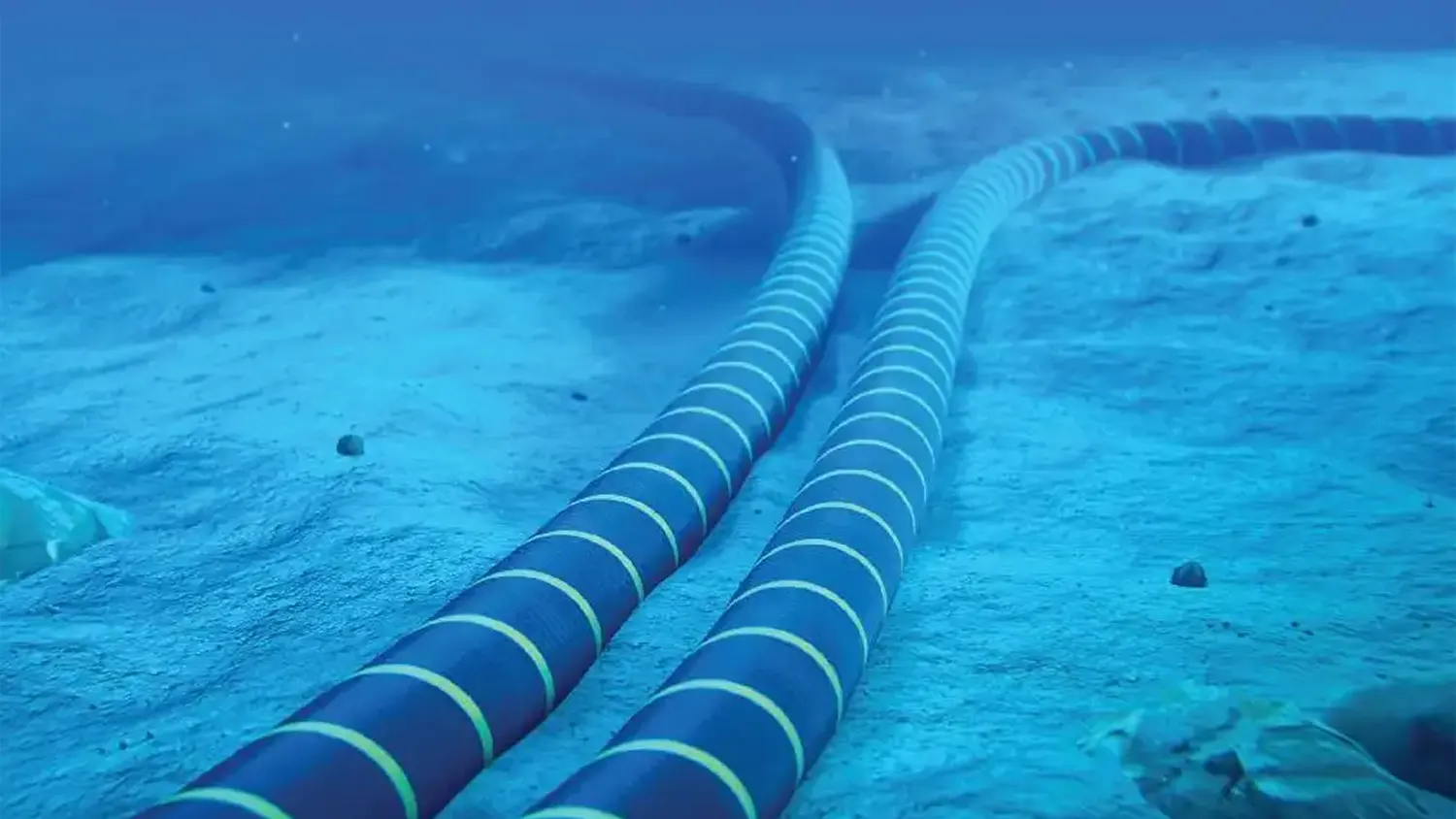
Although undersea cables rarely attract public attention, they form the backbone of the global internet. More than 95% of international data traffic travels through fiber-optic cables laid across the ocean floor, carrying everything from financial transactions and cloud computing traffic to video calls and military communications.
When several cables fail in the same region, the effects spread quickly.
Countries including India, Pakistan, Kuwait, and the United Arab Emirates have reported slower internet performance, increased latency, and intermittent connectivity problems.
Major providers have managed to reroute some traffic through alternative pathways, preventing a total communications collapse. Cloud platforms such as Microsoft Azure and large telecom operators activated backup systems almost immediately.
Still, rerouting comes at a cost. Data must travel through longer and more congested paths, reducing speed and increasing delays for businesses and users alike.
A Digital Lifeline Running Through a Conflict Zone
The timing of the cable cuts has intensified speculation about deliberate interference.
The Red Sea has become increasingly unstable in recent months due to escalating attacks on commercial shipping routes by Houthi forces operating from Yemen. Although no evidence has publicly linked the group to the cable damage, security analysts note that undersea infrastructure in the region has become a growing strategic concern.
Previous warnings from intelligence and maritime security experts have highlighted how vulnerable submarine cables are during periods of regional conflict. Unlike satellites, which receive far more public attention, undersea cables are difficult to monitor and often poorly protected despite carrying enormous amounts of global data.
That vulnerability has transformed them into what many cybersecurity experts now describe as critical but exposed infrastructure.
Even without direct sabotage, the concentration of so many cables in narrow maritime corridors creates a dangerous “single point of failure” for the internet.
The Red Sea is one of those chokepoints.
A disruption there can affect communications stretching from Europe to South Asia in a matter of minutes.
Fixing the Internet Is Slower Than Breaking It
Repairing damaged undersea cables is neither fast nor simple.
Specialized cable repair ships must first identify the exact break point on the seabed, retrieve the damaged section using robotic equipment or underwater crews, and then splice and relay new cable segments before lowering them back into the ocean.
The process is highly sensitive to weather, sea conditions, and regional security risks.
In unstable waters like the Red Sea, repair operations become even more difficult. Ongoing military tensions and shipping threats could delay access for repair vessels or increase operational dangers for crews working in the area.
According to estimates from the International Cable Protection Committee, a single cable repair operation can cost between $1 million and $3 million depending on the extent of the damage.
And even under ideal conditions, repairs can take weeks.
That creates a difficult reality for governments and businesses increasingly dependent on real-time digital services.
The Modern Economy Depends on Cables Most People Never See
The outage highlights just how dependent the global economy has become on invisible infrastructure hidden beneath the ocean floor.
Financial trading systems, cloud computing platforms, remote work services, AI data centers, and enterprise software all rely on ultra-fast international data transmission. Even small delays can affect business operations, customer services, and communications networks.
For companies operating across multiple continents, increased latency can translate into slower transactions, interrupted meetings, and reduced productivity.
The risks become even greater as artificial intelligence, cloud computing, and digital financial systems continue expanding worldwide. These technologies demand enormous amounts of stable, high-speed connectivity — precisely the type of infrastructure vulnerable to undersea disruptions.
That is why experts increasingly warn that submarine cables are no longer just commercial assets. They are becoming part of global strategic infrastructure alongside energy pipelines, ports, and power grids.
The Internet’s Weakest Link May Be Geography Itself
The Red Sea incident is unlikely to be the last major cable disruption the world faces.
As geopolitical tensions rise and digital dependence deepens, governments and telecom companies are under growing pressure to diversify internet routes, strengthen redundancy systems, and improve protection for critical communications infrastructure.
Because despite the internet’s image as a decentralized network, much of it still relies on a surprisingly small number of physical corridors crossing politically unstable regions.
And when one of those corridors breaks, the consequences travel far beyond the ocean floor.
The modern internet may feel wireless, instant, and invisible. But its foundations remain physical, fragile, and increasingly exposed to the tensions shaping the modern world.