The race to dominate artificial intelligence is entering a new phase, and two of the industry’s biggest players are placing an enormous bet on the future.
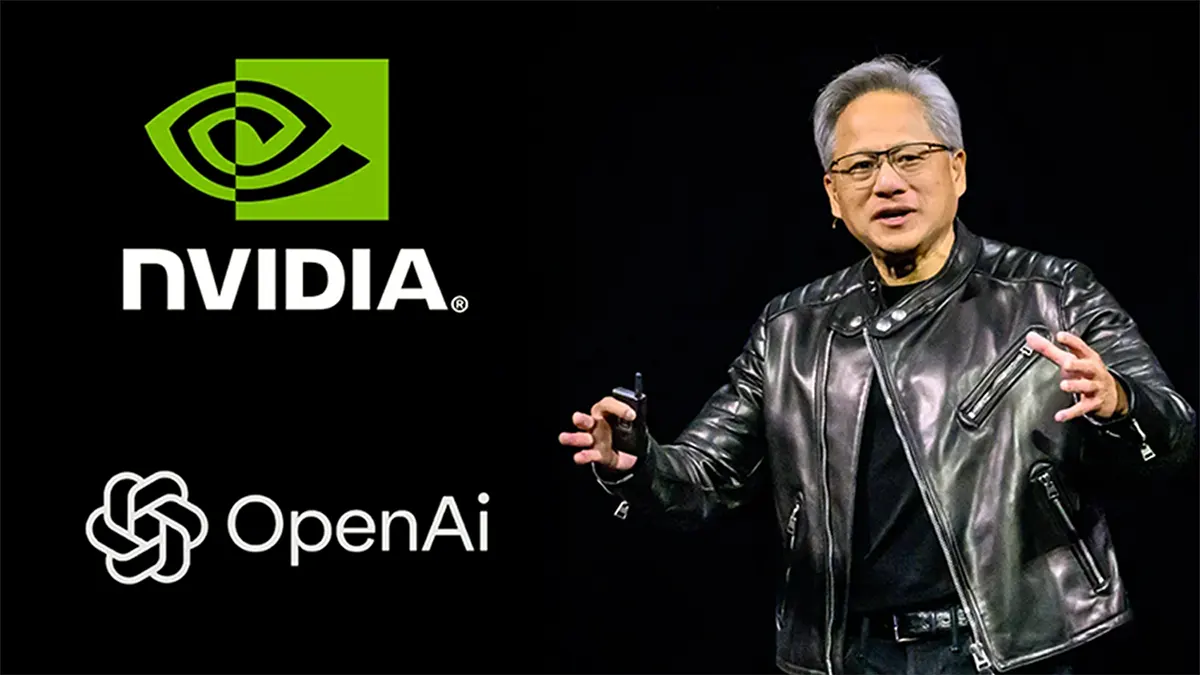
Nvidia and OpenAI have outlined a strategic partnership reportedly valued at up to $100 billion, signaling one of the largest infrastructure commitments ever associated with artificial intelligence. More than a traditional supplier agreement, the partnership aims to build the computing foundation needed to power the next generation of AI systems.
The announcement highlights how rapidly AI has evolved from an emerging technology into a sector attracting investments measured in tens of billions of dollars.
A Massive Investment in AI Infrastructure
At the center of the agreement is a long-term plan to develop large-scale AI computing infrastructure over the next decade.
The project is expected to focus on creating dedicated facilities capable of training and operating increasingly advanced AI models. These systems require enormous amounts of processing power, making access to high-performance hardware one of the most important competitive advantages in the industry.
Under the proposed arrangement, Nvidia would provide both the advanced chips and supporting data center technology required to run these large-scale operations.
The partnership reportedly targets the deployment of 10 gigawatts (GW) of AI compute capacity, an amount that illustrates the extraordinary scale of modern artificial intelligence development.
Why Nvidia Stands to Benefit
For Nvidia, the deal strengthens its position as the leading supplier of AI hardware.
The company already dominates the market for AI-focused graphics processing units (GPUs), which are widely used to train large language models and other advanced AI applications.
By securing a long-term relationship with OpenAI, Nvidia would gain years of predictable demand for its technology while further embedding its hardware into the AI ecosystem.
This move could help solidify Nvidia’s role as a critical infrastructure provider rather than simply a chip manufacturer.
The partnership would effectively place Nvidia at the center of some of the world’s most ambitious AI projects.
OpenAI Gains Access to Critical Resources
For OpenAI, access to reliable computing power is essential.
Training advanced AI systems requires vast amounts of hardware, electricity, and data center capacity. As demand for AI services continues to grow, competition for these resources has become increasingly intense.
A long-term infrastructure partnership could provide OpenAI with a more stable path for developing future AI models while reducing uncertainty around hardware availability.
At the same time, such a close relationship with a single supplier may raise questions about long-term dependence and strategic flexibility.
The Technology Behind the Project
The planned infrastructure is expected to utilize Nvidia’s next-generation technology platforms designed specifically for large-scale AI workloads.
These systems are built to handle increasingly complex training and inference tasks while improving performance and energy efficiency.
The first major milestone reportedly involves bringing an initial one gigawatt of computing capacity online by the second half of 2026, marking the beginning of a much larger expansion effort.
What This Means for the AI Industry
The scale of the proposed investment could have significant implications across the technology sector.
Smaller AI startups may face greater challenges competing with companies that have access to billions of dollars in dedicated computing infrastructure.
At the same time, the partnership could accelerate innovation by providing the resources needed to train more advanced AI models and expand real-world applications.
Industry observers also expect increased attention from regulators concerned about market concentration, competition, and the growing influence of a small number of companies in the AI ecosystem.
The Growing Energy Challenge
One of the biggest questions surrounding the project involves energy consumption.
Large AI systems require substantial electricity to operate, and a computing network measured in gigawatts would demand a significant and reliable power supply.
As AI infrastructure expands, discussions about sustainability, energy efficiency, and environmental impact are expected to become increasingly important.
Governments, utilities, and technology companies will likely face growing pressure to balance innovation with responsible energy use.
Is AI Entering a New Investment Era?
Supporters of the partnership argue that artificial intelligence is following a growth trajectory similar to the early internet and mobile computing revolutions.
They believe large-scale investments are necessary to unlock future breakthroughs in productivity, automation, healthcare, education, and scientific research.
Critics, however, caution that rapid spending could create unrealistic expectations and raise concerns about whether AI infrastructure investments will ultimately generate sufficient returns.
This debate has led some analysts to compare today’s AI boom with previous periods of intense technology investment, including the dot-com era.
A Defining Moment for Artificial Intelligence
Whether the full vision ultimately materializes or evolves over time, the proposed Nvidia–OpenAI partnership reflects a broader shift taking place across the technology industry.
Artificial intelligence is no longer viewed as an experimental technology. It is increasingly becoming a foundational platform that businesses, governments, and consumers are expected to rely on for decades to come.
With billions of dollars flowing into AI infrastructure and competition intensifying worldwide, the partnership represents one of the clearest signals yet that the next phase of the AI revolution will be defined not only by software breakthroughs but also by the massive computing systems that make them possible.