A deadly shooting attack in northern Jerusalem has intensified tensions across Israel and the Palestinian territories, underscoring how quickly violence linked to the Gaza war continues to spill beyond the battlefield.
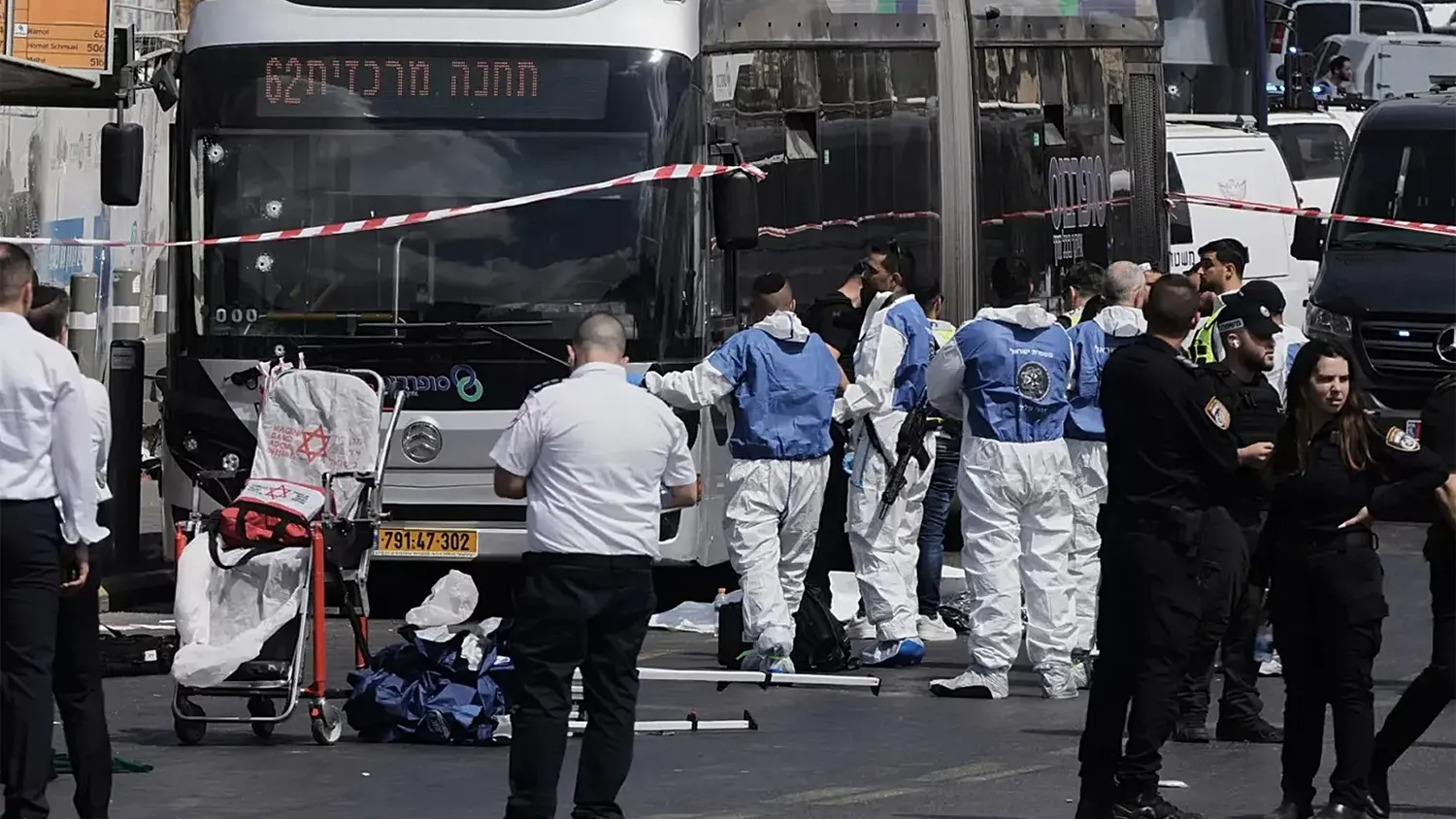
Israeli authorities say six people were killed and at least 12 others wounded after gunmen opened fire during Monday morning rush hour at a crowded bus stop near Jerusalem’s northern entrance. The attack took place at a busy transit junction connecting central Jerusalem to nearby neighborhoods and settlements in East Jerusalem.
The shooting is among the deadliest attacks inside Israel since the escalation of the Gaza conflict and comes at a particularly fragile moment for regional diplomacy.
As ceasefire discussions continue behind closed doors, the violence is fueling fears that the conflict is entering a more dangerous and unpredictable phase, one increasingly defined by attacks beyond Gaza itself.
A Rush Hour Attack in One of Jerusalem’s Busiest Corridors
According to Israeli police and emergency responders, two armed men opened fire on civilians waiting at the bus stop during the height of the morning commute.
Some eyewitness reports suggest the attackers briefly boarded a nearby bus before the shooting expanded into the surrounding area. Panic spread quickly as civilians attempted to flee the intersection.
Both gunmen were ultimately shot and killed at the scene by an off-duty Israeli soldier and an armed civilian, authorities said.
Police later arrested a third suspect whose alleged connection to the attack remains under investigation.
Israeli officials identified the attackers as Palestinian men from the West Bank.
The area targeted in the shooting holds both logistical and symbolic importance. The junction serves as a key transportation route between Jerusalem and Israeli settlements in East Jerusalem and surrounding areas, making it heavily populated during commuting hours.
That visibility ensured the attack would carry immediate political and psychological impact.
Hamas Praised the Attack Without Claiming Responsibility
Although Hamas did not formally claim responsibility for the shooting, the group publicly praised the attack afterward, calling it a “natural response” to what it described as Israeli actions in Gaza and the occupied territories.
The statement triggered immediate condemnation from Israeli leaders, who argued that such rhetoric encourages further violence during an already volatile period.
Israeli officials described the shooting as a deliberate act targeting civilians.
“This was a brutal and calculated act of terror aimed at innocent civilians,” an Israeli police spokesperson said following the attack.
The language surrounding the incident reflects the increasingly hardened narratives on both sides of the conflict. While Israeli authorities frame such attacks as terrorism requiring stronger security responses, Palestinian militant factions continue presenting armed resistance as retaliation for military operations and occupation policies.
That cycle of violence has become one of the central obstacles to any lasting de-escalation.
The Attack Comes at a Fragile Moment for Ceasefire Talks
The timing of the shooting has added another layer of tension to already fragile diplomatic efforts surrounding the Gaza war.
Reports indicate Hamas was reviewing a U.S.-brokered ceasefire proposal around the time the attack occurred, raising concerns that renewed violence could further complicate negotiations.
Israeli Prime Minister Benjamin Netanyahu visited the scene shortly after the shooting and vowed to pursue everyone connected to the attackers.
In response, Israeli security forces moved quickly to tighten operations across parts of the West Bank. The Israel Defense Forces reportedly surrounded several Palestinian villages near Ramallah and expanded security measures in surrounding areas.
Such responses have become increasingly common following major attacks inside Israel. However, security analysts warn that intensified raids and restrictions can also deepen anger in Palestinian communities, increasing the risk of retaliatory violence.
The result is a cycle in which each new attack creates conditions that may contribute to the next one.
The Gaza War Is Reshaping the Security Landscape Beyond Gaza
The Jerusalem shooting highlights how the Gaza conflict is no longer geographically contained.
While much of the international focus remains on Gaza itself, tensions have steadily risen across the West Bank and inside Jerusalem for months. Analysts warn that smaller-scale attacks carried out by individuals or loosely connected cells may become more frequent as the war drags on.
Unlike large coordinated operations, these attacks are often difficult for intelligence agencies to predict or prevent.
Security experts say the emotional intensity surrounding the Gaza war combined with mounting casualties, political anger, and expanding military operations has created conditions where localized violence can erupt rapidly.
That instability is now affecting nearly every aspect of life across the region, from transportation and public gatherings to diplomacy and internal security planning.
And with ceasefire negotiations still uncertain, fears are growing that isolated attacks could trigger broader escalations at any moment.
A Region Trapped Between War and Retaliation
The shooting in Jerusalem is not only another deadly incident in an already devastating conflict. It also reflects the deeper reality shaping the region: the line between frontline warfare and civilian life is becoming increasingly blurred.
For Israelis, attacks targeting public spaces reinforce fears that violence can strike without warning far from active combat zones.
For Palestinians, expanding military operations and tightening security measures continue fueling anger and instability across the occupied territories.
Meanwhile, diplomatic efforts struggle to keep pace with events unfolding on the ground.
As international mediators push for a ceasefire in Gaza, each new act of violence makes political compromise harder, public emotions more volatile, and the possibility of wider escalation more immediate.
Because in conflicts this entrenched, every attack becomes more than an isolated tragedy it becomes part of a rapidly expanding cycle that neither side appears able to stop.